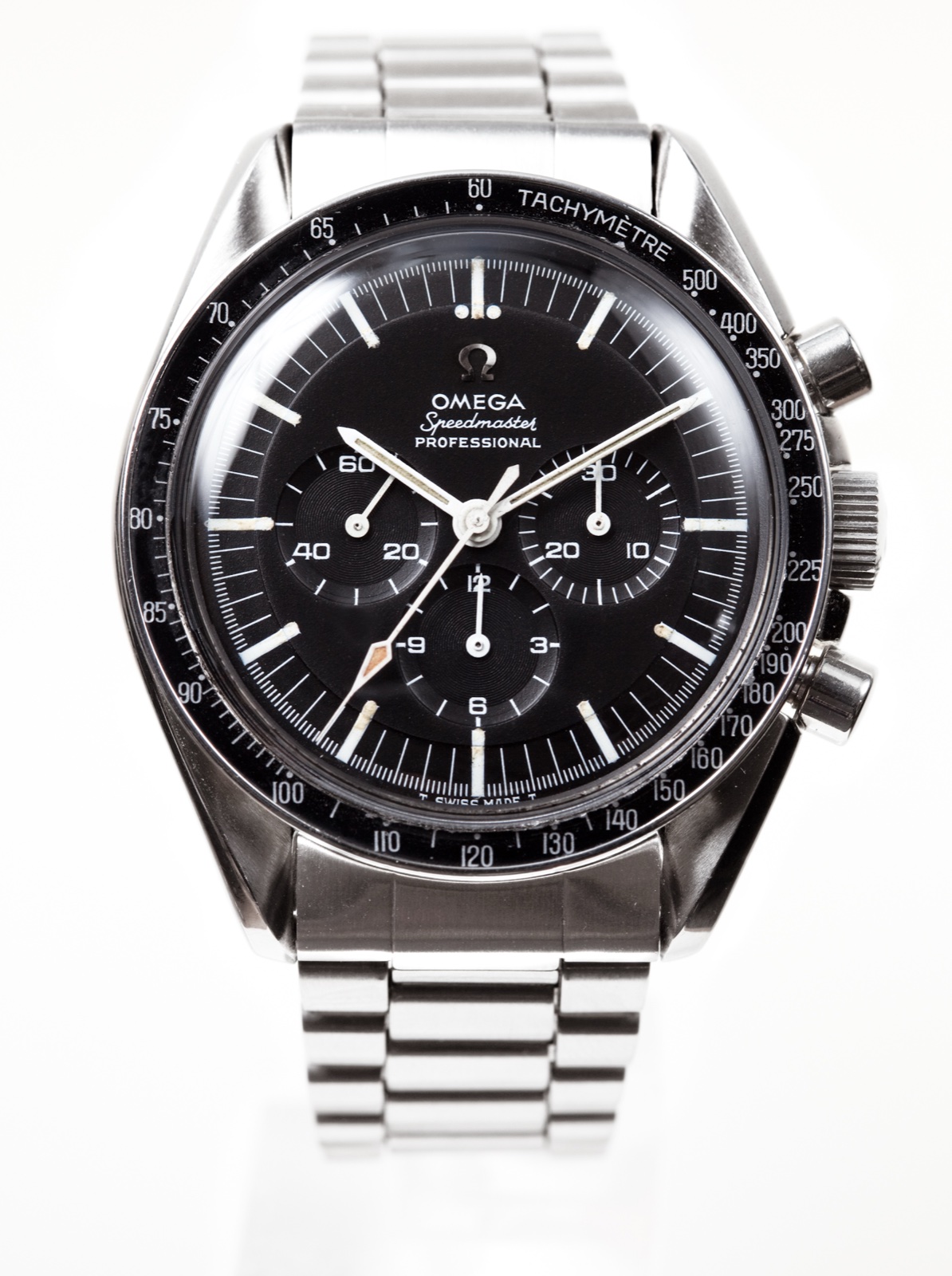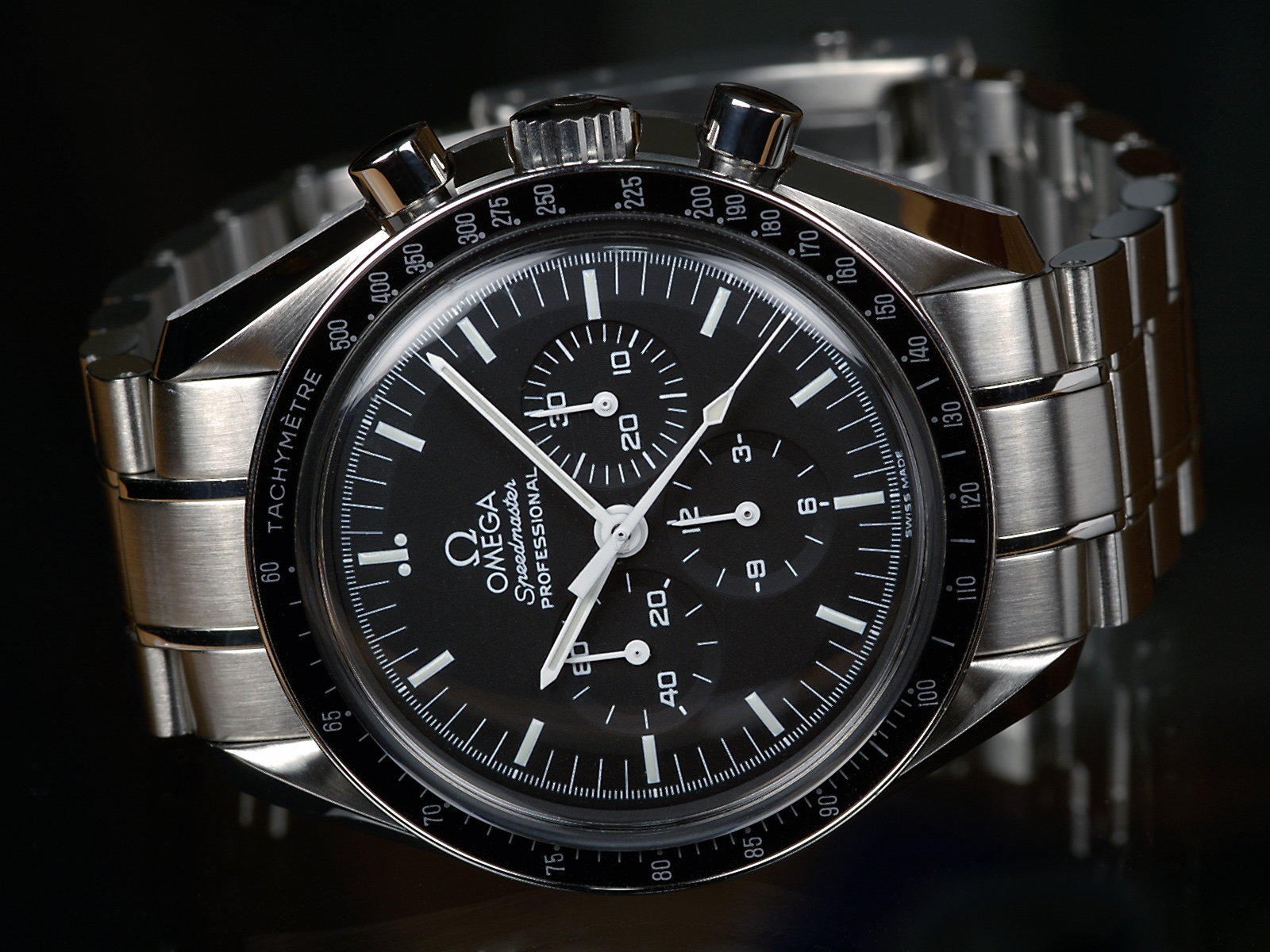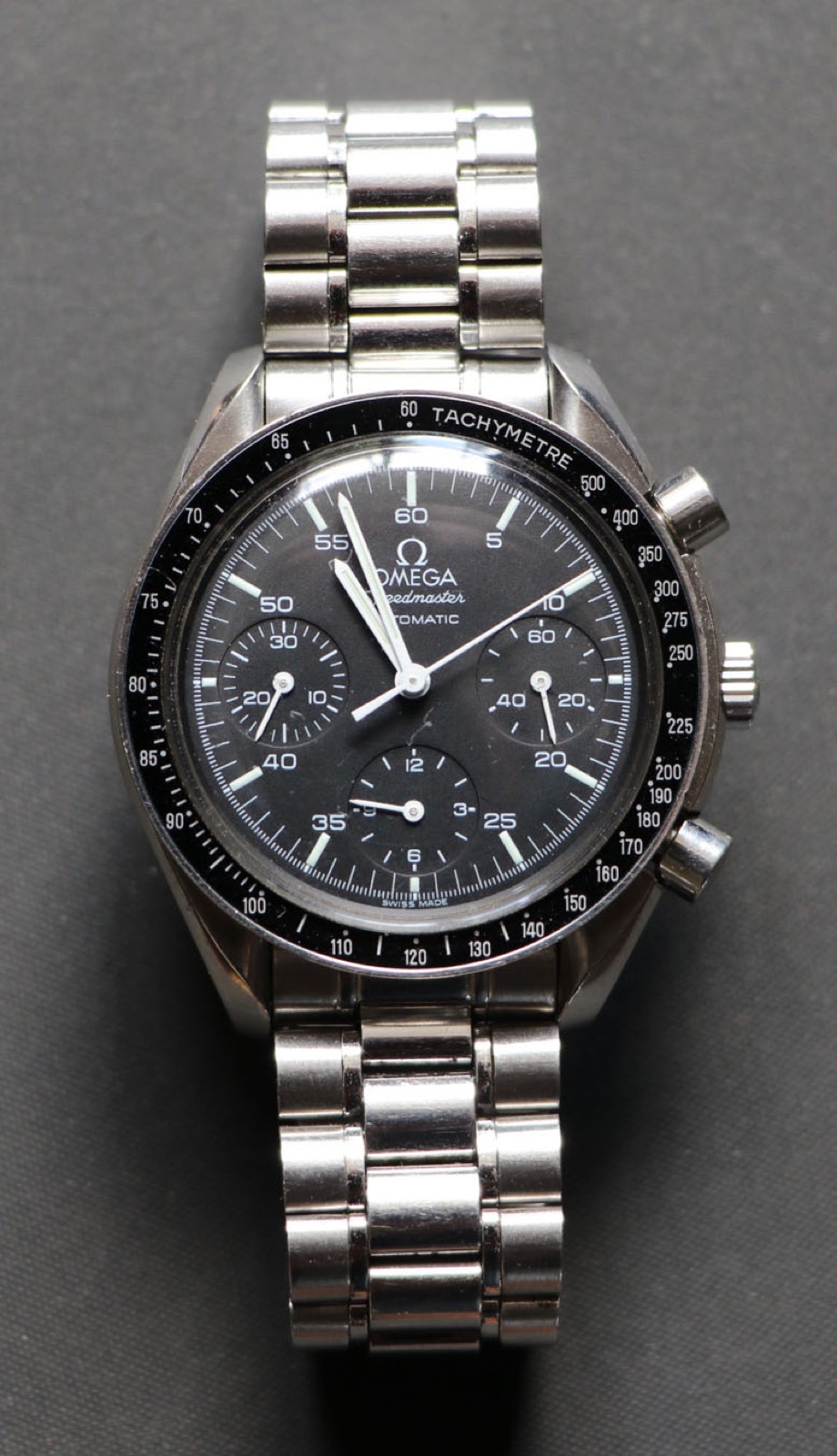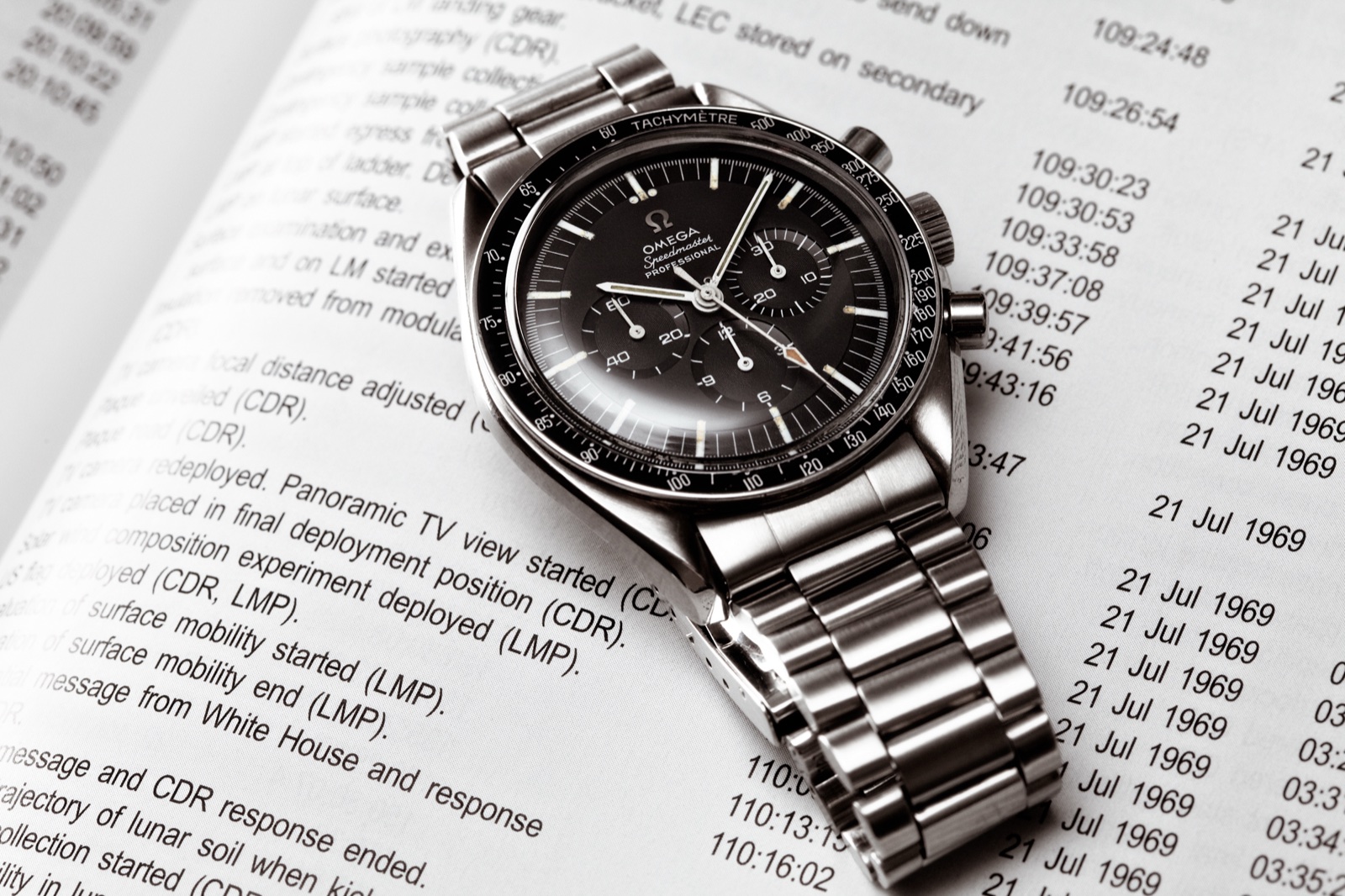
Pre-Moon reference with Cal 321; the most collectible Speedmaster outside the earliest refs.
Originality matters on this reference. An original dial and hands command a significant premium. Service replacements typically trade at a 20-40% discount to original examples.
The 105.012 is the last transitional ref before the 145.012 and 145.022 standardized the modern Moonwatch form. Its Cal. 321 column-wheel movement is the most collectible Speedmaster caliber and has appreciated significantly.
Pre-owned watches trade across a wide condition spectrum. These ranges are typical for the secondary market.
Pre-Moon Speedmasters with correct patina and unpolished cases command strong collector prices; provenance and original caliber condition drive wide spread within the range.
Editorial estimate, 2026 Q2. Actual prices vary by condition, date, and box/papers status.
The 145.012 is the last Speedmaster Professional to carry the caliber 321 in the 145-series case, produced for roughly two years before Omega switched to the 861. That column-wheel chronograph movement with its Nivarox hairspring is what made it to the moon, and this reference is as close as you can get to an unmodified flight-spec piece in civilian form. For collectors who want the real moon-landing caliber in a correct period case, this is the reference to find.
Omega produced the 145.012 from approximately 1967 through 1968, bridging the end of the 321 era and the arrival of the cost-rationalized 861. The caliber 321, originally a Lemania design, features a lateral-clutch column-wheel chronograph with a Glucydur balance and Nivarox hairspring, widely regarded as the superior technical specification. When Omega transitioned to the 145.022 in 1968, the 861 replaced the 321 entirely, dropping the column wheel for a simpler cam-actuated design.
The case and dial of the 145.012 share the same professional asymmetric cushion shape and aluminum tachymetre bezel as the 145.022, so visual differences between references are subtle without opening the caseback. Production numbers were modest, making minty examples genuinely scarce.
Verify the caliber before anything else: the 321 has a distinctive column wheel visible through the caseback; if you see a cam-actuated chronograph, it has been swapped to an 861 or later movement and the premium disappears entirely. Check the aluminum tachymetre bezel for fading, especially at the top where wrist contact is highest; correct unpolished bezels with readable numerals are rare and add real value. Inspect the pushers and crown for replacement parts, since generic substitutions are common after decades of service.
The case should show original facets without polishing, which softens the lugs and reduces collector interest significantly. Dial condition matters enormously here: tropical, faded, or re-lumed dials all trade at different levels, so know what you are buying.
Correct 145.012 examples with matching 321 movements trade at a meaningful premium over the far more common 145.022 with the 861, typically 30 to 60 percent higher depending on condition. Original-dial, unpolished-case, column-wheel examples in honest service condition have crossed $8,000 to $12,000 at auction, with exceptional pieces going higher. Swapped-movement pieces drop close to 145.022 territory, which is the right price for what they actually are.
The market knows the difference, and buyers should too before committing.
The caliber 321 requires a watchmaker experienced specifically with column-wheel chronographs; general service shops that mostly see 861-family Speedmasters may not have the hands-on familiarity. Expect a full service to run $600 to $1,200 from a competent independent or Omega service center, with Omega's boutique pricing trending toward the top of that range. Service intervals of 7 to 10 years are appropriate, and genuine period spare parts are increasingly difficult to source, so a good service history with documented parts provenance adds real value to any listed piece.
Community + OSINT signals haven’t landed for this reference yet. We don’t publish a rating against zero signal — the number would mean nothing. Editorial body + caliber + market value still surface above; ratings appear once the signal corpus does.
The 145.012 with Cal. 321 is the most historically significant Speedmaster and commands the highest premiums. Cal. 321 confirmation is the single most important authentication step.
| Area | What to check | What is correct | Red flag |
|---|---|---|---|
| movement | Cal. 321 column wheel chronograph | Cal. 321 uses a column wheel chronograph mechanism; column wheel is visible as a rotating ratchet wheel when viewed with movement exposed | Cam-actuated chronograph (Cal. 861/321 replacement) in a stated Cal. 321 watch; any horizontal clutch design |
| caseback | Case serial range alignment | 145.012 produced approximately 1963 to early 1968; serial numbers align with Omega production tables for those years | Serial number inconsistent with 145.012 production period; movement serial not aligning with case serial generation |
| dial |
The 145.012 with Cal. 321 is the most historically significant Speedmaster -- the column-wheel movement flown on Apollo 11. Cal. 321 confirmation is the single most important authentication step, and the case-to-movement serial correlation matters.
| "Tropical" patina authenticity |
| True tropical patina shows even, radially consistent oxidation across the full dial face; lume plot aging consistent with dial |
| Selective darkening at dial edges or specific quadrants; lume plot color inconsistent with dial patina age |