
The Omega Speedmaster | family history
A patient walk through the Speedmaster, the longest-running chronograph family in continuous production. Each era frames the references Grail Atlas currently tracks in their actual context.
The watch NASA flight-qualified for the Apollo program. The Professional line is the original Moonwatch; the broader Speedmaster family branches into a half-dozen sub-lines that trade very differently.
1957–1968 · The pre-Professional Speedmasters
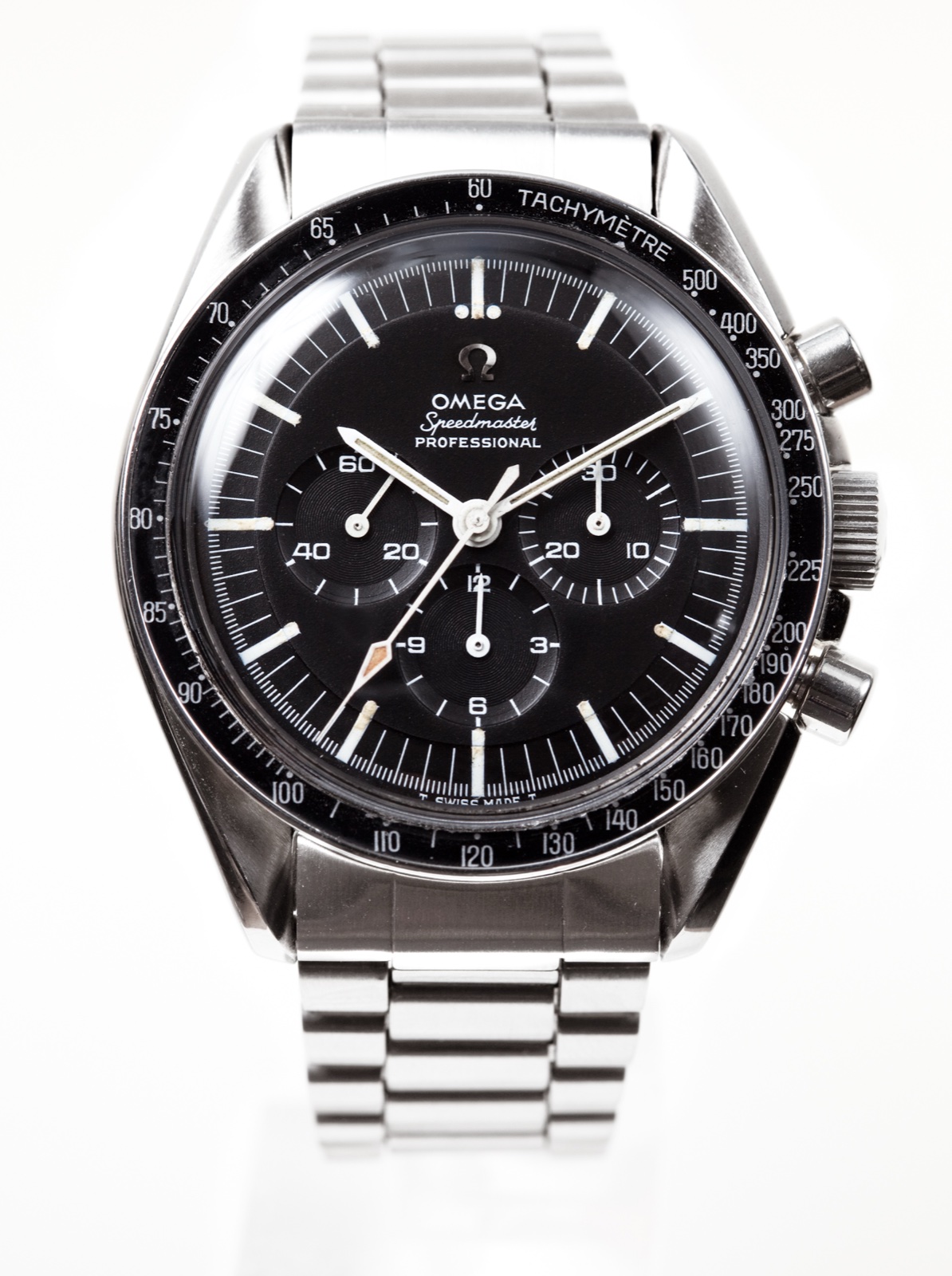
Edouard Heuer's company had the Carrera; Rolex had the Daytona later; Omega had the Speedmaster from 1957, with the CK 2915: the first chronograph with a tachymeter scale on the bezel rather than the dial. The 'Professional' designation didn't arrive until 1964 (CK 2998, then 105.002). The Speedmaster Pro 105.003 is the watch Wally Schirra wore on Mercury-Atlas 8 in 1962, the first Speedmaster in space, six years before the moon. None of these pre-Professional references is in the Grail Atlas catalog yet; they exist in collector markets where authentication and provenance dominate the price discovery and we don't have the inspection-map depth to honestly serve a buyer.
No references from this era in the catalog yet.
1968–1988 · The Pre-Moon and caliber-321 era
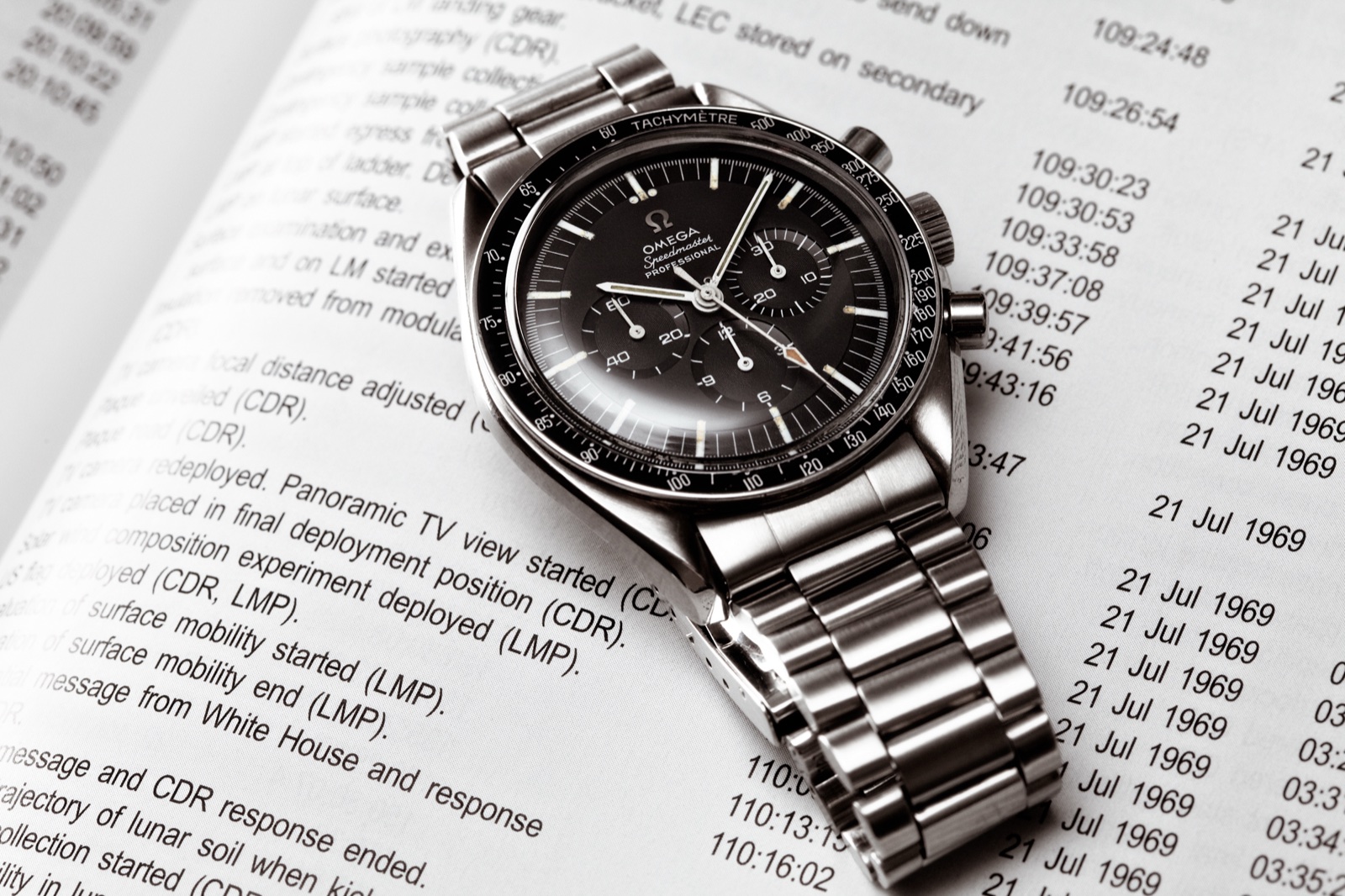
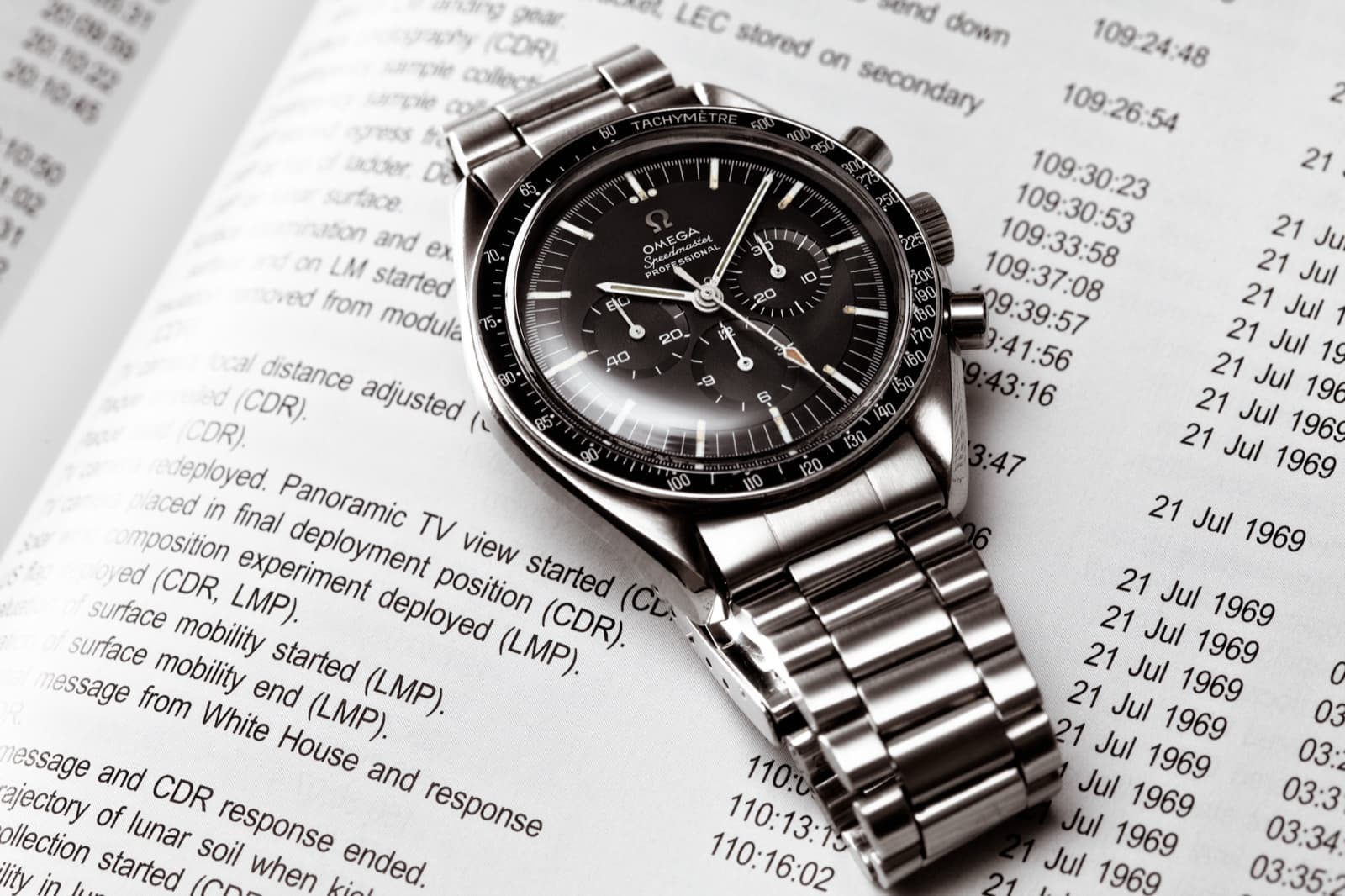
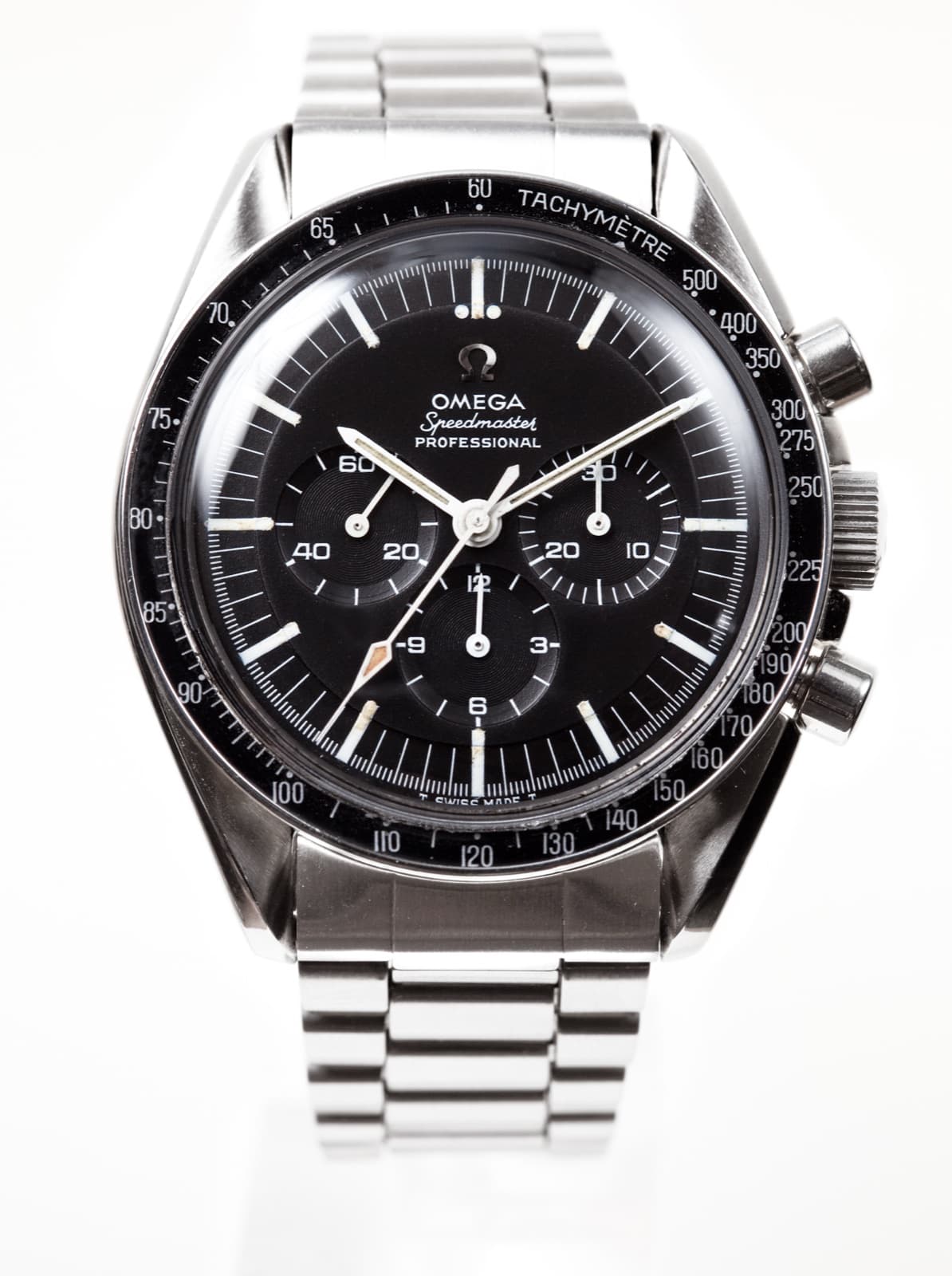
The 145.022 covers most of the production years (1968–1988) and spans both the caliber 321 (Lemania column-wheel) and the caliber 861 (cam-actuated successor, introduced 1969 to lower service cost). The 145.012 (1967–1968) is the transitional Pre-Moon: caliber 321 through its entire production, and the reference that most directly maps to Apollo 11 (the Speedmasters Buzz Aldrin and Neil Armstrong wore were 105.012 and 145.012 references). The 145.012 is the most-coveted Pre-Moon collectible.
1988–2009 · The Reduced era
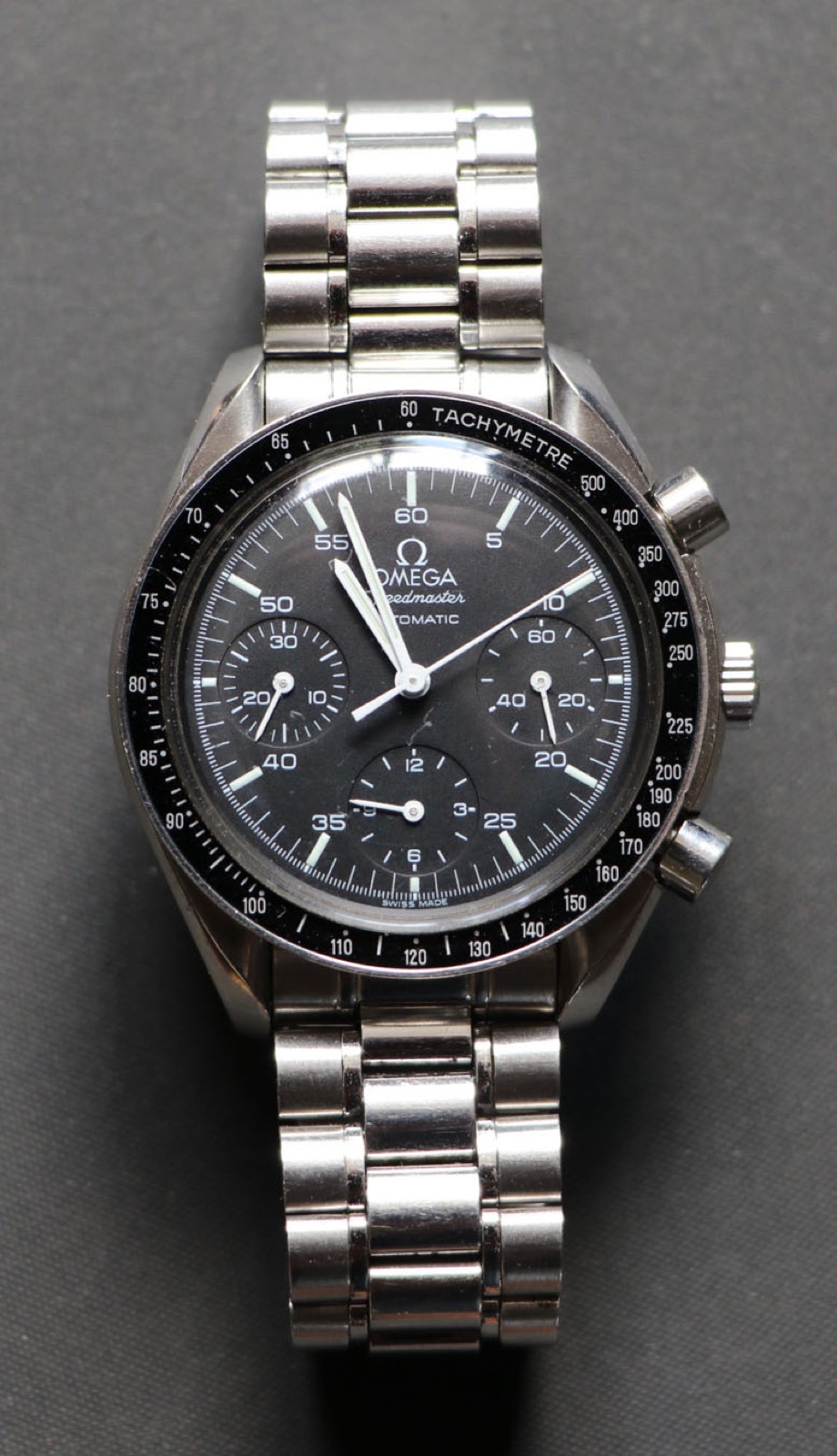
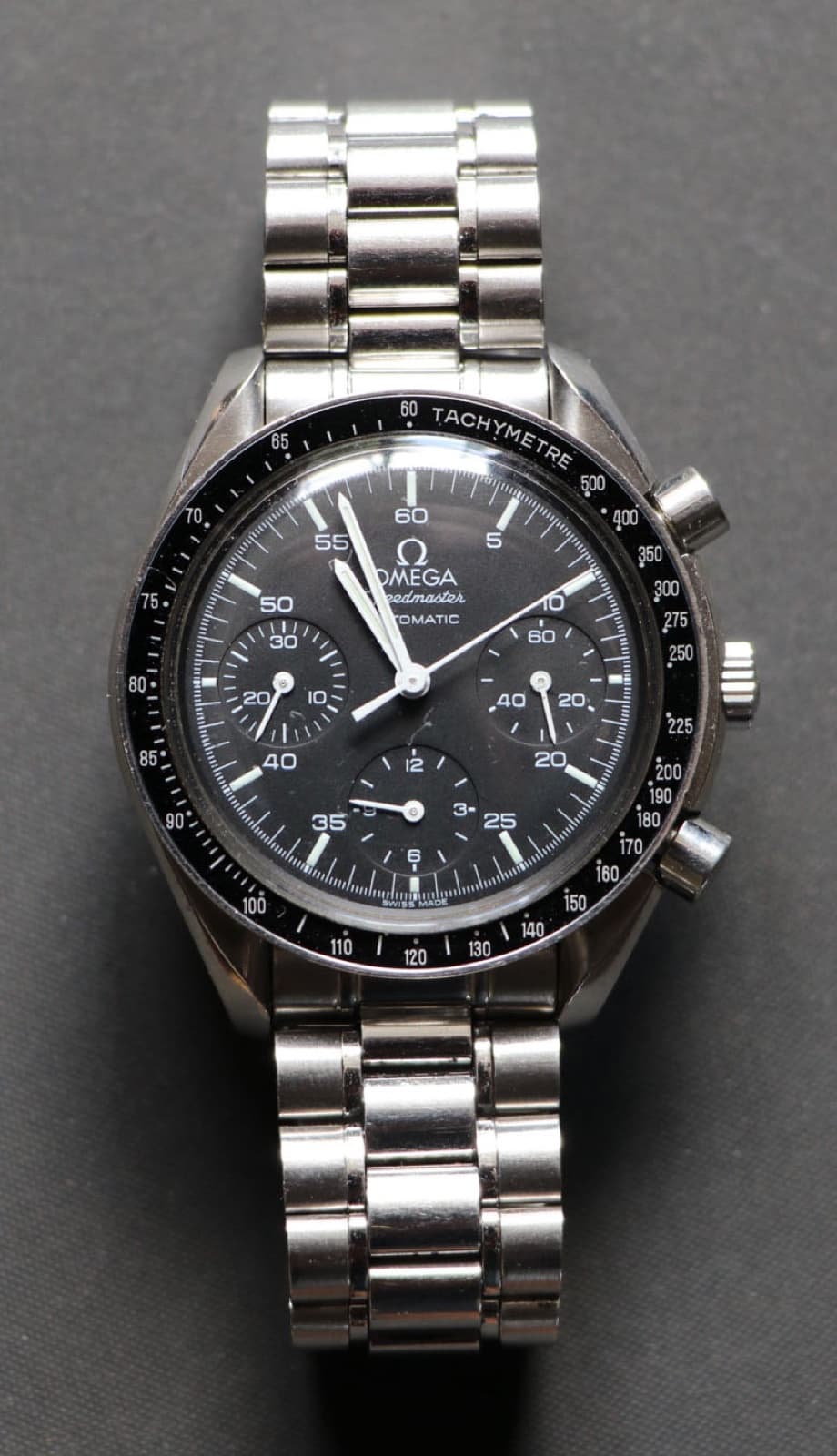
The Speedmaster Reduced (ref. 3510.50) gave a generation of collectors their first Omega chronograph at a price point and a wearable 39mm size. Automatic (caliber 3220, a Frédéric Piguet base with a Dubois Dépraz chronograph module) rather than hand-wind, which split it from the Moonwatch tradition, but the silhouette is unmistakably Speedmaster. The Reduced has been undervalued for years and has started to firm; it remains one of the most-honest entry-level vintage chronograph buys.
- OpenThe Speedmaster Reduced with its automatic movement offers the iconic silhouette at a fraction of the Professional price; undervalued because it lacks the NASA story.
1969–2021 · The caliber-1861 Moonwatch
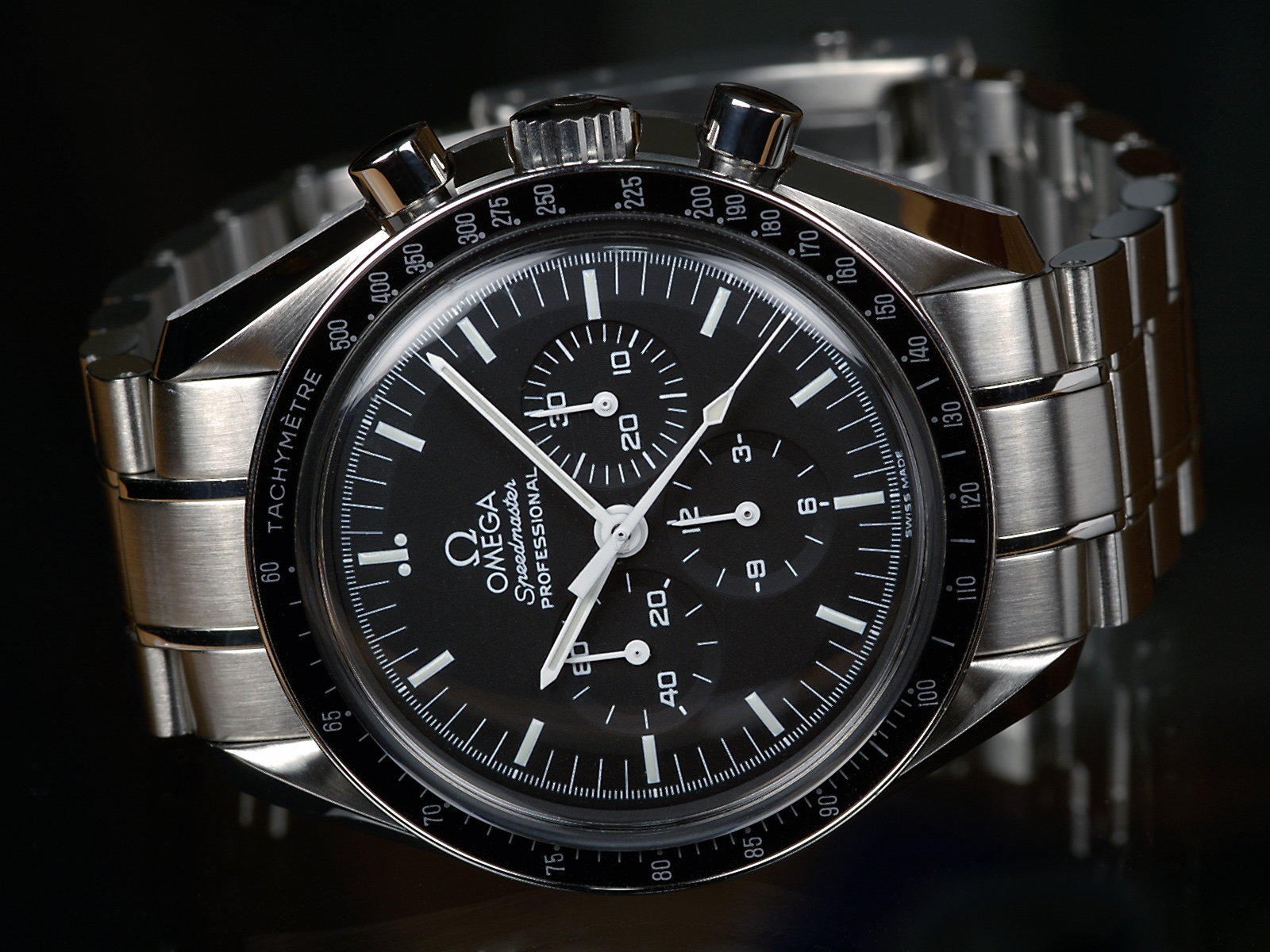
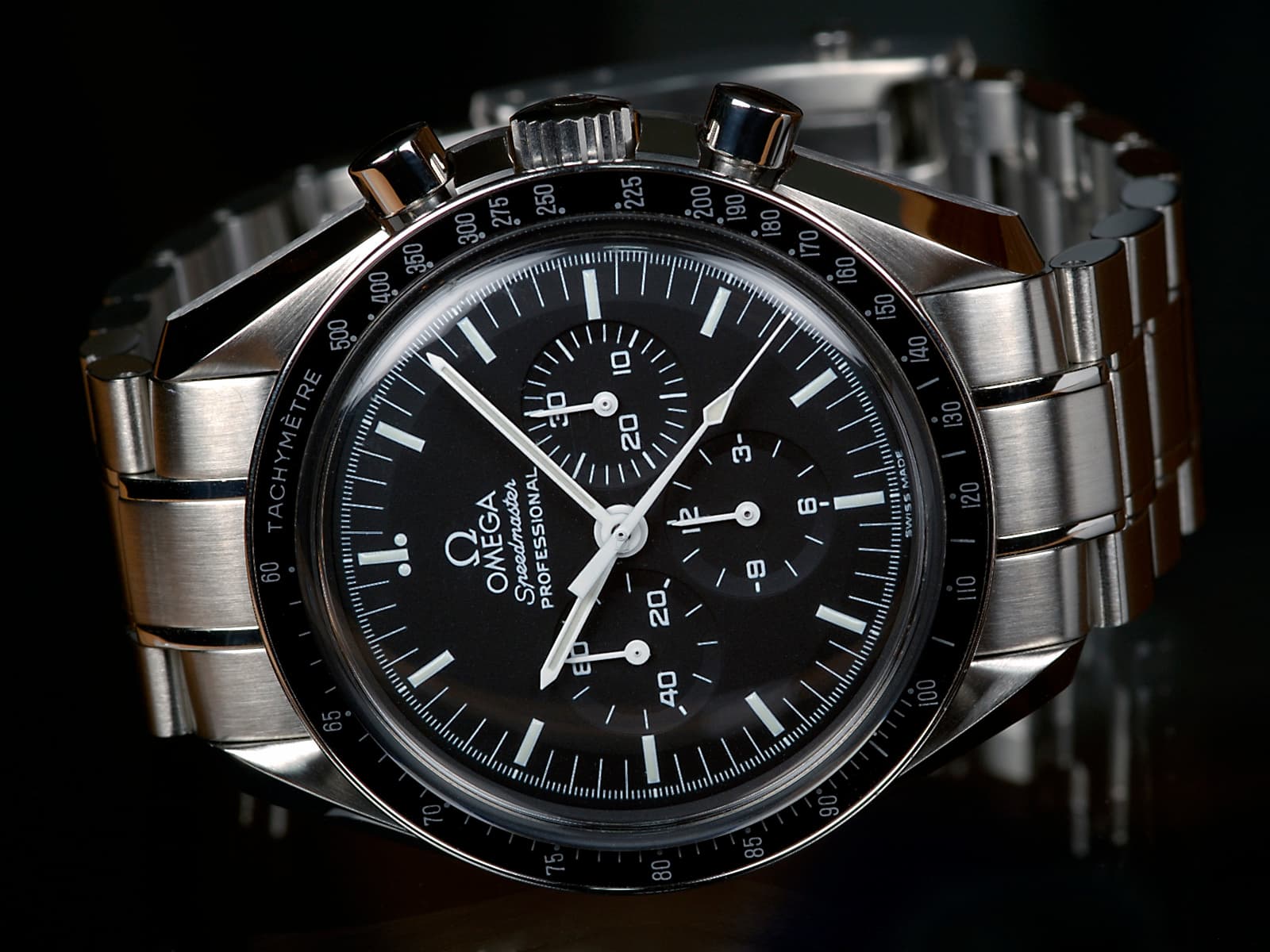
The caliber 861, then 1861 (1996 onwards, with rhodium-plated finishing and other refinements), is the movement most associated with the Speedmaster Professional Moonwatch. Continuously in production for over half a century. Hesalite crystal, manual wind, 42mm. The 1861-era Moonwatches, including the 'Sapphire Sandwich' display-back variant, the 'NASA Engraving' commemoratives, and the various limited editions, collectively define the modern Speedmaster collector market.
No references from this era in the catalog yet.
2021–present · The caliber-3861 Master Chronometer
The 3861 replaced the 1861 in 2021: the first co-axial Master Chronometer Moonwatch. METAS-certified to ±0/+5 sec/day and resistant to 15,000 gauss magnetic exposure. Silicon balance spring. Cosmetic changes are subtle: a stepped dial, applied Omega logo (vs printed), slimmer bezel ring. The hesalite-crystal variant retains the period-correct look; the sapphire-sandwich variant trades closer-to-original look for clarity. Current production; available at retail.
- OpenThe Cal. 3861 Moonwatch is the only watch NASA has ever certified for extra-vehicular activity and remains in continuous production, making it the single most historically documented wristwatch in circulation.
How to read this family
Three honest questions for any Speedmaster buyer:
- Caliber 321 or not? The 321 (pre-1969) is the column-wheel original; the 861/1861/3861 lineage is the cam-actuated successor. Both are robust; the 321 carries a collector premium that's only widening.
- Hand-wind or automatic? The Moonwatch tradition is hand-wind. The Reduced (3510.50) is automatic; the modular chronograph design is the trade-off that lowers the price and increases service risk.
- Hesalite or sapphire? Hesalite is the period-correct material on every Moonwatch through 2021. The sapphire-sandwich variant trades the period look for clarity. Resale data favors the hesalite.
Related families: Submariner · Daytona
Sub-lines
- OpenThe hand-wound, NASA-qualified line: the original Moonwatch. The 42mm hesalite-crystal canon is the reference design; sapphire and "First Omega in Space" branch off without leaving the Professional spec.
- OpenThe 39mm automatic Speedmaster made from 1988 to 2009. Smaller case, ETA 2892-A2 base with a Dubois-Dépraz 2020 chronograph module, not a Lemania-derived Moonwatch caliber.
- OpenThe modern tribute to the 1957 CK 2915: straight-lugged case, applied broad-arrow indices, no crown-guards. 40.5mm, Master Chronometer caliber 9906 in the 2022-onward generation. Not a Moonwatch spec; closer to a pre-Professional Speedmaster in form.
- OpenThe Master Chronometer Moonphase Chronograph: a 44.25mm Speedmaster with a high-resolution photo-printed moon disc at six and the cal. 9904 Co-Axial automatic chronograph. Distinct from the Professional Moonwatch line: thicker, automatic, dressier.
- OpenThe Racing branch of the Speedmaster: minute-track variants drawn from 1968 Speedmaster "racing dial" references, paired with the Master Chronometer cal. 9900 in the 2017-onward generation. 44.25mm automatic chronograph; the racing scale and applied tachymetric numerals separate it visually from the Professional.
References in this family
- OpenThe Cal. 3861 Moonwatch is the only watch NASA has ever certified for extra-vehicular activity and remains in continuous production, making it the single most historically documented wristwatch in circulation.
- OpenThe reference NASA certified for Apollo missions; every subsequent professional Speedmaster traces its lineage here.
- OpenThe Speedmaster Reduced with its automatic movement offers the iconic silhouette at a fraction of the Professional price; undervalued because it lacks the NASA story.
- OpenPre-Moon reference with Cal 321; the most collectible Speedmaster outside the earliest refs.
- OpenModern reissue faithful to the 1957 original proportions and Cal 321; draws serious collectors who want a 38.6mm Speedy with period-correct movement.
- Open
- Open
- Open
- Open
Which ref to buy
The Speedmaster is one of the most documented watch families in existence -- but between vintage, transitional, and modern refs, the right entry point depends entirely on what story you want to own.
- 1Open
Current professional moonwatch with cal. 3861 and METAS certification -- the canonical Speedmaster.
- The case for it:
- Cal. 3861 is the legitimate descendant of the Lemania 321/861/1861 lineage. METAS anti-magnetic rating adds real-world utility. This is the one to give and receive.
- Consider instead if:
- If historical authenticity matters more than modernity, the 145012 is the actual moonwatch movement in a period case.
- 2Open
Vintage cal. 12 era Speedmaster -- the pre-moon reference and a serious collector piece with documented NASA history.
- The case for it:
- The cal. 321 (Lemania 2310) era Speedmaster is the movement that went to the moon. Period-correct examples command strong prices and deserve them.
- Consider instead if:
- Service requirements are real with any 50+ year old movement. For daily wear, the current 3861 is a smarter choice.
- 3Open
2021 steel cal. 321 reissue -- limited production, correct Lemania movement history, and a modern case that wears the history honestly.
- The case for it:
- Omega re-tooled production of the cal. 321 for this release. It is not a vintage watch but it has the vintage movement. For collectors who want the movement without service risk, this is the answer.
- Consider instead if:
- Carries a significant premium over the current 3861 Moonwatch and is not meaningfully more useful. Purists prefer the actual vintage piece.
- 4Open
Late vintage cal. 861 Speedmaster -- the transitional reference and an excellent first vintage Speedy at accessible prices.
- The case for it:
- Cal. 861 (Lemania 1873 base) is robust, well-documented, and parts-available. Late 145022 examples can be found in excellent condition.
- Consider instead if:
- The 145022 sits between vintage desirability and modern utility without fully delivering either. The current ref does both its jobs better.
- 5Open
Heritage-inspired 38mm Speedmaster with cal. 3861 reduced -- honest in its reference to the 1957 original.
- The case for it:
- Smaller diameter addresses the single most common complaint about modern Speedmasters. The 38mm case is period-correct for the original design.
- Consider instead if:
- Niche sizing in a market that has broadly accepted 42mm. Secondary market is thinner than the main professional ref.
- 6Open
Modern co-axial chronograph Speedmaster with master chronometer rating and a sportier dial treatment.
- The case for it:
- Master chronometer certification, co-axial escapement, and better water resistance than the manual-wind professional.
- Consider instead if:
- Loses the manual-wind ritual and the space-program history. Most buyers who want a Speedmaster want the moonwatch DNA, not a co-axial sports version.
- 7Open
Moonphase complication added to the Speedmaster case -- technically impressive but divisive.
- The case for it:
- High technical content and a genuinely unusual configuration. For complication collectors who already own the basic Speedy.
- Consider instead if:
- The moonphase crowds the dial and changes the character of the watch. The Speedmaster is defined by its chronograph layout, not additional complications.
- 8Open
Quartz-era reduced-case Speedmaster -- for collectors who want the silhouette at a smaller diameter and lower price.
- The case for it:
- Genuinely smaller case than even the 57 ref, and prices on the secondary market are minimal. Accessible entry to the family.
- Consider instead if:
- Quartz movement removes the primary reason people collect Speedmasters. Very thin collector interest. Buy the 57 instead.
- 9Open
Barrel-shaped case reissue with cal. 861 heritage -- historically significant shape, narrow buyer appeal.
- The case for it:
- The barrel case is unlike anything else in the Speedmaster family and references a genuinely unusual piece of Omega history.
- Consider instead if:
- The barrel case is polarizing and the secondary market reflects it. Most Speedmaster buyers want the round case.
Rankings last reviewed 2026-06-06. Editorial perspective only. Not financial advice.