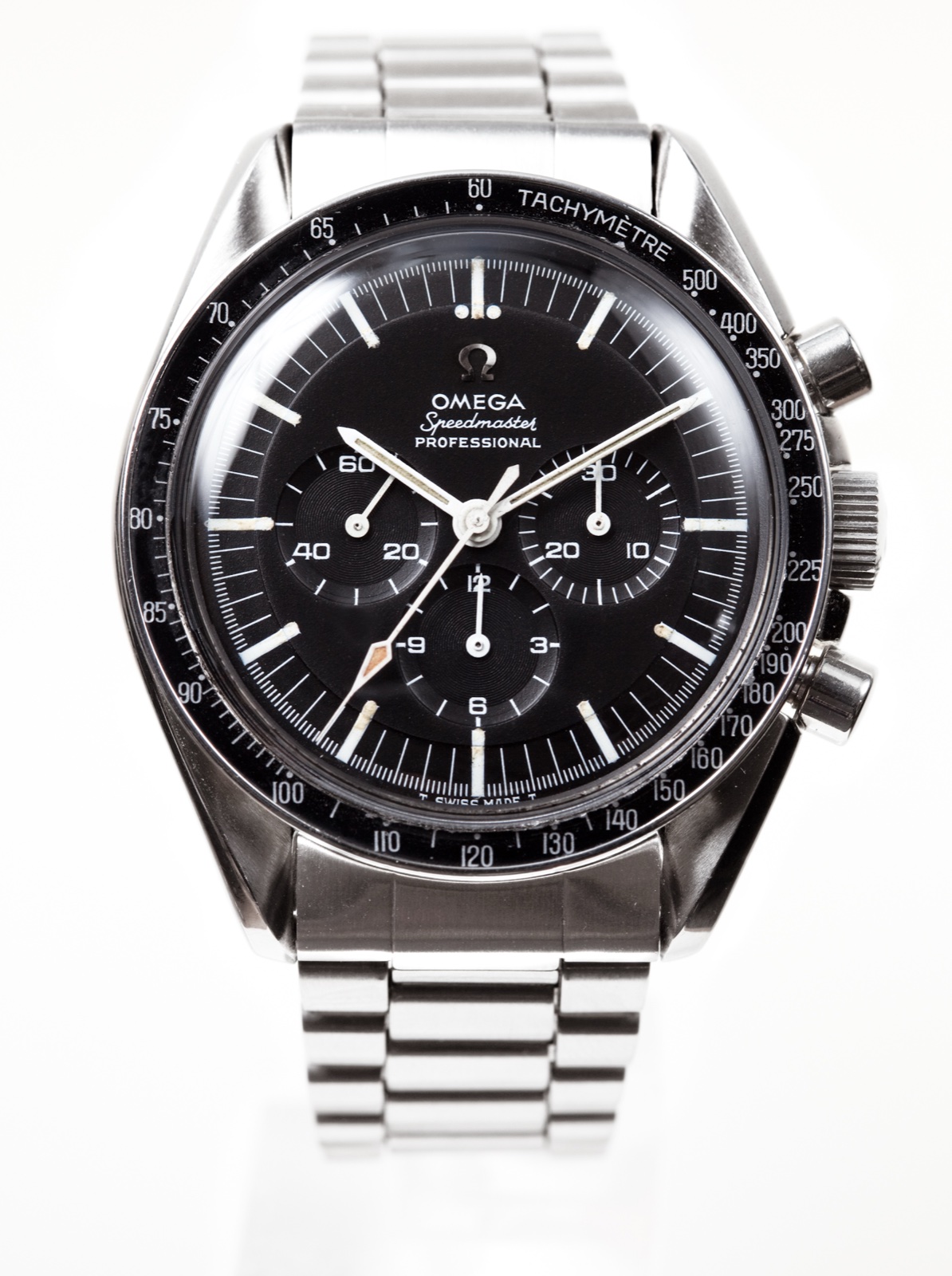
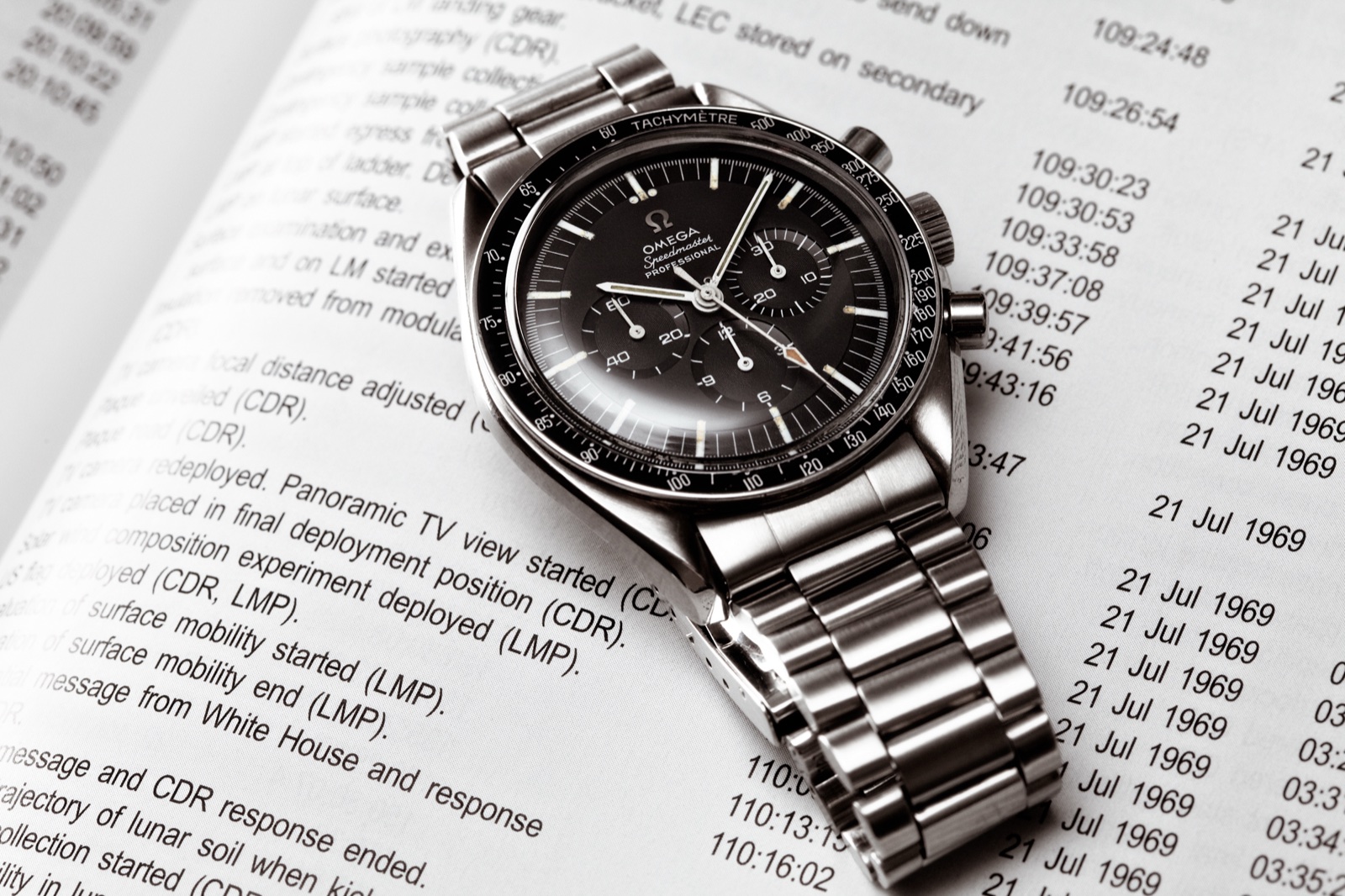
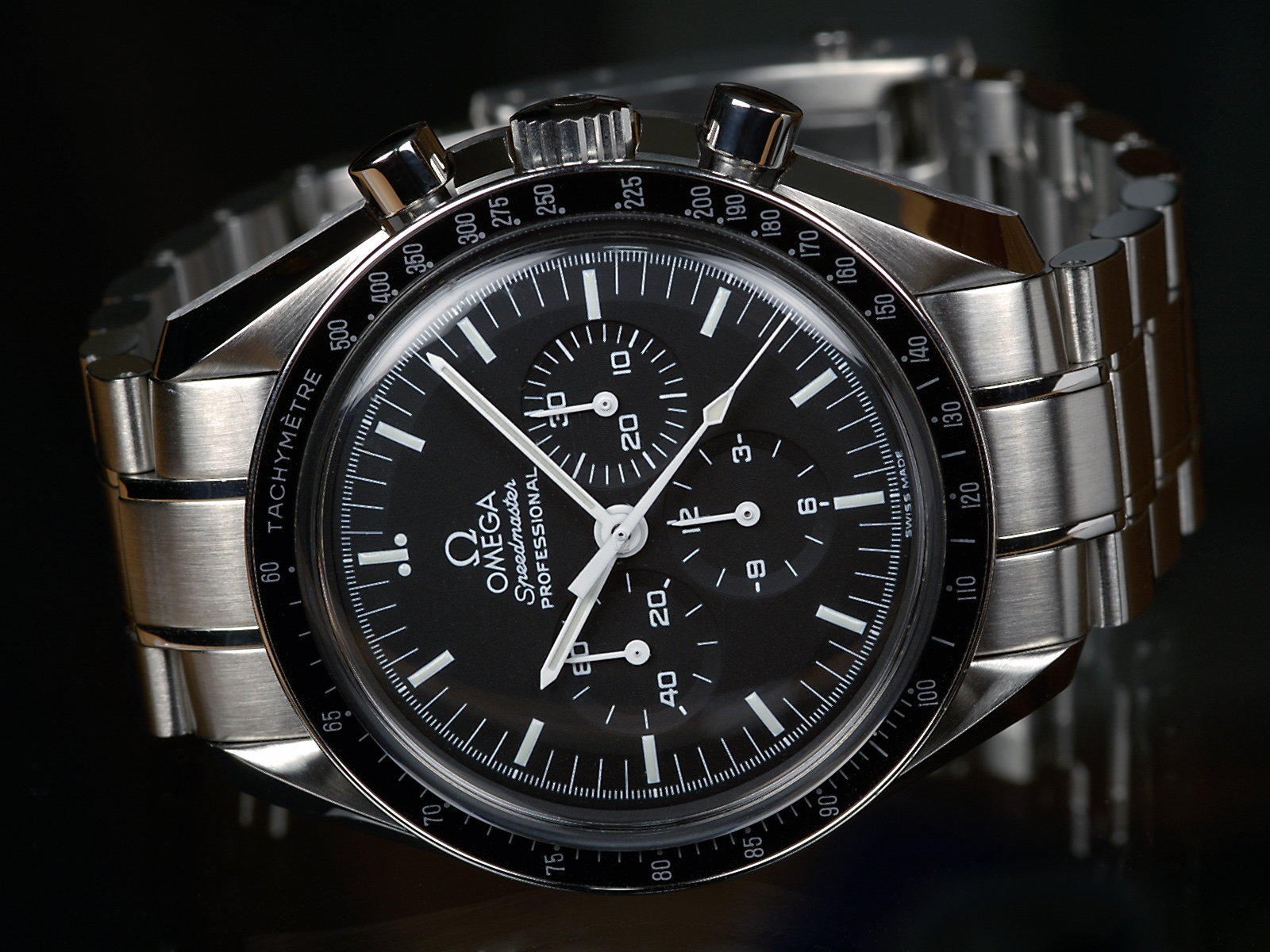
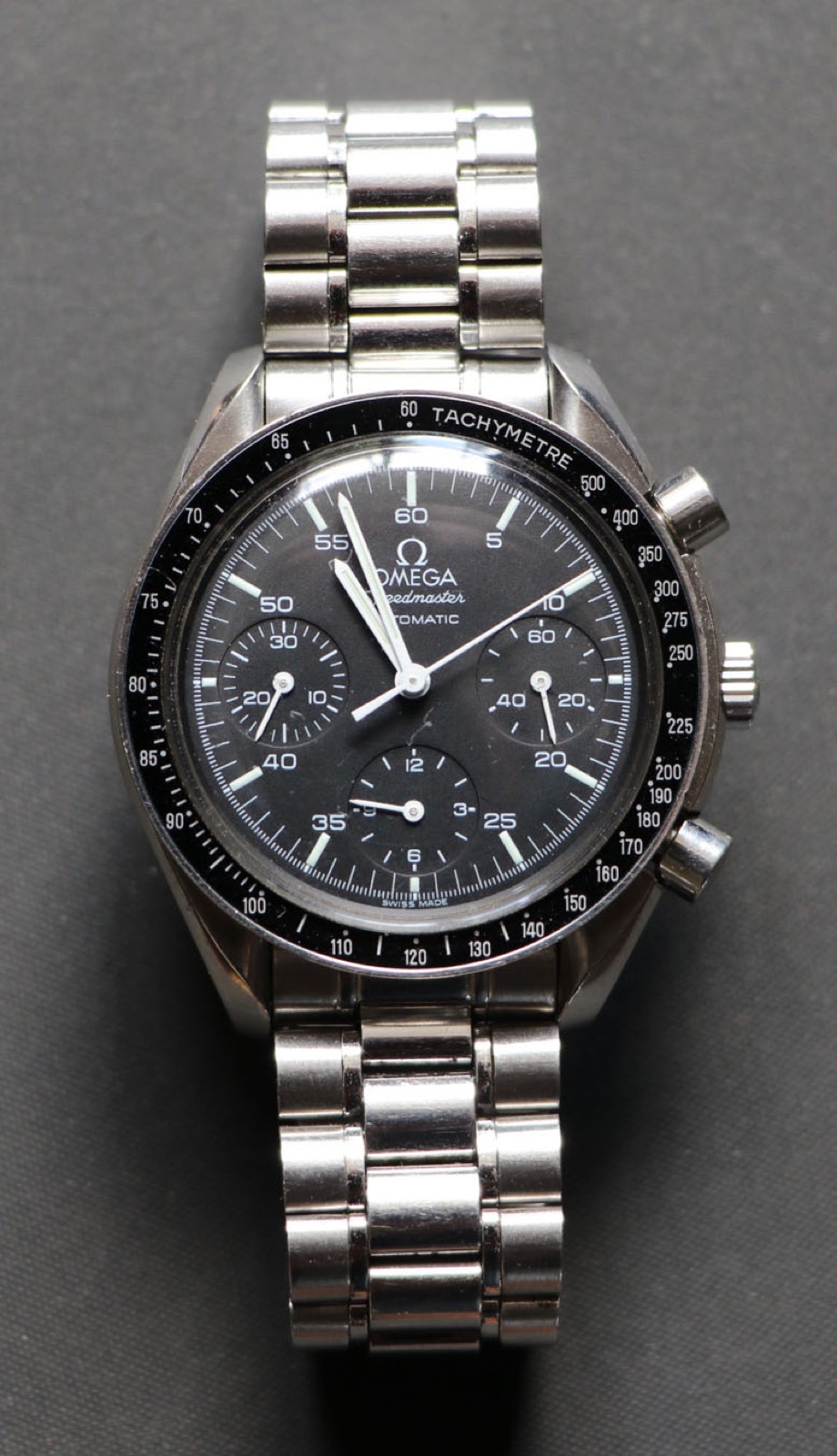
Live pricing is coming soon. Get notified when it is available for this reference.
Omega revived the calibre 321 in 2020 specifically for this reference, the first time the movement had been in production since 1968. At 39.7mm it wears smaller than the standard Moonwatch, and the sector dial and column-wheel chronograph give it a character the ETA/Sellita-era Speedmasters simply cannot match. If you want the historically correct Moonwatch movement in a new case, this is the only route.
The original cal 321 powered the Speedmaster through the Apollo missions before Omega replaced it with the cal 861 in 1968 for cost and reliability reasons. Omega reengineered the movement from scratch for the 60th anniversary launch in 2020, using a combination of reverse-engineering surviving examples and consulting with watchmakers who had worked on the original. The reference ships in two crystal variants: hesalite (ref. 311.30.40.30.01.001) faithful to the mission-era look, and sapphire crystal (311.30.40.30.01.002) for those who prioritize scratch resistance.
Both use the same case and movement; the hesalite version is generally considered the more historically coherent choice. Production has been steady since launch, with no major reference changes through 2026.
The cal 321 is a freshly produced movement but it is handwound, so inspect the crown and crown tube carefully, as forcing a wound-down crown is the most common user error. Check the chronograph operation through a full cycle: start, stop, and reset should all be crisp with no false starts or sluggish reset. The aluminum bezel insert on this reference will scratch; examine it under direct light for gouges or chips, since Omega's bezel inserts are not cheap to replace outside warranty.
At 50m water resistance this is not a tool watch, so look for evidence of crown-open exposure to moisture, particularly fogging on the hesalite crystal or condensation traces on the dial. Verify the sector dial printing is clean at the sub-register tracks, where any UV or chemical exposure shows as fading first.
New retail is around $13,000 USD, and grey market sits close to that, which is unusual for Omega; the cal 321 revival commands genuine respect and does not discount the way standard Moonwatches do. The hesalite variant holds slightly stronger collector interest because it reads as the honest tribute choice; sapphire versions are easier to find and trade at a modest discount to hesalite. Do not expect to flip this at a profit in the short term, but it has held value better than almost anything else in the Speedmaster line.
The calibre 321 is a column-wheel lever-set chronograph requiring a watchmaker with genuine experience on vintage-style column-wheel movements; not every authorized service center has staff comfortable with it yet. Omega recommends a service interval of 5 to 8 years, and factory service on this calibre runs $800 to $1,200 USD depending on parts needed. For a watch this new, service need is unlikely before 2027 unless the chronograph mechanism shows any hesitation or the power reserve drops noticeably short of the rated 48 hours.
Community + OSINT signals haven’t landed for this reference yet. We don’t publish a rating against zero signal — the number would mean nothing. Editorial body + caliber + market value still surface above; ratings appear once the signal corpus does.
The Cal. 321 Speedmaster is a premium reissue of the original Moonwatch movement; Franken-watches with the historic 321 movement fitted to incorrect cases are the primary authentication concern.
| Area | What to check | What is correct | Red flag |
|---|---|---|---|
| movement | Cal. 321 lateral clutch and column wheel via caseback | Exhibition caseback shows Cal. 321; distinct column wheel (star-shaped, signed "321"); lateral clutch mechanism; "Omega" signed balance cock; 18,000bph (slower tick than modern Speedmaster variants) | Cal. 1861 or 1863 in claimed 321 case (different escapement geometry); cam-lever clutch; unsigned column wheel; 21,600bph tick rate (too fast for 321) |
| case |
| 40mm 1957 trilogy case dimensions |
| 40mm case diameter consistent with original 1957 Speedmaster; lug-to-lug 47mm; correct lug shape (slightly less pronounced than later generations); case thickness appropriate for the manual-wind Cal. 321 |
| Case diameter outside 39.5-40.5mm; pronounced lug shape of the 105-series case generation; wrong thickness for the movement |
| dial | Dial print and sub-register layout | Three sub-registers at 3, 6, and 9; "Calibre 321" text on dial below 12; "Co-Axial Master Chronometer" text; dial color and texture consistent with 2020 reissue specification | "Calibre 321" text absent; sub-register layout inconsistent with the 321 movement's chronograph architecture; dial from a different Speedmaster generation fitted to claimed 321 case |
| hands | Chronograph seconds jump on start | Zero jump on chronograph start; lateral clutch engages without seconds hand deflection; smooth engagement feel | Visible seconds hand jump on chronograph start; this definitively indicates a cam-lever clutch (Cal. 1861 or similar), not the lateral clutch of the genuine Cal. 321 |
| caseback | METAS certification and Cal. 321 text | "Master Chronometer Certified" text; "METAS" present; "Cal. 321" text on movement visible through exhibition caseback; "Omega" medallion on caseback | No Cal. 321 text; solid caseback; no METAS certification; caseback serial inconsistent with dial serial |