

The Rolex Daytona | family history
Sixty years of the Cosmograph. The Daytona has gone from undersold novelty (1963) to the most-watched modern Rolex sport reference. A walk through each era and the references the catalog currently tracks in their actual market context.
Rolex’s racing chronograph. Defined by the tachymeter bezel and three subdials; the most-collected modern Rolex line and the one with the deepest price stratification across eras.
1963–1988 · The manual-wind Daytonas (6239, 6240, 6262, 6263, 6265)
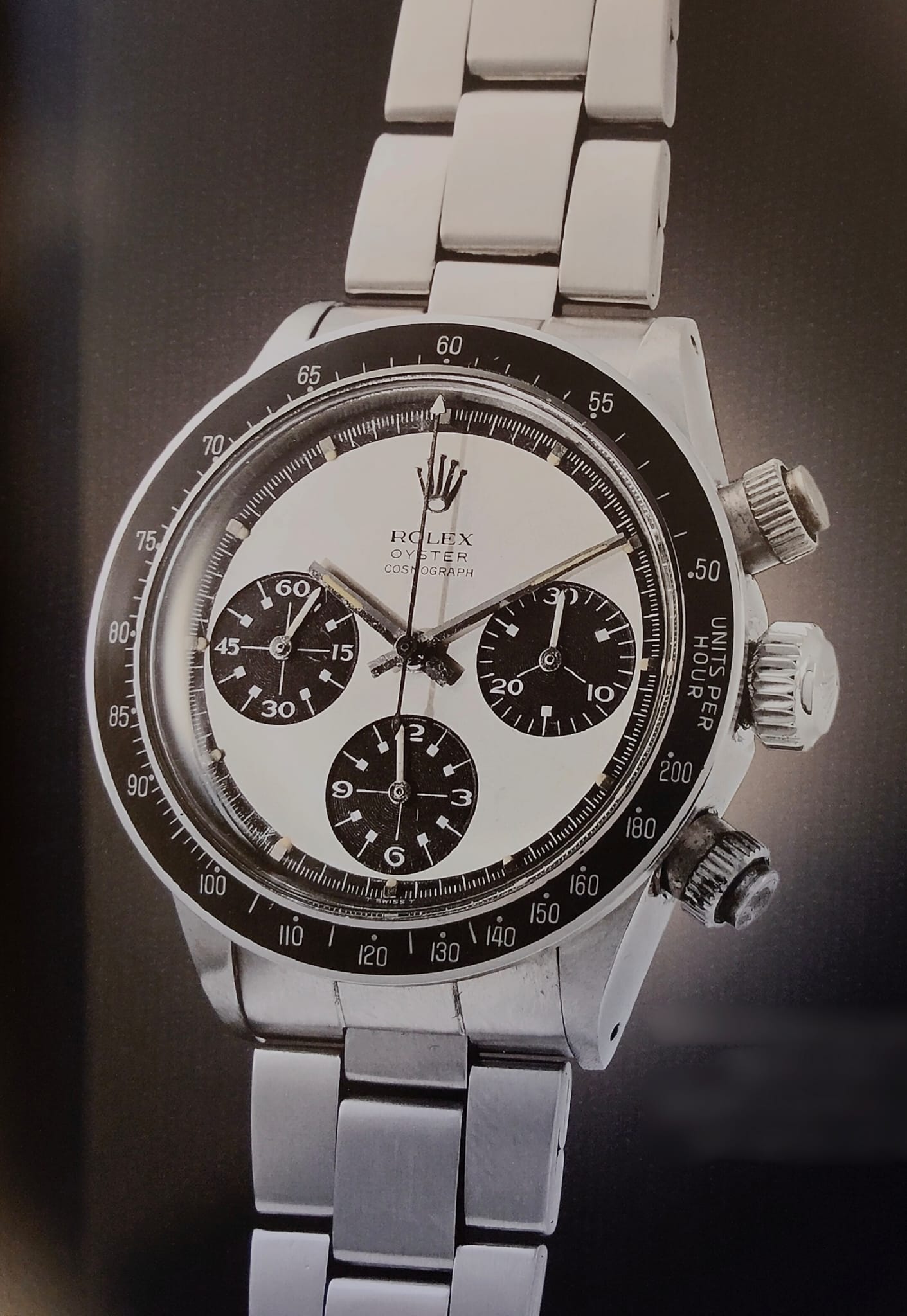
Rolex launched the Cosmograph in 1963 (ref. 6239) as a tool watch for race-track timing, with the tachymeter scale moved from the dial to the bezel for legibility at speed. The line ran on Valjoux 72 movements through 1988. The Paul Newman 'exotic dials' (1969–1973), with three-color sub-registers and square-tipped indices, were a low-selling factory option that became, after Newman's death in 2008, the most-collected vintage Rolex variant in the world. These references are six-figure provenance markets; the Grail Atlas catalog doesn't serve buyers at this depth yet.
No references from this era in the catalog yet.
1988–2000 · The Zenith-era Daytona, the 16520
Rolex released the 16520 in 1988: the first automatic Daytona, with a Rolex-modified Zenith El Primero base (Rolex caliber 4030). The 16520 took the Daytona from an undersold curiosity to one of the most-collected modern Rolex sports chronographs. Dial variants and the Patrizzi tropical sub-register are the headline collector ladder. Production ended in 2000 when Rolex introduced the in-house caliber 4130.
- OpenThe first Daytona with an automatic movement; patina-dialed examples from early production are known as "Zenith Daytona" references by serious collectors.

2000–2016 · The 116520: in-house caliber 4130
The 116520 (2000–2016) introduced the in-house caliber 4130: fewer parts than the Zenith-based 4030, longer service intervals, vertical-clutch chronograph. The case retained the 16520's silhouette; the dial laydown was largely unchanged (black or white). The 116520 is the bridge between the Zenith-era's enthusiast-darling status and the ceramic-bezel modern era; not yet in the Grail Atlas catalog.
No references from this era in the catalog yet.
2016–2023 · The 116500LN: ceramic bezel
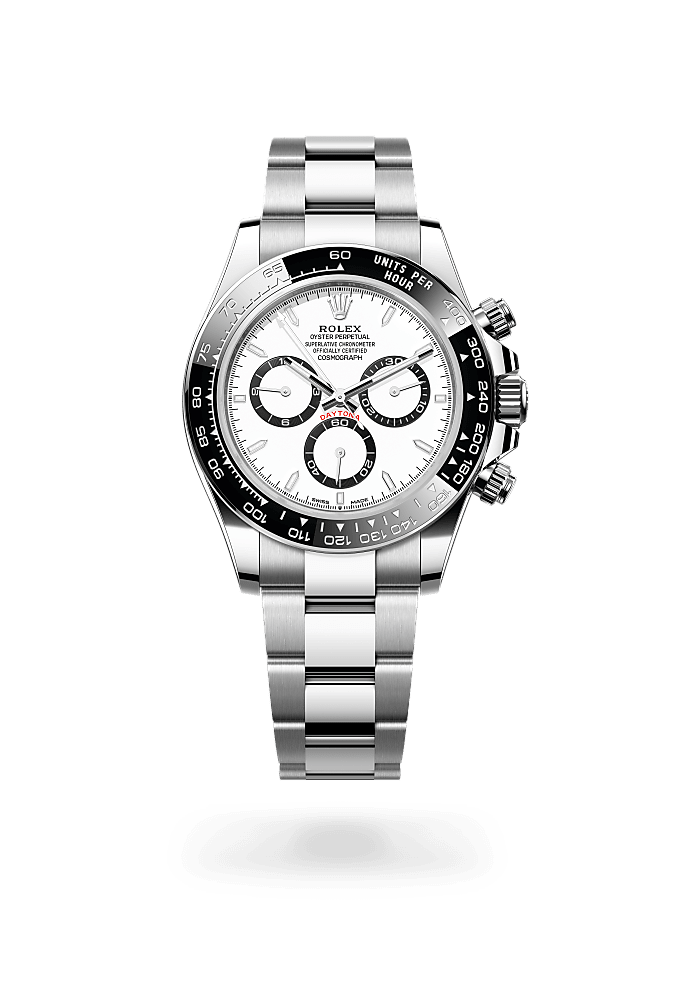
Rolex moved the Daytona to a ceramic bezel insert in 2016: the 116500LN. Same case + caliber 4130 as the 116520, but the ceramic bezel resists scratches and fading. Demand has been intense; Rolex's allocation discipline meant secondary-market prices spiked through 2021 to multiples of retail before correcting through 2024. Still trades meaningfully above retail.
No references from this era in the catalog yet.
2023–present · The 126500LN: caliber 4131
The current Daytona (126500LN) updated the case to slightly slimmer lugs, introduced the caliber 4131 (Chronergy escapement, longer reserve), and refined the dial layout. Retail launched in 2023; secondary market remains substantially above MSRP. The case retains the 40mm spec but wears similar to the 116500LN.
No references from this era in the catalog yet.
How to read this family
Three honest questions for any Daytona buyer:
- Pre-Zenith, Zenith, or in-house? The pre-Zenith manual-winds are vintage-only and trade on provenance. The Zenith-era 16520 is the bridge: high-prestige modern with a historically interesting base movement. The in-house caliber 4130 (116520 onwards) is the modern Daytona; caliber 4131 is the current production.
- Aluminium or ceramic bezel? Aluminium fades and is harder to replace; ceramic is scratch-resistant and the modern standard. The 16520 (aluminium) carries the vintage premium; the 116500LN / 126500LN (ceramic) carry the modern demand premium.
- Steel or precious metal? Steel Daytonas are the most-collected, but the gold and platinum variants are not 'lesser' watches; they trade in their own markets at multiples higher than steel. Stick to steel unless you have specific reasons.
Related families: Submariner · Speedmaster
Sub-lines
- OpenThe 1988–2000 generation, powered by a heavily-modified Zenith El Primero caliber (Rolex 4030). The most-traded vintage-adjacent Daytona.
- OpenThe 1963–1988 manual-wind generation (refs 6239, 6262, 6263, 6265). Valjoux 72 and 727 base calibers, smaller 37mm cases: the vintage Daytona canon.
- OpenThe 2000-onward generation built on Rolex’s in-house cal. 4130 (and the 2023-onward cal. 4131). 40mm Oyster case, Cerachrom-bezel references from 2016: the modern Daytona canon. 116500LN (white-panda steel) and 116515LN (rose gold on Oysterflex) are the most-traded entries.
References in this family
- OpenThe first Daytona with an automatic movement; patina-dialed examples from early production are known as "Zenith Daytona" references by serious collectors.
- OpenThe manual-wind pre-Zenith Daytona; Paul Newman exotic-dial examples within this reference number are among the most valuable wristwatches in any auction.
- Open
- OpenEverose Daytona on Oysterflex is the most wearable Daytona and trades at a meaningful secondary discount to the steel 116500LN, representing better value for buyers indifferent to metal.

Which ref to buy
The Daytona is the most oversubscribed watch at retail and the most speculated-upon on the secondary market. Every configuration has a different collector thesis.
- 1Open
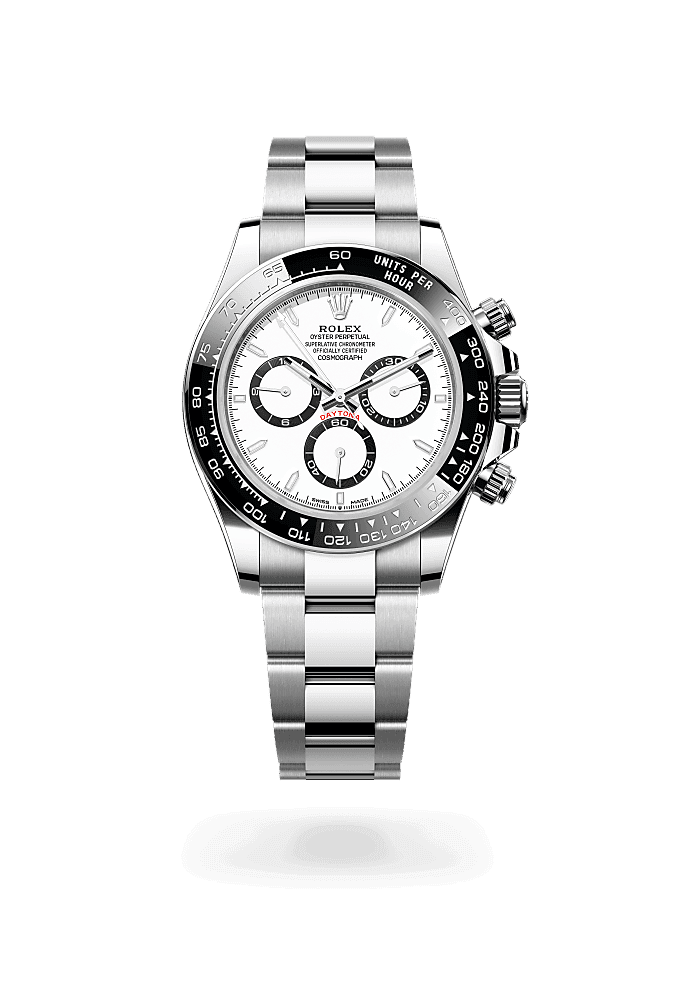
The ceramic bezel Daytona, white dial -- the dominant configuration of the modern era.
- The case for it:
- Cal. 4130 (in-house column wheel, vertical clutch, redesigned architecture), 40mm Oyster case, Cerachrom bezel. The panda dial (white with black subdials) is the most sought configuration. Secondary premiums have compressed from 2021 peaks but remain above retail. The Daytona is the single most requested watch at Rolex ADs globally.
- Consider instead if:
- Paying secondary premium for a watch you cannot service yourself and will not wear daily is a specific collector choice. The premium compresses further over time as supply increases. Patience at retail is the correct play if you can manage a long wait.
- 2Open
The Zenith-era Daytona -- the transitional reference between manual-wind and in-house Rolex movements.
- The case for it:
- Cal. 4030 (modified Zenith El Primero), the most technically accomplished movement in any pre-4130 Daytona. Strong collector community, well-documented dial variants. Trades at a meaningful discount to the in-house era while retaining genuine horological interest.
- Consider instead if:
- The 4030 requires more frequent service than the 4130 and parts are getting scarcer. A good example is fine for decades, but factor servicing into the cost of ownership.
- 3Open
The vintage manual-wind Daytona -- the grail configuration for purist collectors.
- The case for it:
- Caliber 727 (manually wound Valjoux 72 base), exotic dials including Paul Newman variants, the foundational Daytona. The 6263 is the watch that launched Daytona collecting as a serious discipline. A verified original example is a generational asset.
- Consider instead if:
- This is vintage buying at the most expertise-demanding level. Paul Newman dials require authentication from known specialists. Budget for authentication alongside the purchase price.
- 4Open
Everose gold on Oysterflex -- the Daytona for buyers who want precious metal without the full gold bracelet weight.
- The case for it:
- The Everose/Oysterflex combination is lighter and more sport-appropriate than the full gold bracelet configuration. Distinct from the steel Daytona in character and collector base.
- Consider instead if:
- Rose gold Daytonas have a narrower resale market than steel. If you are thinking about this as an investment or as a highly liquid asset, the 116500LN has a much deeper secondary market.
Rankings last reviewed 2026-06-06. Editorial perspective only. Not financial advice.