Live pricing is coming soon. Get notified when it is available for this reference.
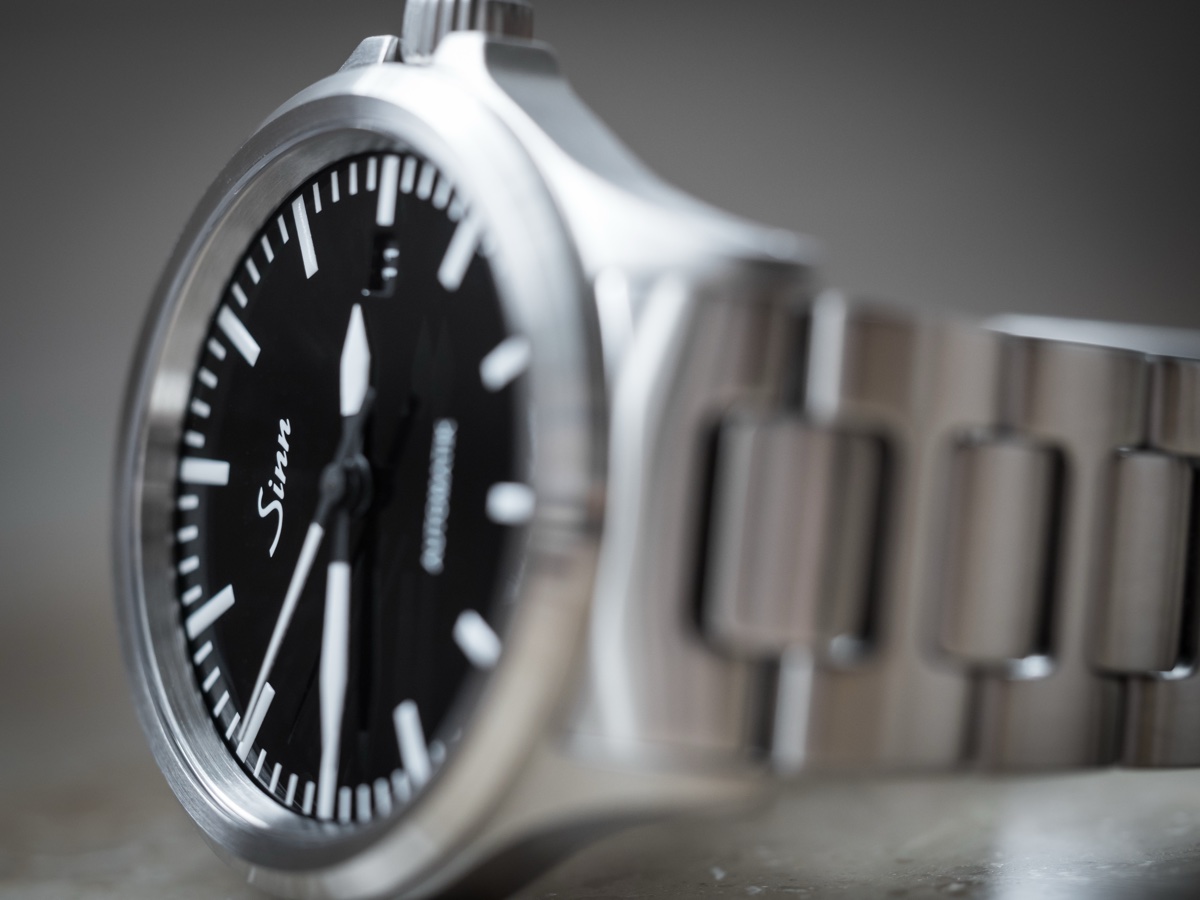
The U1 is built from the same submarine steel used in actual submarine hulls, hardened to 1,400 N/mm² , roughly three times the hardness of standard 316L. Sinn's point is not marketing: the material genuinely resists scratching in a way that changes how a dive watch wears over years. At 44mm with 1000m water resistance, it is a serious tool watch that earns that description.
Sinn introduced the U1 in 1997 as the first watch to use submarine steel sourced from German U-boat construction. The material choice came directly from Sinn's philosophy of applying purpose-built industrial materials to watchmaking, rather than treating specification as a marketing exercise. The 44mm case with helium escape valve and screw-down crown gave it legitimate dive credentials from the start.
The line has remained in continuous production and has expanded to include variants with different dials and treatments, but the core formula has not changed. It remains one of the clearest expressions of what Sinn actually is as a manufacturer.
The 44mm diameter and roughly 48mm lug-to-lug measurement make this a poor fit for smaller wrists , check before buying. The Sellita SW200-1 movement inside is competent and reliable but unremarkable; buyers expecting movement quality to match case quality will be disappointed. Dial condition matters on the used market: the textured surface on earlier examples can show wear around the crown area and pushers.
Some early examples lack the AR coating on later production, which affects legibility under certain lighting. Verify the helium escape valve and crown seals if buying used and intending to dive; pressure-test documentation from a watchmaker is worth requesting.
New U1s sell in the $1,500 to $1,800 range depending on dial configuration and retailer. The used market is stable and relatively liquid, with clean examples in the $1,100 to $1,400 range. Unlike many watches in this price band, the U1 holds value well because the submarine steel case genuinely does not scratch the way standard steel watches do, keeping used examples in better cosmetic condition.
The Sellita SW200-1 is a well-supported movement with widely available parts and no shortage of watchmakers who can service it. Manufacturer-recommended service interval is around five years, though the movement is not demanding. For any example intended for actual diving, have the case pressure-tested by a qualified watchmaker before use.
A direct ETA 2824-2 equivalent produced after ETA restricted OEM supply. Parts are interchangeable in many areas, and service costs mirror the 2824.
Community + OSINT signals haven’t landed for this reference yet. We don’t publish a rating against zero signal — the number would mean nothing. Editorial body + caliber + market value still surface above; ratings appear once the signal corpus does.
Submarine steel cannot be mirror-polished; any U1 with a polished case has been incorrectly serviced.
| Area | What to check | What is correct | Red flag |
|---|---|---|---|
| case | Submarine steel matte texture | Uniform matte surface texture specific to submarine steel alloy; characteristic appearance distinct from standard stainless | Mirror-polished surface; case incorrectly polished; surface texture inconsistent with submarine steel |
| caseback | Caliber identity | Sellita SW200-1 architecture; Sinn serial number verifiable; U1 designation on caseback | Non-Sellita movement; incorrect caliber; serial inconsistent with U1 production |
| crown | Screw-down crown | Crown screws down flush; dive rating requires correct engagement | Crown does not screw down; cross-threading; crown tube damage |