Live pricing is coming soon. Get notified when it is available for this reference.
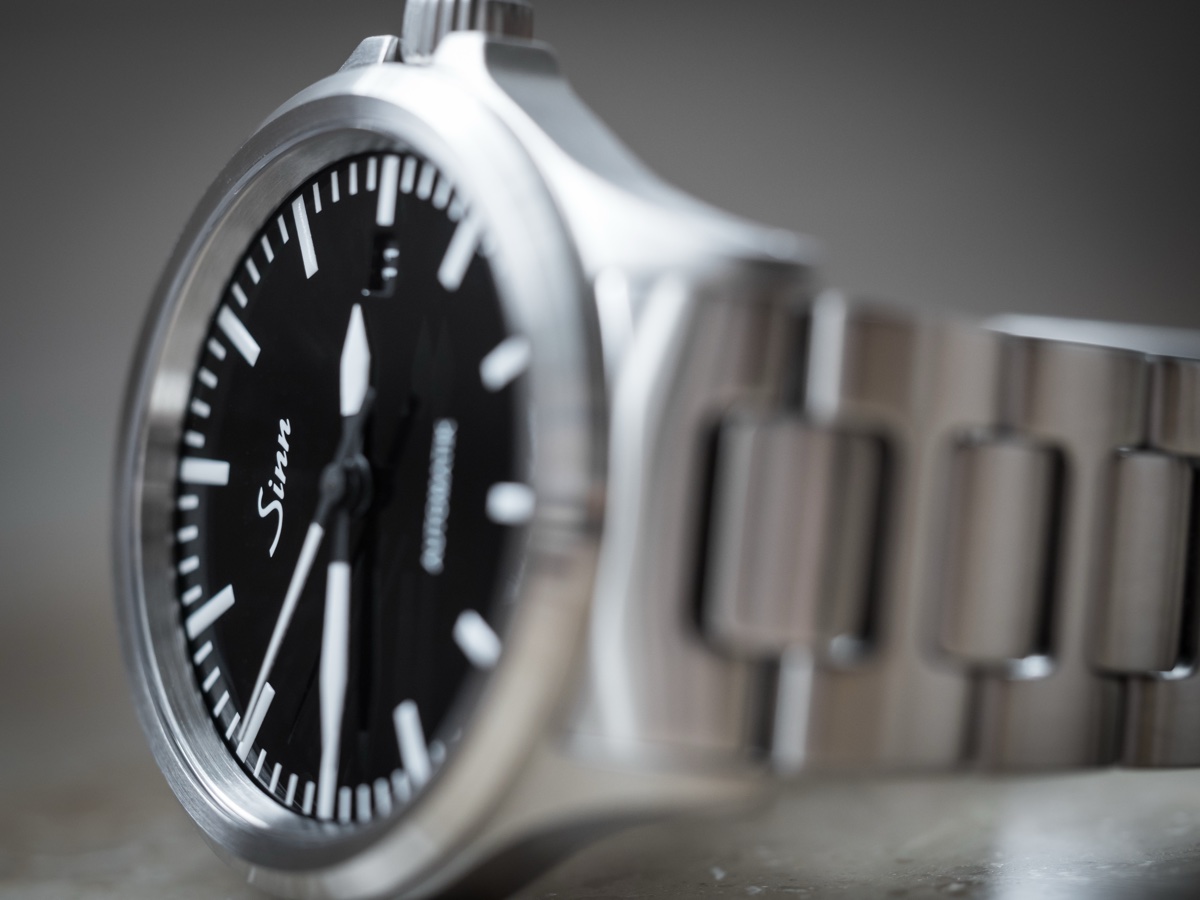
The 556 I is Sinn's honest entry point: a no-frills German field watch that delivers 200m water resistance, a clean three-hand dial, and a movement you can service anywhere for under $1,000. The "I" suffix signals basic steel without any of Sinn's proprietary hardening treatments, which keeps the price accessible and the case far easier to refinish if it gets scratched. Thirty-eight and a half millimeters puts it at the smaller end of modern tool watches, which is a genuine advantage for buyers who find the industry's current 40-42mm obsession too large.
Sinn introduced the 556 series in 2002 as a distillation of its field-watch philosophy at an approachable price. The reference number structure matters: 556 identifies the family, and the suffix letter identifies the case material and treatment, with "I" denoting untreated stainless steel. Sinn built its reputation making instruments for pilots and divers, and the 556 carries that functional DNA without the case hardening and argon gas systems that make the Frankfurt-made tool watches significantly more expensive.
The 38.5mm diameter traces back to an era when that was a normal size for a daily-wear field watch rather than a niche specification. Production has continued largely unchanged since launch, which speaks to how well the original design worked.
The Sellita SW200-1 inside is a competent movement, but buyers expecting COSC accuracy or anything near Sinn's in-house finishing should recalibrate. Untreated steel scratches more readily than the Tegiment-hardened variants in the 556 line, so the "I" suffix is a cost trade-off that has real-world implications if you wear it hard. The bracelet quality is adequate but not a strong point; many owners move to an aftermarket strap fairly quickly.
The dial variants across the 556 family (A, I, S, Ti) can look nearly identical in photos, so verify the reference suffix before buying secondhand since prices vary. Water resistance is rated to 200m, but the crown is not screw-down, so verify the gasket condition before any serious water exposure on a used example.
New pricing on the 556 I sits in the $750-$950 range depending on configuration, which makes it one of the few German-made mechanical watches with legitimate tool-watch credentials at that price. The secondhand market reflects that position: used examples trade in the $500-$700 range and hold reasonably steady because the reference has a clear reputation and a transparent value proposition. There is no significant collector premium here, which is exactly the point for a buyer who wants utility over status.
The Sellita SW200-1 is a licensed ETA 2824-2 derivative with broad service support. Any competent independent watchmaker can service it, and parts availability is excellent globally. Sinn recommends a service interval of around five years for heavily worn examples, though the movement is robust enough that many owners stretch longer without issues.
A direct ETA 2824-2 equivalent produced after ETA restricted OEM supply. Parts are interchangeable in many areas, and service costs mirror the 2824.
Community + OSINT signals haven’t landed for this reference yet. We don’t publish a rating against zero signal — the number would mean nothing. Editorial body + caliber + market value still surface above; ratings appear once the signal corpus does.
Verify Sinn serial number via sinn.de for production details; Ar-dehumidifying capsule is standard, not a premium feature.
| Area | What to check | What is correct | Red flag |
|---|---|---|---|
| caseback | Caliber identity and Sinn serial | Sellita SW200-1 architecture; Sinn serial number verifiable at sinn.de | Non-Sellita or non-ETA movement; serial number absent or inconsistent with production records |
| case | Tegimented surface | Matte tegimented steel finish; light surface marks acceptable; no deep gouges | Deep scratches from hard-object damage; polished case on a tegimented reference |
| crystal | Anti-reflective coating | Crystal with intact AR coating on both sides; minimal reflection when viewed at angle | Strong reflections indicating lost AR coating; scratched crystal needing replacement |