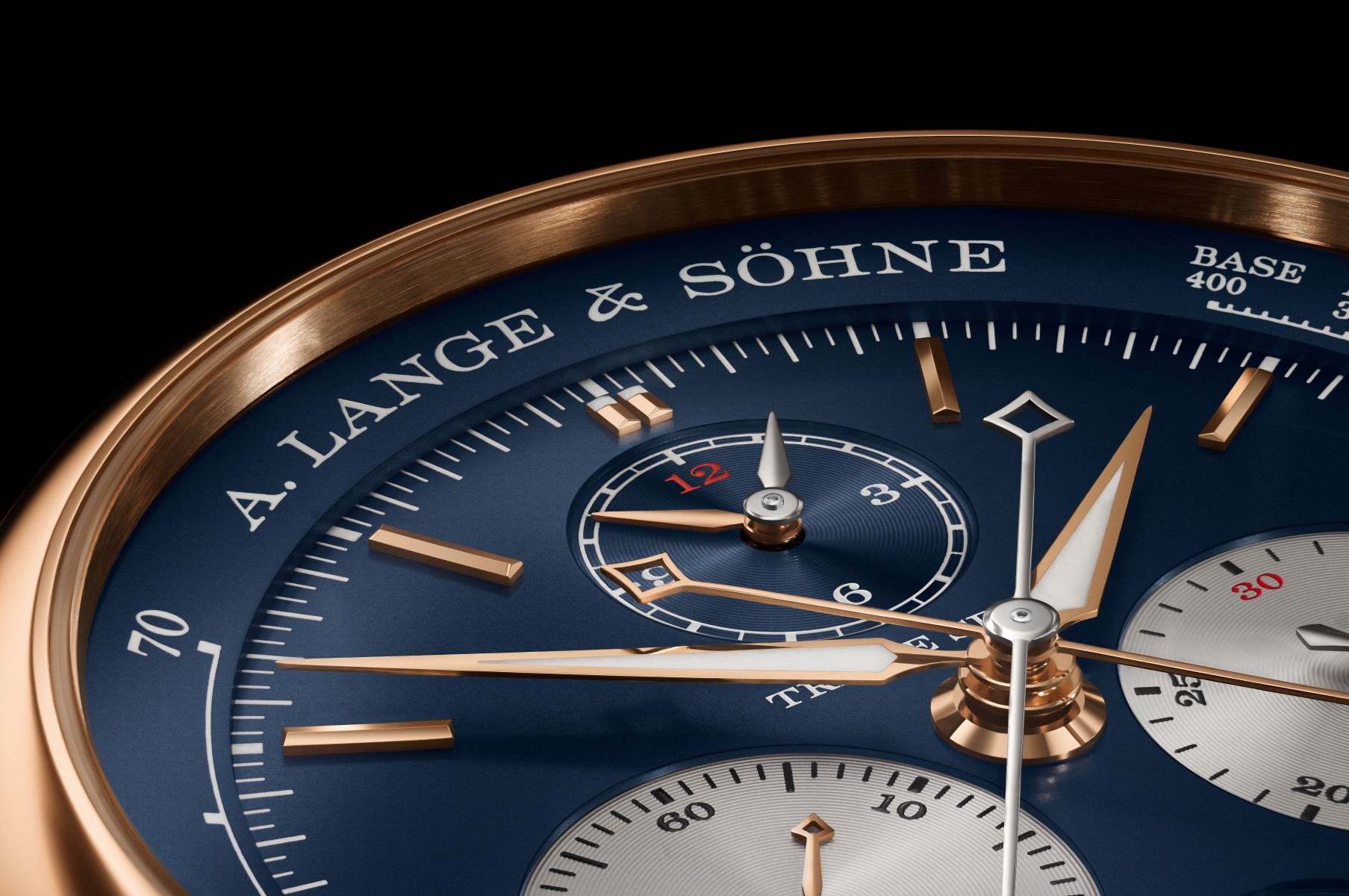
The Triple Split is one of the most complex chronographs ever produced by an independent house, with three simultaneous rattrapante hands; secondary prices reflect extreme horological ambition and very limited production.
The Triple Split is one of the most mechanically ambitious chronographs ever put into production. It extends the classic rattrapante complication to all three time registers at once, letting you capture split times across hours, minutes, and seconds simultaneously. Almost no buyer will ever use it to its full capability, but that is not really the point.
A. Lange and Söhne introduced the Triple Split in 2018, building on decades of rattrapante development that began with the Doppel Chronograph in the 1990s. The movement, caliber L132.1, was developed entirely in-house and required years of engineering work to solve the synchronization problem across three separate split registers.
At the time of release it was the first wristwatch ever to offer simultaneous split-second capture at the hours, minutes, and seconds level. The case is 43.2mm in white gold with the characteristic Lange three-quarter plate and blued screws visible through the sapphire caseback. Production is limited and unhurried, consistent with how Lange approaches any complication of this difficulty.
White gold in this size and complexity puts the Triple Split firmly above $400,000 new, and the secondary market reflects that scarcity without offering meaningful discounts. Condition matters enormously: the pusher mechanism and rattrapante components are under real mechanical stress during use, so inspect any pre-owned example for evidence of hard service or amateur lubrication. The dial configuration, with split registers for all three hands, can read as busy to eyes accustomed to simpler chronographs; this is worth confirming in person before committing.
Servicing requires a Lange authorized center or an independent with documented experience on the L132.1 specifically. Any example that has been polished loses resale value significantly, and re-polishing is common on watches that have passed through multiple hands.
The Triple Split trades in a thin market where buyers are few and sellers are rarer. Gray market pricing tends to sit at or above retail, and substantial discounts should raise questions about service history or undisclosed damage. Provenance documentation, especially the original Lange papers and box, is meaningful here in a way it is not for more common references.
The L132.1 is a hand-wound movement and should be serviced on the manufacturer's recommended interval, typically every five to seven years under normal use. Given the complexity of the rattrapante mechanism across three registers, this caliber requires specialist knowledge that goes beyond general watchmaking. Lange authorized service centers are the correct first call; for independent service, require documented prior work on the L132.1 before entrusting it.
Community + OSINT signals haven’t landed for this reference yet. We don’t publish a rating against zero signal — the number would mean nothing. Editorial body + caliber + market value still surface above; ratings appear once the signal corpus does.
All three split-seconds chronograph functions must operate independently; any non-functional split mechanism is missing a core feature.
| Area | What to check | What is correct | Red flag |
|---|---|---|---|
| crown | All three chronograph mechanisms function | All three split-seconds mechanisms operate independently; cumulative, split, and rattrapante hands each function correctly on their respective pushers | Any non-functional split mechanism; rattrapante hand that does not return correctly to the main chronograph hand |
| caseback | Cal. L132.1 manual-wind movement | Cal. L132.1 visible through caseback; complex bridge layout consistent with triple split-seconds architecture | Any caliber other than L132.1; movement bridge layout inconsistent with Lange documentation |
| dial | Triple split indication layout | Dial layout showing three separate chronograph indications; all hands present and correctly positioned at zero |
Editorial estimate. Actual prices vary by condition, date, and box/papers status. Live pricing data is in development.
| Any missing chronograph hand; hand positioning inconsistent with zero at rest |