The A. Lange & Söhne Datograph | family history
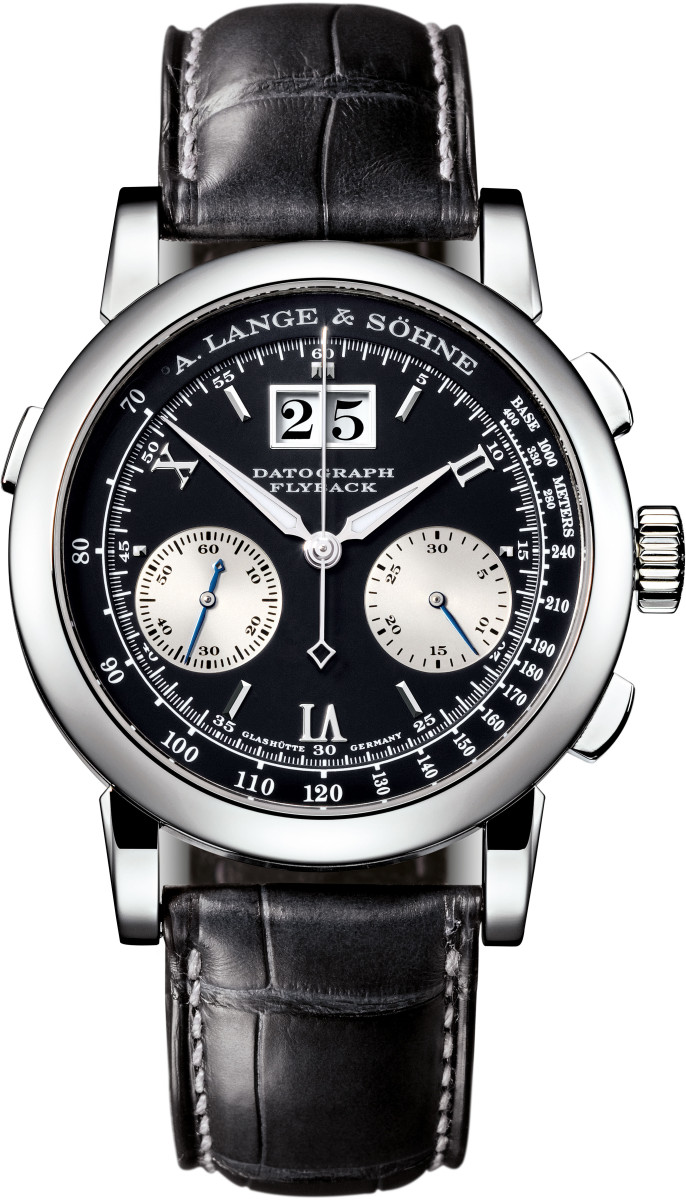
There is an argument to be made that the Datograph is the best chronograph movement made by anyone, at any price. It is not the most complicated chronograph; the Patek 5270 or the Lange Triple Split would take that title. But for the combination of column-wheel control, precision flyback reset, outsize date display, Saxon three-quarter plate finishing, and hand-engraved balance cock, nothing at the same standard of finishing exists from any other manufacture. Lange introduced the Datograph in 1999 with the L951.1. The case is 39mm, the movement is manual-wind, and the dial is the asymmetric Lange signature: subsidiary seconds at bottom-left, 30-minute counter at 12, outsize date at top-right. The layout has been imitated; none of the imitations come close on movement quality.
Lange’s flyback chronograph with the outsize date. Movement-side finishing that watchmaker forums still cite as the high-water mark of modern manufacture chronographs.
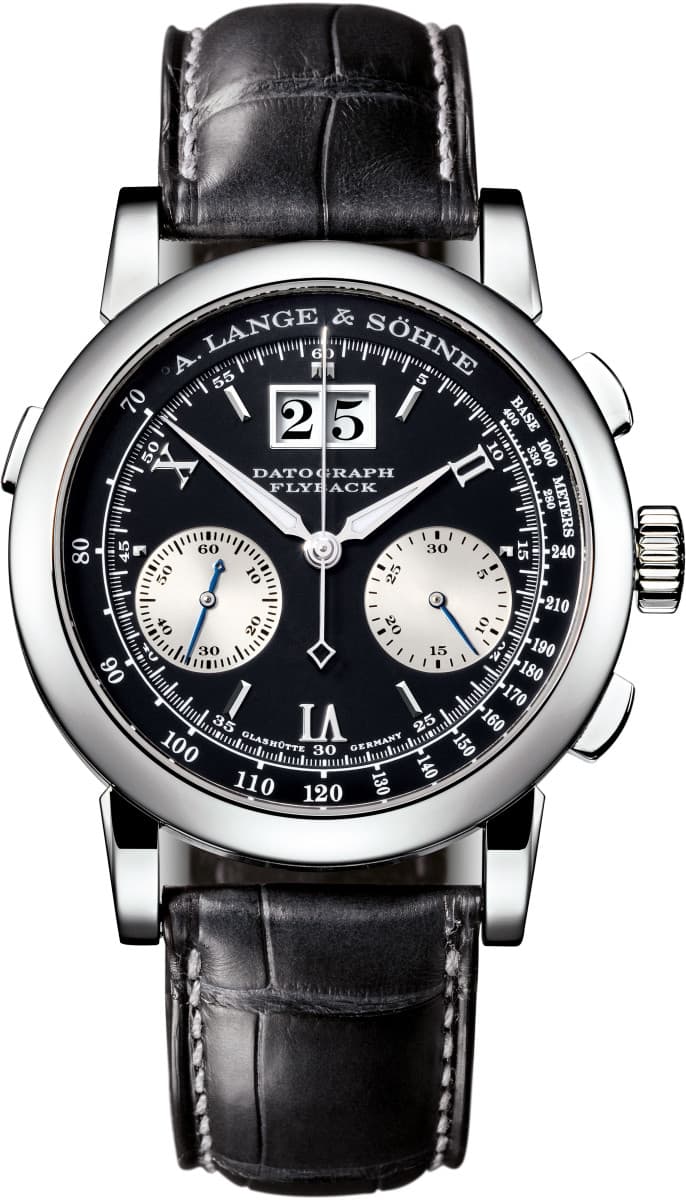
1999–2012 · The first-generation Datograph, caliber L951.1
The original Datograph (ref. 403.035) launched in 1999 in yellow gold; platinum and rose gold followed. 39mm case, caliber L951.1: manual-wind, 36-hour power reserve at 18,000bph, column-wheel chronograph with flyback function, outsize date at 12 o'clock using two discs (not a single jumping disc). The finishing is Saxon-traditional: German silver three-quarter plate, blued screws, hand-engraved balance cock. Production ran until 2012 when the Up/Down variant superseded it at 41mm. First-generation examples in platinum are the most-collected and trade at premiums over their successors.
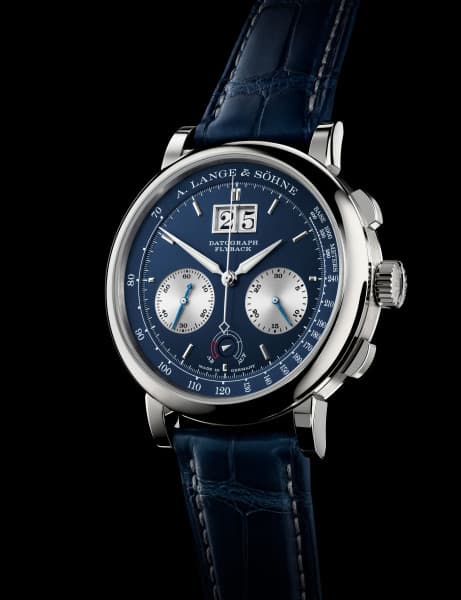
2012–present · The Datograph Up/Down, caliber L951.6
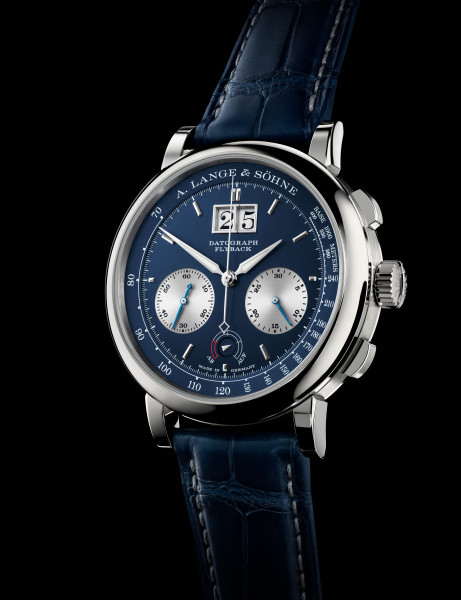
The Up/Down (ref. 405.035, 2012) expanded the case to 41mm and added a power reserve indicator (the 'Up/Down' of the name) to the subsidiary-seconds register. Caliber L951.6 adds 6 more jewels to the L951.1 architecture for the PR complication. The 41mm case wears larger than the 39mm original; some collectors prefer the first-generation for that reason. The Up/Down is the current primary Datograph and the one most buyers will be considering from the current production.
- OpenDatograph Up/Down · 405.035landmarkThe reference that proved post-1994 German watchmaking could compete at the top of the market.
2018–present · The Triple Split: the complication ceiling
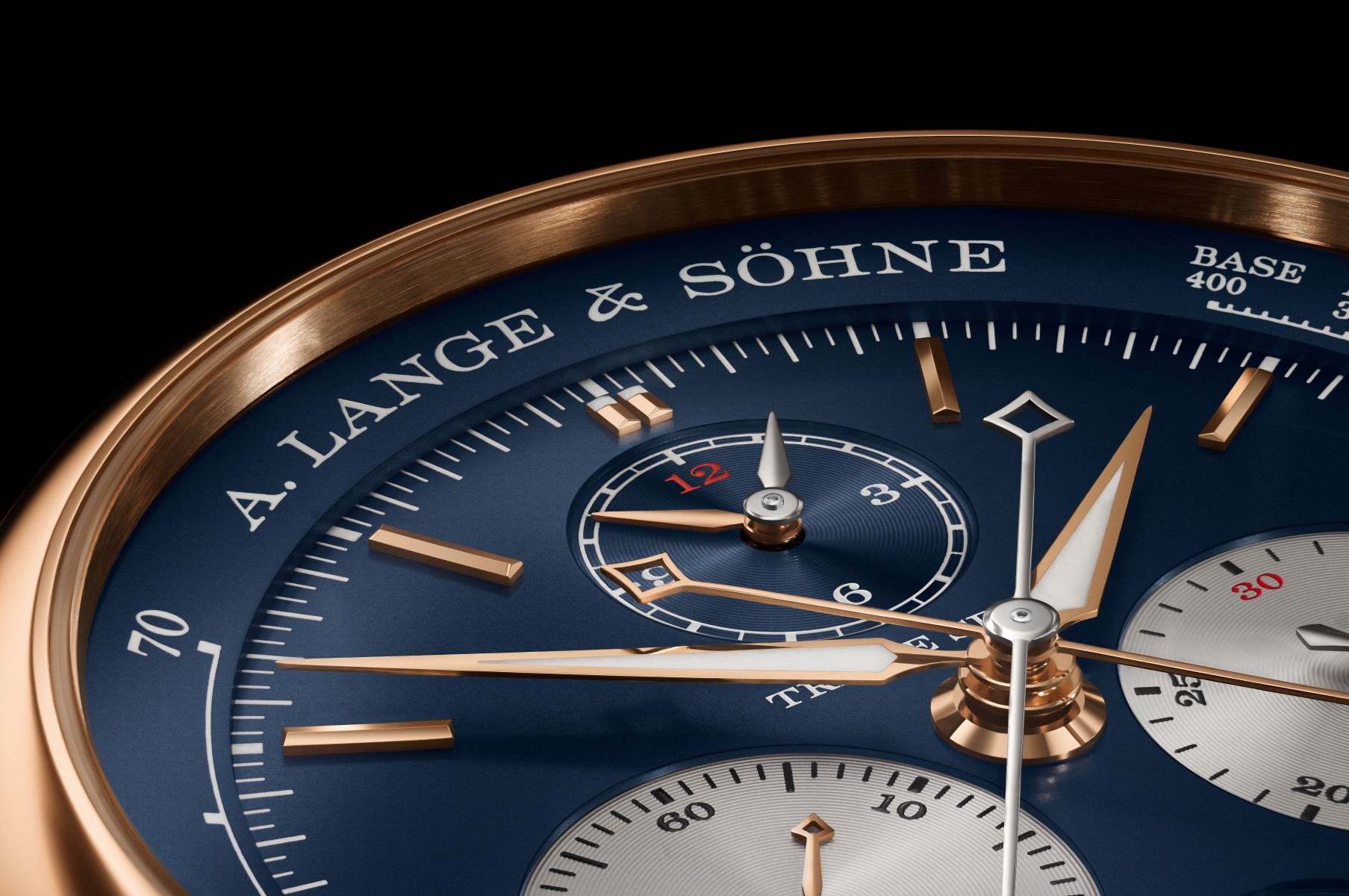
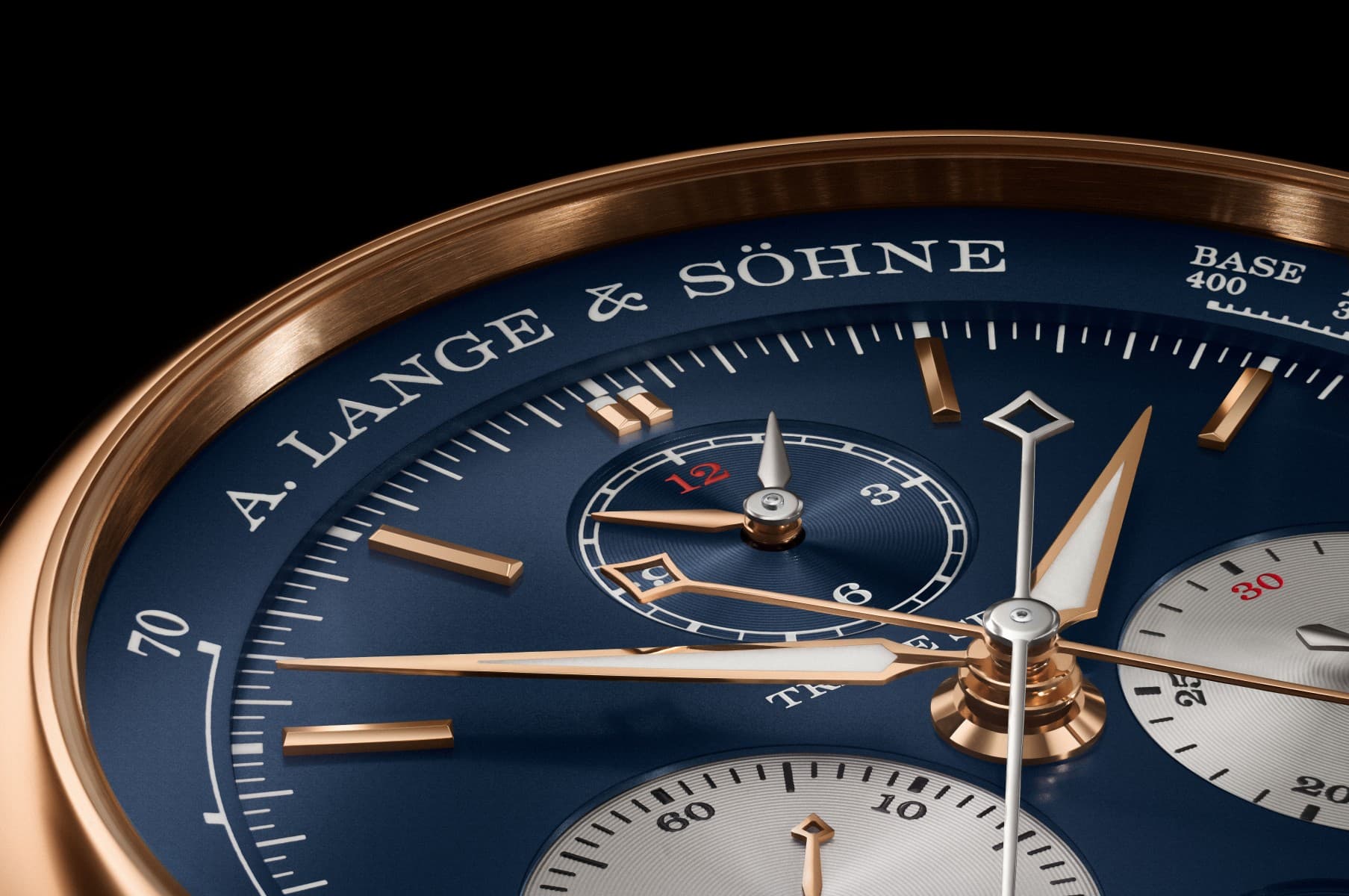
The Triple Split (ref. 424.038, 2018) is the peak of the Datograph family: a split-seconds (rattrapante) chronograph that can measure three simultaneous intervals independently, including a long-running counter for hours and minutes on a separate rattrapante mechanism. 567 parts, caliber L132.1, 43.2mm. World premiere of the triple split-seconds complication. This is not a purchase decision based on value; it is Lange's mechanical statement. It exists to demonstrate what the manufacture can do.
How to read this family
Three honest questions for any Datograph buyer:
- First-generation or Up/Down? The first-generation Datograph (39mm, L951.1, no PR indicator) is the more historically significant reference and the one with the stronger collector premium among Lange specialists. The Up/Down is the current production at 41mm with the PR complication added. If you prefer the smaller case and the cleaner dial layout, first-generation. If you want a current-production watch with a documented service network and the useful PR indicator, Up/Down. Both use the same flyback architecture.
- What metal? Rose gold is the most common and the most wearable; it reads warmly against the silver or black dial. White gold is the formal choice and reads closest to the slate grey finishing on the movement. Platinum is the collector's choice at the highest price; first-generation platinum references are the most-coveted. Yellow gold is the original and is now the rarest configuration. None of these is a bad choice; the dial color should drive the metal choice.
- Is the Datograph worth the price over a Lange 1 or a Patek chronograph? The Datograph costs more than a Lange 1 and roughly comparable to a Patek 5172 or 5270 at retail. For a buyer who values chronograph mechanics above all else, the Datograph is the correct answer: no other movement at any price combines the column-wheel flyback with outsize date and Saxon finishing in one package. If you want complications beyond a chronograph (perpetual calendar, moonphase), the Patek 5270 is the comparison. If you want the cleaner dressy Saxon watch, the Lange 1 costs less and wears differently.
Related families: Lange 1 · 1815 · Saxonia
References in this family
Which ref to buy
The Datograph is arguably the finest flyback chronograph made. Lange's proprietary column-wheel mechanism, the precisely jumping digital minute counter, and the hand-finished Glashütte movement combine to make this the reference against which other chronographs are judged. First launched in 1999; every generation has refined without fundamentally changing the formula.
- 1Open
Datograph Up/Down -- the definitive Datograph; adds a power reserve indicator without adding clutter.
- The case for it:
- Cal. L951.6, flyback chronograph, jumping minute counter, power reserve indicator, 41mm. The Up/Down designation refers to the power reserve display. The addition is calibrated perfectly into the dial layout -- it reads as original, not as an afterthought. The L951.6 caliber has four more parts than the original Datograph and no compromises. The best way to own a Datograph.
- Consider instead if:
- Secondary pricing for the Up/Down is above the original Datograph. If power reserve indication is not meaningful to you, the original Datograph is a slightly less expensive and equally excellent watch.
- 2Open
Datograph (first generation) -- the original and still among the finest mechanical achievements in watchmaking.
- The case for it:
- Cal. L951.1, flyback chronograph, jumping minute counter, large date, 39mm. The original Datograph introduced Lange's proprietary flyback mechanism and the precisely jumping minute counter display. The 39mm case is smaller than the current 41mm Up/Down -- a meaningful difference for buyers who prefer a more restrained wrist presence.
- Consider instead if:
- The Up/Down adds meaningful information and the L951.6 is a generational improvement. If budget allows, prefer the current generation.
- 3Open
Triple Split -- the most complex Datograph, with rattrapante in three registers.
- The case for it:
- Cal. L133.1, split-seconds (rattrapante) flyback chronograph that can measure split times in hours, minutes, and seconds simultaneously. The Triple Split is the technical pinnacle of Lange's chronograph work -- no other watchmaker has executed a triple rattrapante at this level of finishing.
- Consider instead if:
- The Triple Split is priced significantly above the Datograph and targets a specific complication collector. For most buyers, the Datograph Up/Down is the correct answer.
Rankings last reviewed 2026-06-06. Editorial perspective only. Not financial advice.