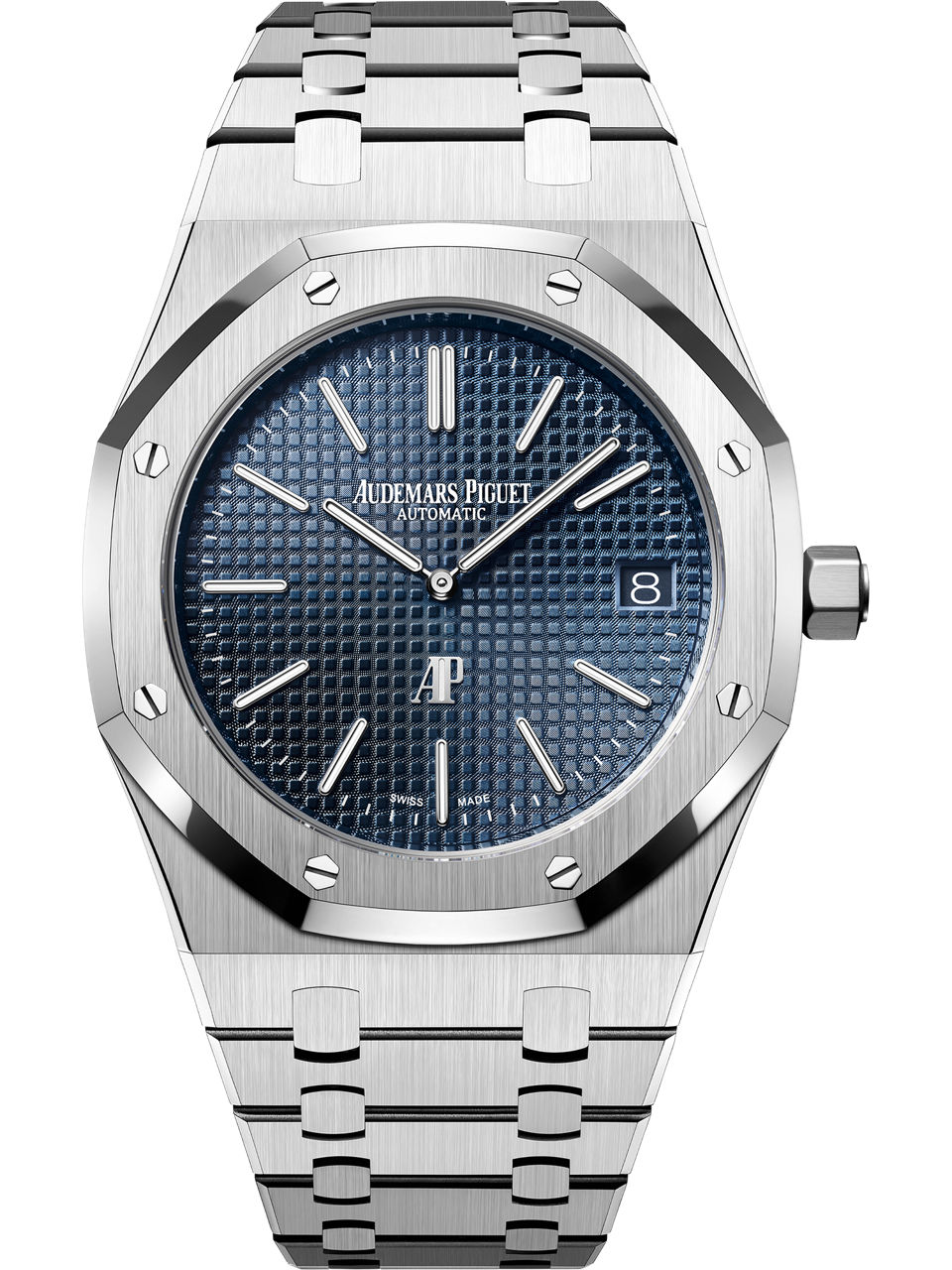
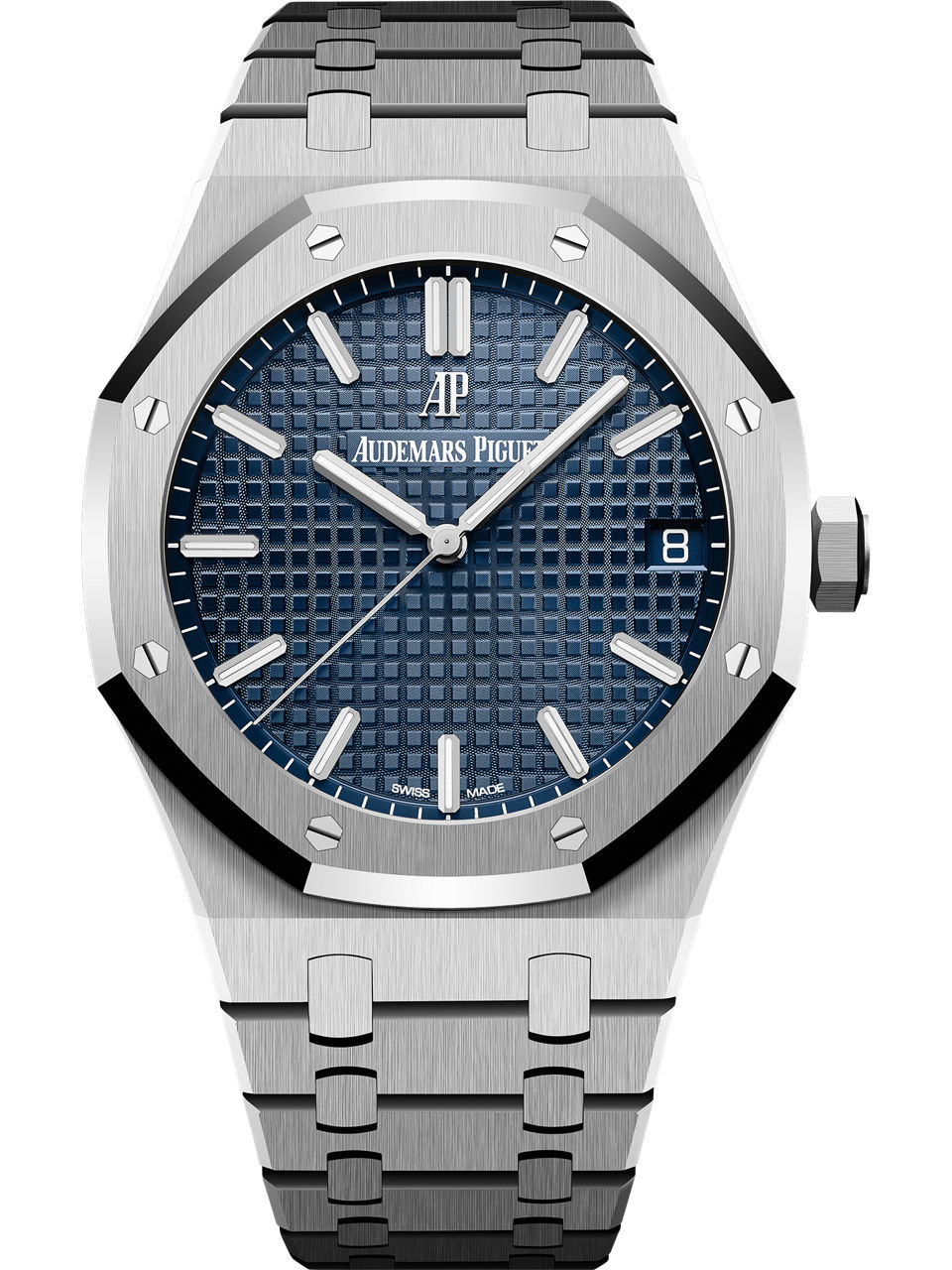
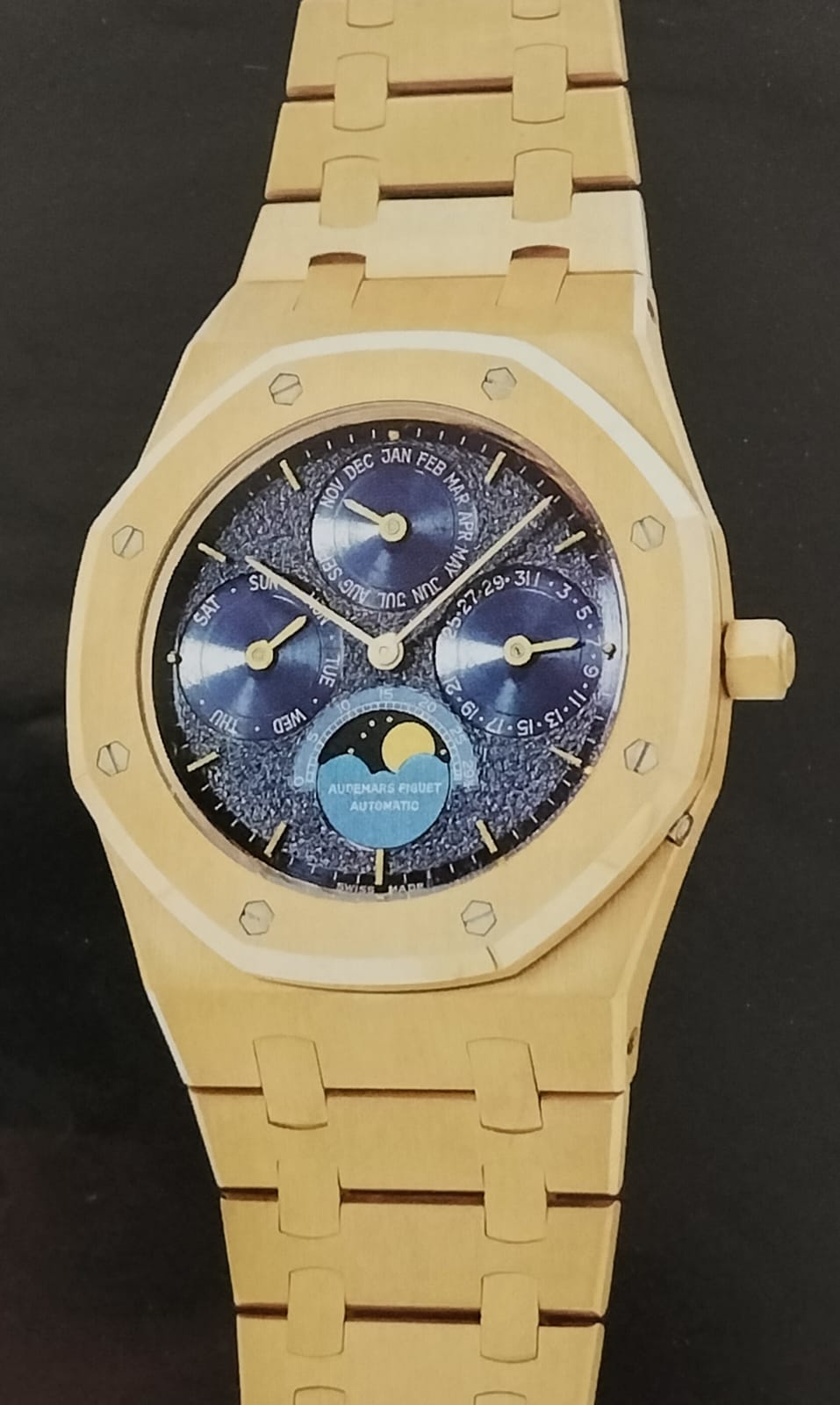
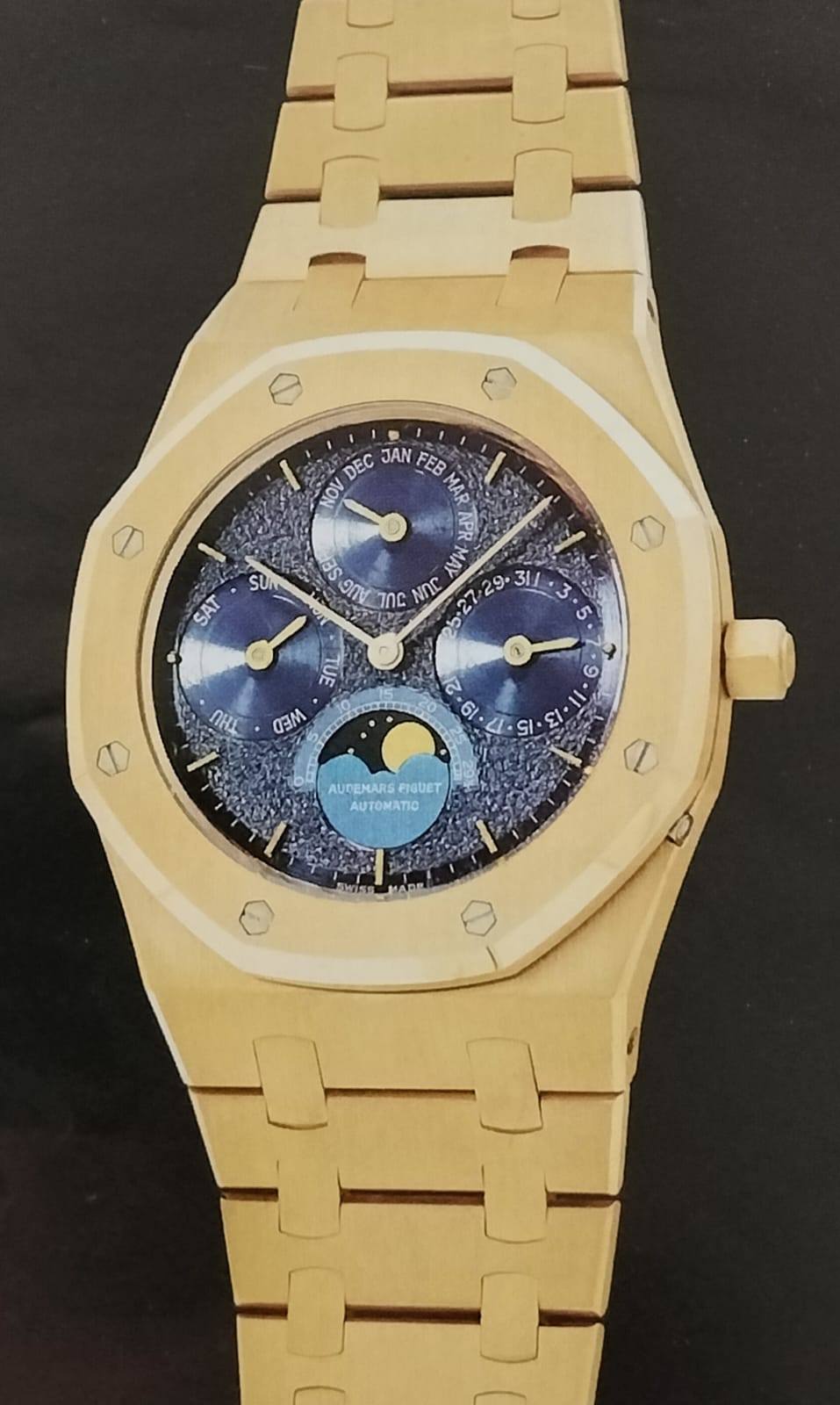
Mid-size Royal Oak from the 1980s-1990s trades at a significant discount to the current 15202 yet shares the core Genta design language.
Pre-owned watches trade across a wide condition spectrum. These ranges are typical for the secondary market.
The second-generation 33mm Royal Oak 14790 trades at a modest discount to the 15202 Jumbo because of its smaller case; steel examples represent the entry point and yellow gold commands the most significant premium.
Editorial estimate, 2026 Q2. Actual prices vary by condition, date, and box/papers status.
The 14790 is the second-generation Royal Oak, produced 1992 through 2003, at a 36mm case size that the modern market briefly forgot about and then dramatically remembered. It's the 'small Royal Oak' that runs around half the cost of a 15202 'Jumbo' but has more original Genta-designed character than any post-2000 Royal Oak.
The original Royal Oak (5402, 1972) was a 39mm case; the 'medium' Royal Oak followed at 36mm. The 14790 launched in 1992 with the caliber 2125 (a JLC-derived automatic with a date complication), replacing the earlier 4100. Production ran through 2003 when the 15300 took over.
Variants exist in steel, two-tone, full-gold, and a Tantalum 'Royal Oak 25th anniversary' commemorative.
Common things to check: dial originality (the petite tapisserie pattern is hand-applied and not field-replicable, service-replacement dials are visible under magnification); bracelet (the integrated bracelet means a wrong-size or wrong-generation bracelet is a value disaster, verify the end-link generation matches the case era); case finishing (the polished/brushed alternation on the Royal Oak case profile is hand-applied; over-restored examples lose the finish definition that makes the watch); papers (AP service papers are the gold standard for provenance; a 14790 without papers should be priced 15-25% below a papered equivalent).
The 14790 was undervalued from 2008 through 2018, when 36mm cases were considered “too small.” That has reversed. Honest steel-bracelet examples now trade in the high-$10,000s to mid-$20,000s; the market for medium Royal Oaks is much shallower than the 15202 market but the dollar gap to a comparable 15202 has narrowed substantially.
AP-direct service for the caliber 2125 is supported and routine; cost is comparable to other Royal Oak service. Service interval 5-7 years; the integrated bracelet is also serviced (link tightening, case-bracelet alignment) during the appointment. An AP-stamped service card on a 14790 is a meaningful value lift.
Community + OSINT signals haven’t landed for this reference yet. We don’t publish a rating against zero signal — the number would mean nothing. Editorial body + caliber + market value still surface above; ratings appear once the signal corpus does.
Grande Tapisserie dial texture must be crisp under magnification; a fuzzy or flat pattern on a claimed 14790 indicates a replica
| Area | What to check | What is correct | Red flag |
|---|---|---|---|
| dial | Grande Tapisserie hobnail pattern | Uniform raised pyramid pattern across dial; each pyramid point is sharp under 10x loupe; pattern terminates cleanly at sub-dials and date window; "Audemars Piguet" text at 3; "Royal Oak" at 9 | Flat or printed tapisserie (not raised); pyramids inconsistent in size or spacing; pattern bleeds into sub-dial apertures; text positioning inconsistent with 14790 layout |
| case | 36mm octagonal bezel with "AP" screws | 36mm diameter; eight hexagonal screws on bezel each with "AP" engraved; alternating brushed and polished surfaces on case; integrated bracelet flush with case | Missing "AP" on screw heads; fewer than 8 screws; polished-only case (no satin finishing); bracelet not flush with case at attachment point |
The 14790 is the transitional Royal Oak produced before the current 15300/15400 generation. It uses the Cal. 2225 movement and shares the core Tapisserie dial architecture. Authentication focuses on dial texture authenticity, eight-screw bezel uniformity, and movement caliber confirmation.
| bracelet | Jubilee-style integrated bracelet | Polished center links with brushed outer links; integrated attachment with no visible gap; correct taper toward clasp; "AP" on folding clasp; solid link construction | Hollow bracelet links; visible gap at case-to-bracelet junction; no "AP" on clasp; incorrect finish pattern on links |
| movement | Cal. 2225 or 2226 via caseback | Exhibition or solid caseback per variant; Cal. 2225 with date or 2226 without date; "Audemars Piguet" signed; ETA 2892 base architecture is expected and correct | Incorrect calibre for date/no-date variant; non-ETA architecture; unsigned movement |
| Era | Description | Identifiers |
|---|---|---|
| 1992 to 2003 (blue/black Grande Tapisserie) | Grande Tapisserie dial in blue or black, 37mm case. This generation predates the supercase 15300. |
|