
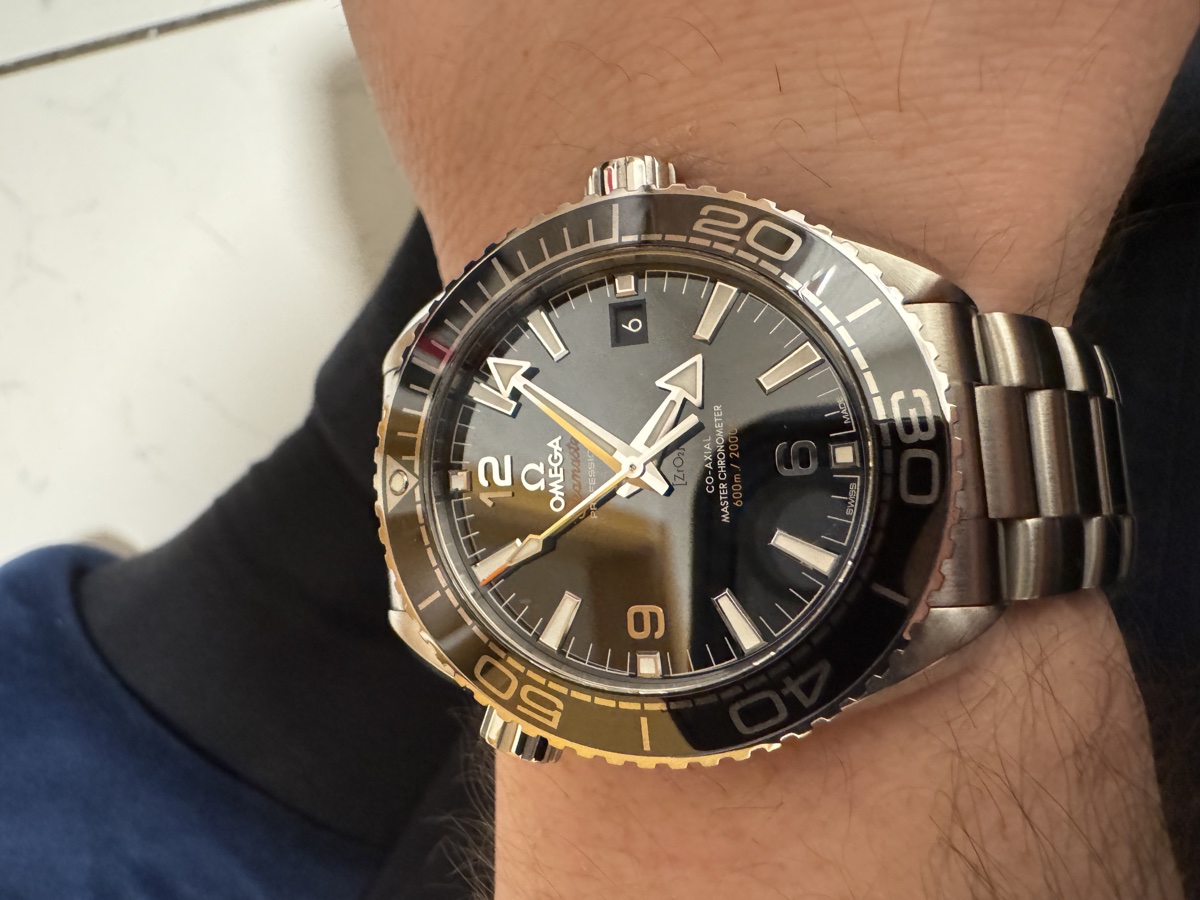


The Omega Seamaster | family history
The Seamaster predates the Submariner by five years. Omega launched it in 1948 as a watch for postwar professional use; the dive-watch branch of the family came later. Today the Seamaster name covers everything from slim Aqua Terra dress watches to the 600-meter Planet Ocean, which makes it one of the broadest watch families in the catalog. This walk focuses on the diver lineage: the 300, the 300M, and the modern Master Chronometer generation. The Aqua Terra is its own family. The Seamaster 300M is the practical answer to the question 'what dive watch should I actually buy?' It has better anti-magnetic spec than any contemporary Rolex (METAS-certified to 15,000 gauss), is available at retail, and trades honestly on the secondary market.
Omega’s longest-running family, born in 1948 from wartime-watch case construction. The modern collection centers on the Seamaster 300M dive line; Planet Ocean, Diver 300M, and Aqua Terra branch off into their own sub-lines.
1948–1967 · The original Seamaster and the early divers
Omega introduced the Seamaster in 1948 as a water-resistant dress-sport watch for civilians and professionals. The 1957 Seamaster 300 (CK 2913/2914 and 2915) was the dedicated dive variant: 200m rating, Mercedes hands, black dial with luminous indices. These early references share the year with the original Submariner and the Blancpain Fifty Fathoms; the 300 is a legitimate peer to both. Period examples are in the five-figure collector market and valued by the same collectors who track early Submariners. Not in the catalog at the vintage level.
No references from this era in the catalog yet.
1993–2007 · The first 300M and the Bond connection
Omega relaunched the Seamaster line in 1993 as the 300M (ref. 2541.80). The choice of Omega as the official Bond watch (from GoldenEye, 1995, through Casino Royale, 2006) drove the 300M into mass cultural awareness and made Omega's second-largest commercial success after the Speedmaster. The 2541.80 has a wave-pattern dial, helium escape valve, and aluminum bezel, running on caliber 1120 initially and then 2220. The Bond association did what marketing cannot: made a professional tool watch aspirational.
No references from this era in the catalog yet.
2007–2017 · The Planet Ocean and the 300M update
In 2007 Omega launched the Planet Ocean as a 600m-rated 45.5mm dive watch for the serious end of the Seamaster family, running on caliber 8500 (later 8900). The regular 300M was updated in the same period with ceramic bezels and co-axial movements. The Planet Ocean with its orange bezel became the signature Omega sport watch for a generation; the 45.5mm case wears large and is divisive for that reason. The 300M and Planet Ocean ran in parallel, targeting different buyers.
No references from this era in the catalog yet.
2018–present · The Master Chronometer 300M
The 2018 Seamaster Diver 300M (ref. 210.30.42.20.01.001) moved the entire line to caliber 8800: METAS-certified Master Chronometer, anti-magnetic to 15,000 gauss, 55-hour power reserve. Ceramic bezel insert, rubber or steel bracelet, new mesh-strap option. The 42mm case is the center of the current lineup. Available at authorized dealers at retail in most markets, without the allocation constraints of the Submariner. The caliber 8800 is technically ahead of the Rolex 3235 on anti-magnetic spec, which matters more than collectors gave it credit for.

2021–present · The Seamaster 300 Heritage
The 2021 Seamaster 300 Heritage (ref. 234.30.41.21.01.001) is the modern reinterpretation of the 1957 CK 2913/2914 design: 41mm, aluminum bezel, lollipop seconds hand, symmetrical case proportions closer to the original than the 300M. Caliber 8912 (a co-axial Master Chronometer variant). This is the Seamaster for buyers who want the vintage proportions without sourcing a 60-year-old example. It runs alongside the 300M rather than replacing it.

How to read this family
Three honest questions for any Seamaster buyer:
- 300M or Seamaster 300 Heritage? The 300M is the contemporary dive watch: 42mm, ceramic bezel, wave-dial option, master chronometer spec. The Seamaster 300 Heritage is the vintage-styled sibling: 41mm, aluminum bezel, symmetrical case, closer to the 1957 original. Both are at retail. If you like the modern-sport look, 300M. If you want the vintage proportions in a new watch, the 300 Heritage is the one.
- Seamaster or Submariner? The honest answer: the Seamaster 300M is technically superior in anti-magnetic spec, available at retail without a waitlist, and costs less. The Submariner has a stronger secondary-market position and a longer single-reference production history. If you're buying to wear, the Seamaster is the better value. If you're buying partly for secondary-market liquidity, Submariner. Both are excellent dive watches.
- Steel bracelet or rubber strap? Omega ships the 300M with both options in the box (depending on configuration). The rubber strap is lighter and period-correct for a dive watch. The steel bracelet is the dominant choice for daily wear. The mesh strap (on some variants) is a strong third option. All three are genuine use cases; this is preference-driven.
Related families: Speedmaster · Seamaster Aqua Terra · Submariner
Sub-lines
- OpenThe Seamaster Professional: the 300m-rated dive watch made famous as James Bond's watch since 1995. The wave-pattern dial, ceramic unidirectional bezel, and helium escape valve define the sub-line. Running the co-axial escapement since 2007, it is both a working dive watch and the most recognisable Omega in production.
References in this family
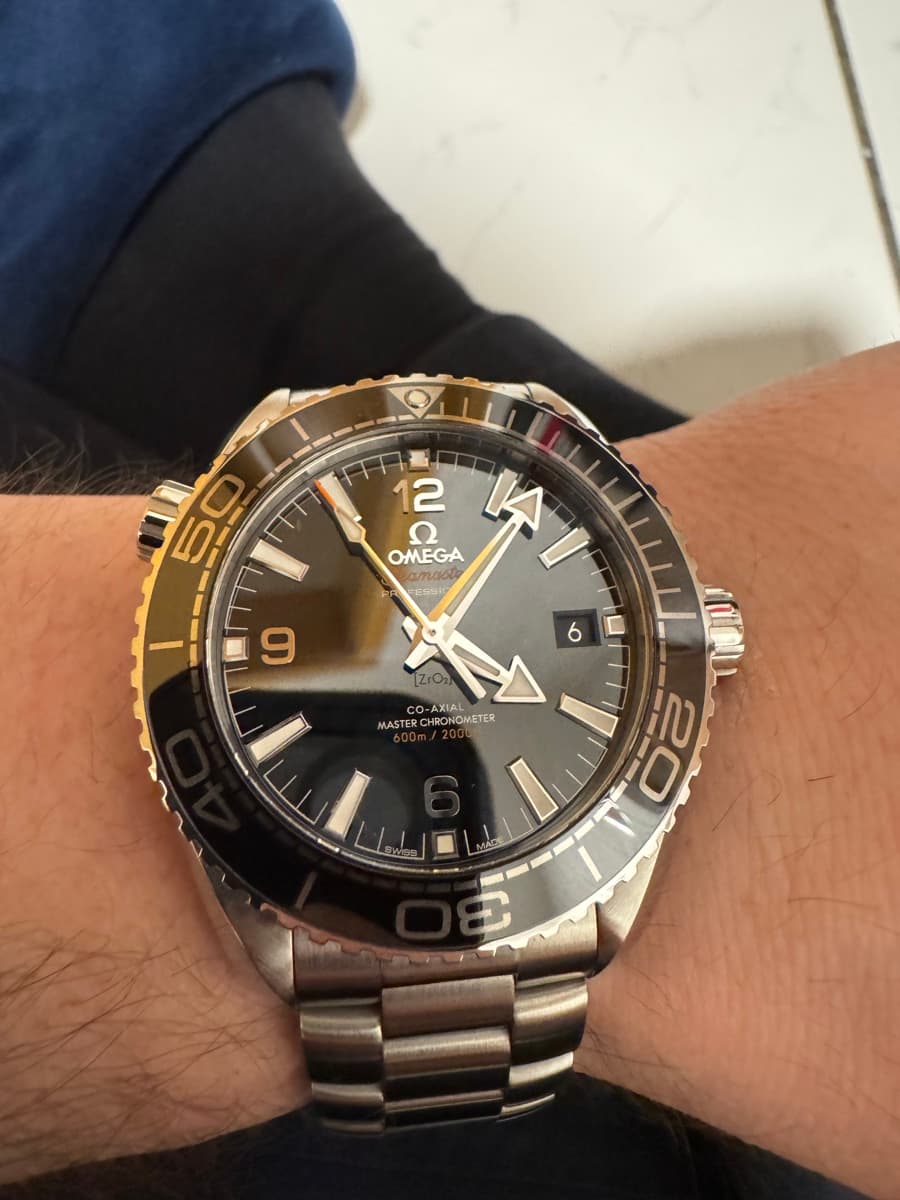
Which ref to buy
The Seamaster is Omega's longest-running dive watch family and its range has expanded from honest tool watches to lifestyle pieces -- but the 300m with METAS certification remains the correct entry point for most buyers.
- 1Open
Current 300m 42mm with cal. 8800 and METAS certification -- the definitive modern dive watch at this price point.
- The case for it:
- Master Chronometer certification, ceramic bezel, Co-Axial escapement, 300m water resistance. Every relevant box checked at a price that embarrasses competitors twice the cost.
- Consider instead if:
- If you want something more understated, the 300 Heritage 41 trades the tool-watch identity for cleaner proportions with the same movement quality.
- 2Open
Previous-generation 300m with same movement profile -- trades at a slight discount and is mechanically identical to the current ref.
- The case for it:
- Cal. 8800 and METAS certification are shared with the current generation. Secondary market examples in excellent condition represent real value.
- Consider instead if:
- The current-generation case finishing and dial details are slightly improved. Unless the price differential is meaningful, buy current.
- 3Open
41mm heritage-inspired no-date with cal. 8806 -- more understated than the 300m, same movement tier.
- The case for it:
- No date, 41mm case, vintage-inspired proportions. For buyers who want the METAS movement without the aggressively tool-watch aesthetic.
- Consider instead if:
- Less water resistance than the 300m and a thinner secondary market. If dive-watch credibility matters, the 300m is the correct choice.
- 4Open
Limited trilogy set -- the Seamaster 300 element is the collector piece here, not an everyday recommendation.
- The case for it:
- Period-correct proportions in a limited numbered set. The Seamaster 300 element of the trilogy has the strongest individual collector appeal.
- Consider instead if:
- Sold as a set at a significant premium. If you want just the Seamaster 300, a standalone Heritage 41 is the practical choice.
- 5Open
Current 300 (non-300m) at 41mm -- softer collector following than the 300m, valid watch for non-dive buyers.
- The case for it:
- The 300 (without the M) is a cleaner, less dive-tool design. Correct choice if you want the Seamaster identity without the bezel complexity.
- Consider instead if:
- At a similar price, the 300m delivers more capability and stronger resale. The non-M version is a harder secondary market proposition.
- 6Open
43.5mm Planet Ocean with cal. 8900 -- for buyers who want the largest, most capable Omega dive tool in production.
- The case for it:
- Cal. 8900 METAS, 600m water resistance, and a larger case that commands more wrist presence than the 300m. The professional dive specification.
- Consider instead if:
- At 43.5mm it is a statement piece, not a versatile daily watch. Most buyers are better served by the 42mm 300m.
Rankings last reviewed 2026-06-06. Editorial perspective only. Not financial advice.