The A. Lange & Söhne Lange 1 | family history
The Lange 1 is the watch that proved Glashütte could matter again after the Wall fell. Walter Lange and Günter Blümlein re-established the Lange trademark in December 1990; the Lange 1 was one of four references they unveiled at the relaunch event in October 1994. Thirty years later the off-center dial, the outsize date, and the in-house manual-wind movement remain the family signature. This walk frames each era and the references the catalog currently tracks.
The watch that re-launched Lange in 1994. Off-center dial, oversized date, in-house movement finished to a standard the Swiss were not setting at the time.
1994–2015 · The original Lange 1: caliber L901.0
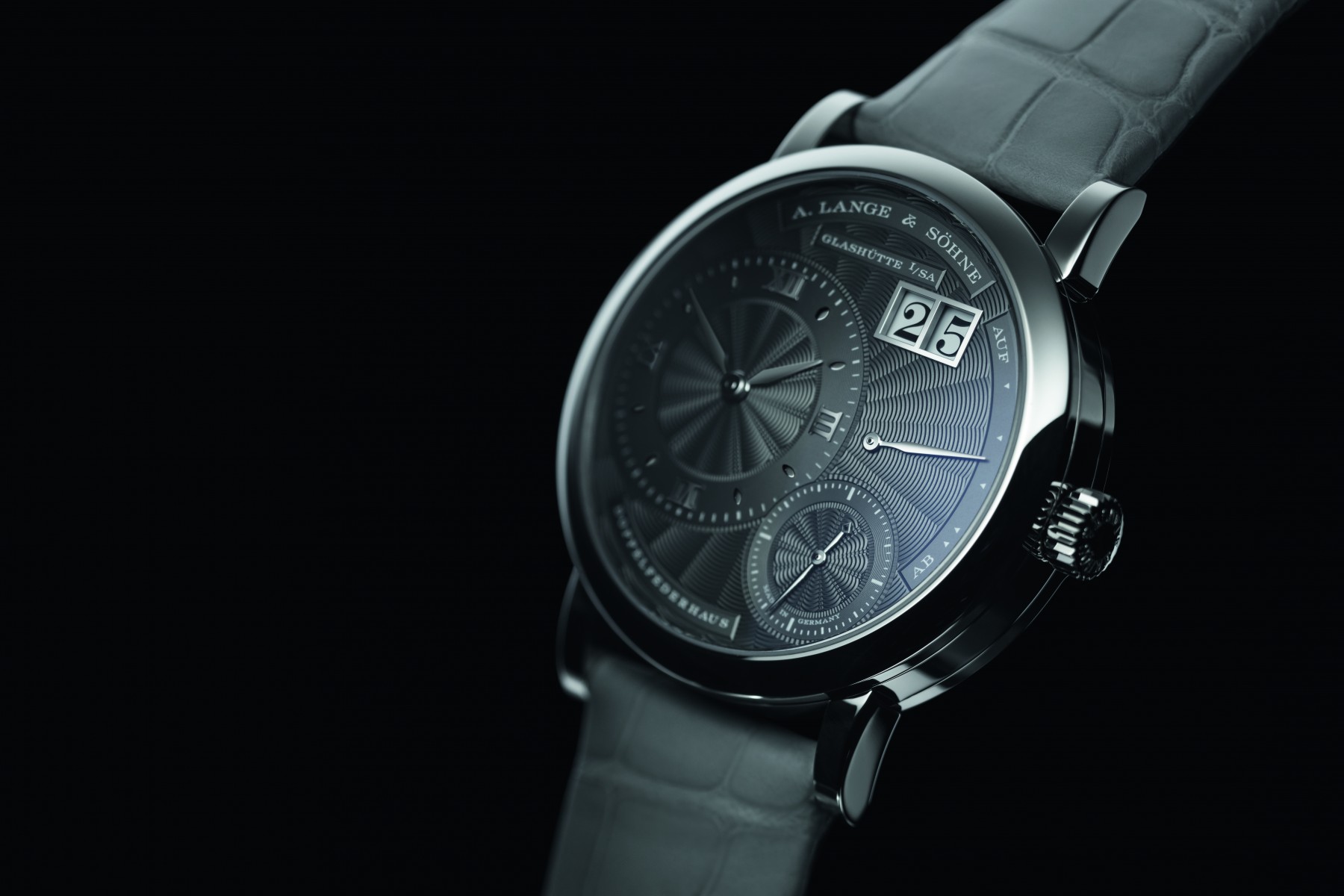
The Lange 1 launched in October 1994, among the first four references after the brand's revival. Asymmetric dial layout (hours/minutes off-center to the left, subsidiary seconds at bottom-left, outsize date at top-right, power reserve at right). Caliber L901.0: manual-wind, 72-hour power reserve, German silver three-quarter plate, hand-engraved balance cock. 38.5mm yellow gold initially; platinum and rose gold followed. This caliber ran for 21 years and is the canonical Lange 1 movement for collectors. Not in the catalog at the early-production level (provenance market).
No references from this era in the catalog yet.
2013–present · The Little Lange 1: 36.8mm
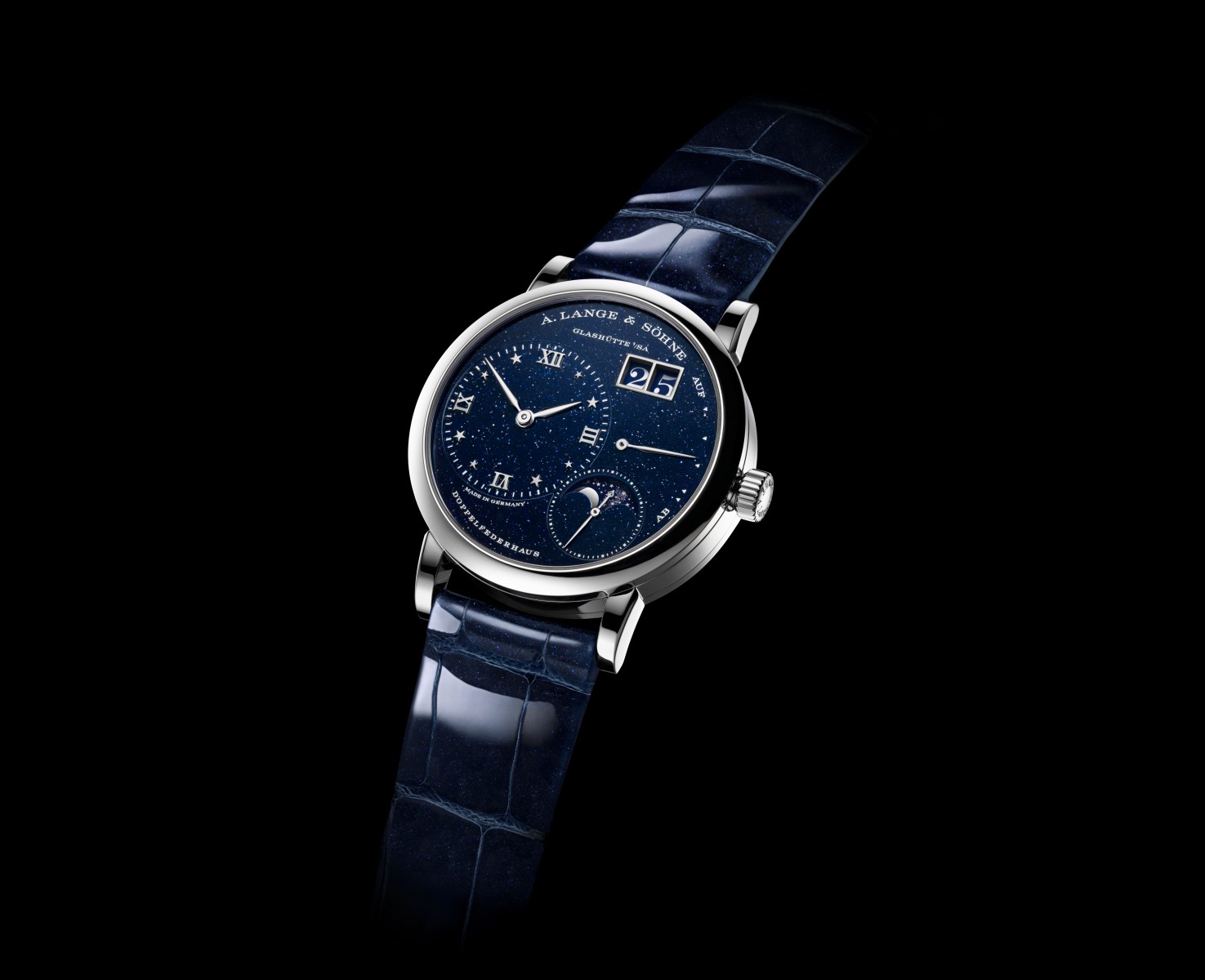
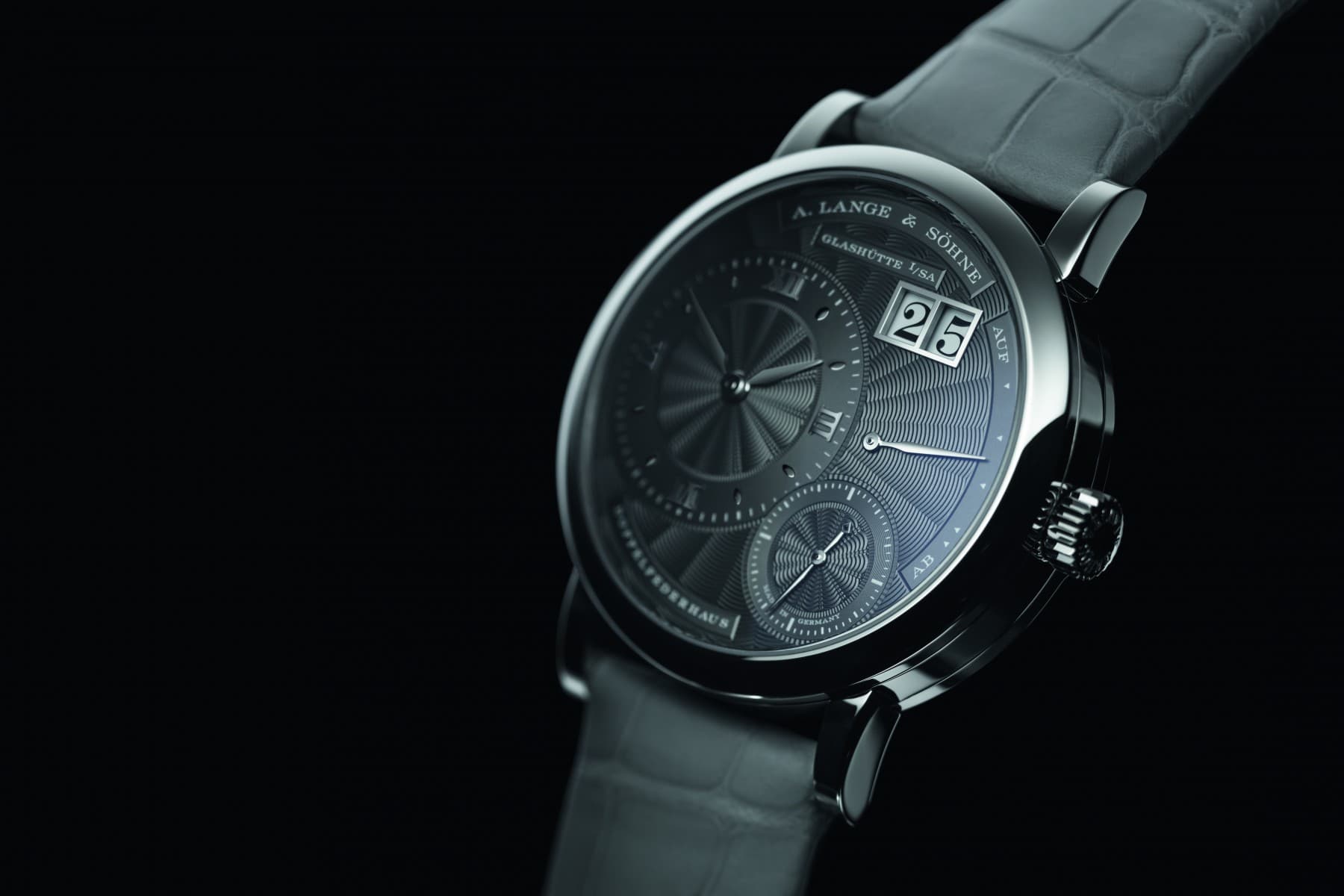
The Little Lange 1 (ref. 181.027, white gold, 2013–present) is the smaller-cased Lange 1: 36.8mm vs the standard 38.5mm. Same dial layout, same caliber L901.0/L121.1 lineage at a smaller scale. Marketed as a women's reference but worn by collectors of any gender who prefer the smaller proportions on the wrist.
2014–present · The Grand Lange 1 Moon Phase: 41mm
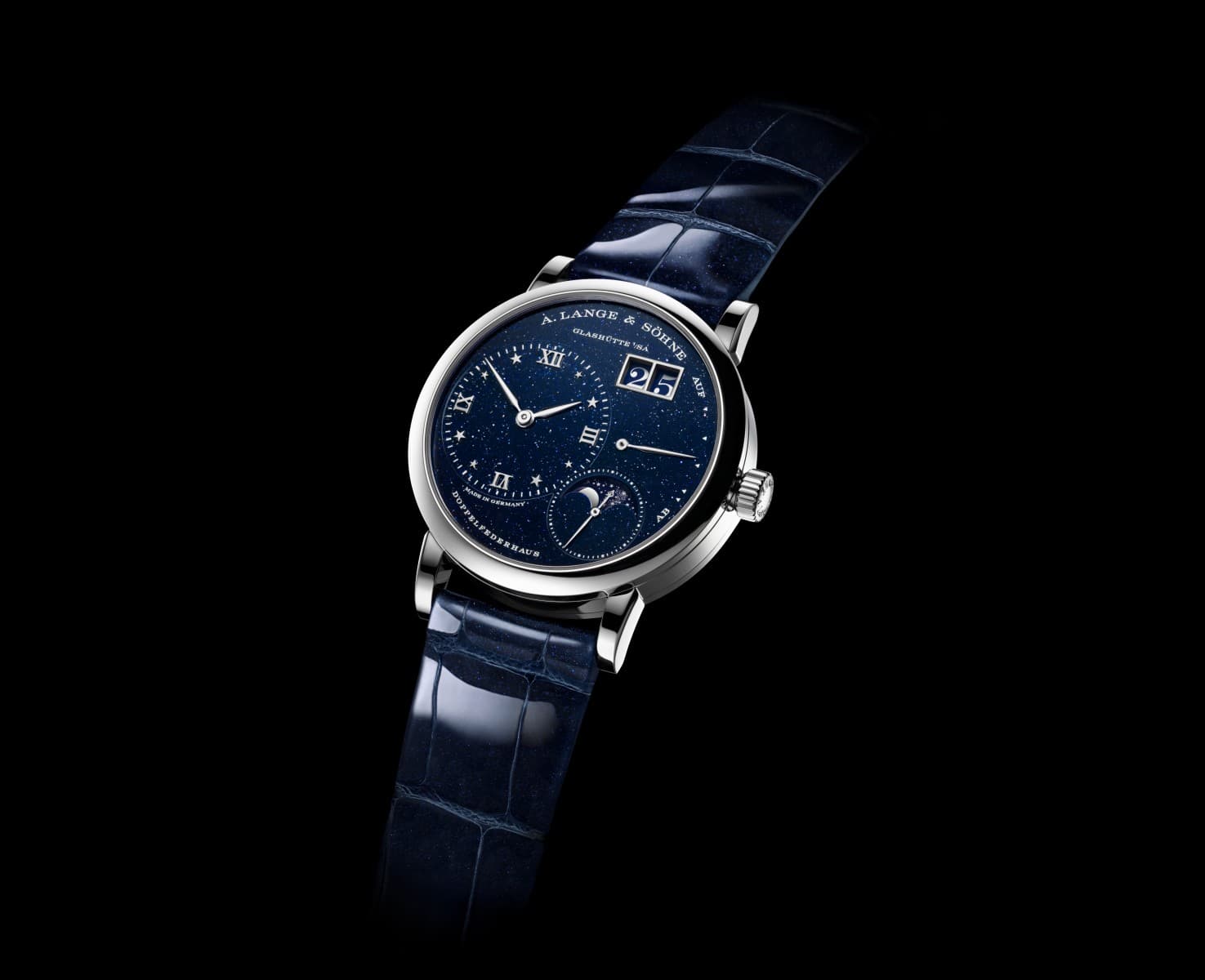
The Grand Lange 1 Moon Phase (ref. 139.025, 2014–present) is the largest case in the Lange 1 family (41mm) and adds a moon-phase indicator integrated into the subsidiary-seconds register. Caliber L095.3 (the Grand Lange 1 base, derived from L121.1 architecture). The moon phase is precise to one-day deviation per 122.6 years. The largest-and-most-complicated-without-being-grand-complication Lange 1.
2015–present · The current Lange 1: caliber L121.1
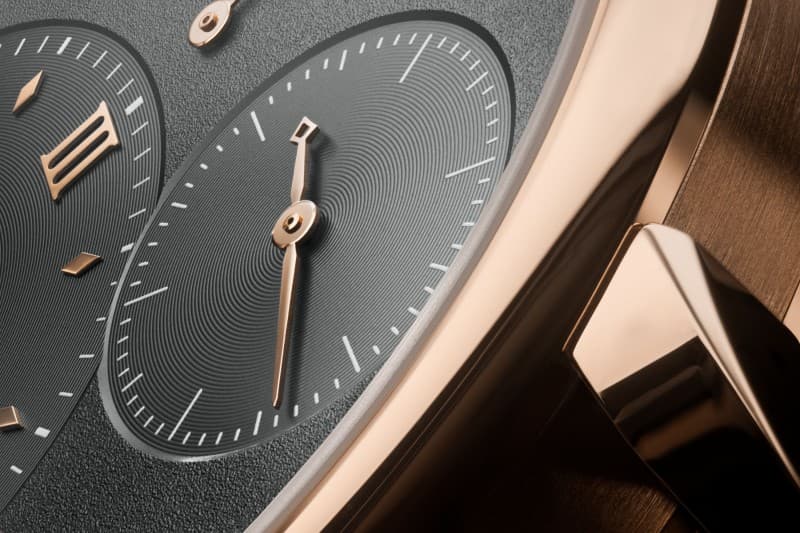
In 2015 Lange introduced the caliber L121.1, the first ground-up redesign of the Lange 1 movement since 1994. Same 72-hour power reserve, same outsize date mechanism, but with a stop-seconds mechanism added (the original L901.0 did not hack) and a redesigned date-change actuation (instantaneous, vs the L901.0's drag). Reference 191.039 (rose gold) is the current canonical reference. The 191.039 is what most current Lange 1 buyers will be choosing between.
- OpenLange 1 · 191.039landmarkThe first watch Lange produced after the 1994 revival; an asymmetric layout that became the defining face of the brand.
How to read this family
Three honest questions for any Lange 1 buyer:
- L901.0 or L121.1? The original caliber L901.0 (1994–2015) is the longer-historical-lineage choice and the one with the stronger collector premium. The L121.1 (2015–present) is the technically-improved current production: hacking seconds, instantaneous date jump. Both are exceptional movements; the choice is between historical lineage and current production.
- 38.5mm, 36.8mm, or 41mm? The 38.5mm is the canonical Lange 1 size and the historical default. The 36.8mm Little Lange 1 reads more dress-watch-proportional on smaller wrists. The 41mm Grand Lange 1 reads largest and most-modern. Try all three before committing.
- Pink/rose gold, white gold, or platinum? Pink/rose gold has been Lange's most-collected metal historically. It's the visual signature most associated with the brand. Platinum is the most-formal and trades at the highest absolute price. White gold reads similar to platinum visually but at a meaningfully lower price; it's the value-conscious choice if you want the cool-toned dial pairing.
Related families: Datograph · Saxonia · 1815
References in this family
Which ref to buy
The Lange 1 is the most important German watch of the last 30 years. Its asymmetric layout, outsize date, and three-part dial architecture are entirely its own. Within the family, the choice is simple: start with the original and add complications only if you genuinely want them.
- 1Open
The original Lange 1 with cal. L901.0 -- the reference every other Lange is measured against.
- The case for it:
- Cal. L901.0 with three-quarter plate, Glashütte stripe finishing, and hand-engraved balance cock. The outsize date is the best date mechanism in watchmaking. There is nothing in German horology more significant.
- Consider instead if:
- If you want the Lange 1 complication stack pushed further, the Grand Lange 1 Moon adds a moon phase without losing the design language.
- 2Open
Grand Lange 1 with moon phase -- larger case, higher horological ambition, the Lange 1 for complication collectors.
- The case for it:
- Moon phase at 5 o'clock adds genuine complication depth without crowding the dial. The Grand case reads the design at a larger scale without losing the proportional balance.
- Consider instead if:
- The original 38.5mm Lange 1 is the more restrained and historically grounded design. The moon phase adds cost and case size for buyers who may not need it.
- 3Open
Little Lange 1 at 36mm -- correct proportions for smaller wrists with the same movement quality throughout.
- The case for it:
- The Little Lange 1 uses the same movement standard and the same three-part dial architecture as the original. The 36mm case is genuinely appropriate for smaller wrists rather than a compromised version.
- Consider instead if:
- Specific clientele. Thinner secondary market than the standard Lange 1. Not a substitute for the original -- it is a parallel choice for a different wrist size.
Rankings last reviewed 2026-06-06. Editorial perspective only. Not financial advice.