Hands
The moving pointers that display time
What it is
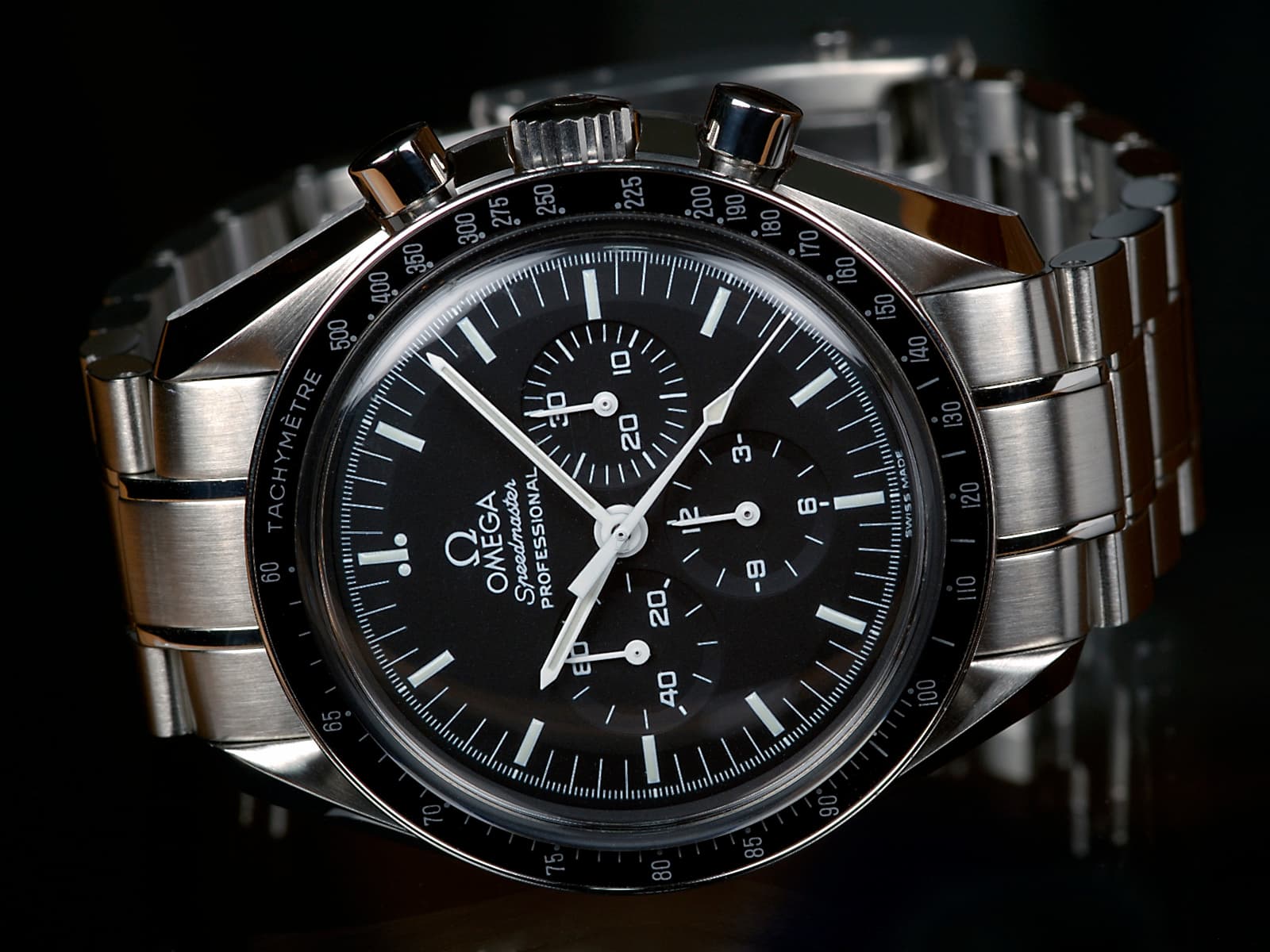
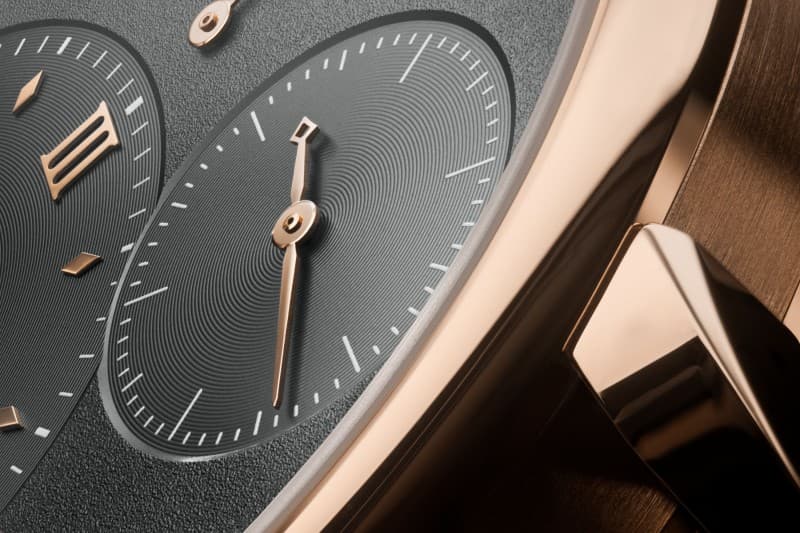
The hands are the metal pointers driven by the movement's wheel train to display hours, minutes, and (on most mechanical watches) seconds. Most watches have three hands; complications add further pointers for a second time zone, chronograph elapsed time, power reserve, and so on. Hand design is one of the most expressive decisions in watchmaking: the shape, finish, and proportion of hands define character as clearly as dial colour.
History
Early watch hands were gilded brass shaped into elaborate flame, tulip, and serpentine forms. The Breguet hand; a slender shaft ending in a hollow circle near the tip; was devised by Abraham-Louis Breguet around 1800 as a legibility aid and remains in continuous production on dress watches. The baton hand (straight, rectangular cross-section, no taper) became the 20th-century standard for clarity. Rolex's Mercedes hand; the distinctive three-spoke hour hand with a large filled circle near the tip; was introduced on the Submariner in 1959 to maximise legibility with a lume plot at low light. Dauphine hands (faceted triangular cross-section, tapering to a point) are the dress standard on Datejust and similar pieces. The evolution of luminescent materials tracks 100 years of chemistry: Radium was used until the late 1940s (radioactive, now a hazard on unserviced pieces); tritium replaced it from the 1950s to the 1990s (weakly radioactive, self-luminous); Super-LumiNova (photo-luminescent, non-radioactive, requires light charging) has been the standard since the mid-1990s.
How it works
Each hand is press-fit onto a dedicated arbor or pipe. The hour hand sits on the hour tube, driven by the going train at one revolution per 12 hours. The minute hand sits on the cannon pinion at one revolution per 60 minutes. The seconds hand sits directly on the fourth-wheel arbor at one revolution per 60 seconds. The angular relationship between the hands is set during assembly: if the minute hand does not point to 12 when the hour hand points to 12, the watch is incorrectly assembled. Regulating the alignment to within a fraction of a degree is part of final movement finishing.