Case
The metal shell that houses the movement
What it is
The case is the structural enclosure containing all other components: movement, dial, crystal, and crown. Most cases are made in three parts; caseback, middle, and bezel; though some designs are two-part or monobloc. Case material is one of the most consequential specifications: 316L stainless steel is the industry standard, while Rolex uses 904L (harder, more corrosion-resistant, but more difficult to machine). Titanium, yellow and white gold, ceramic, and carbon fibre each bring distinct weight, hardness, and finishing trade-offs.
History
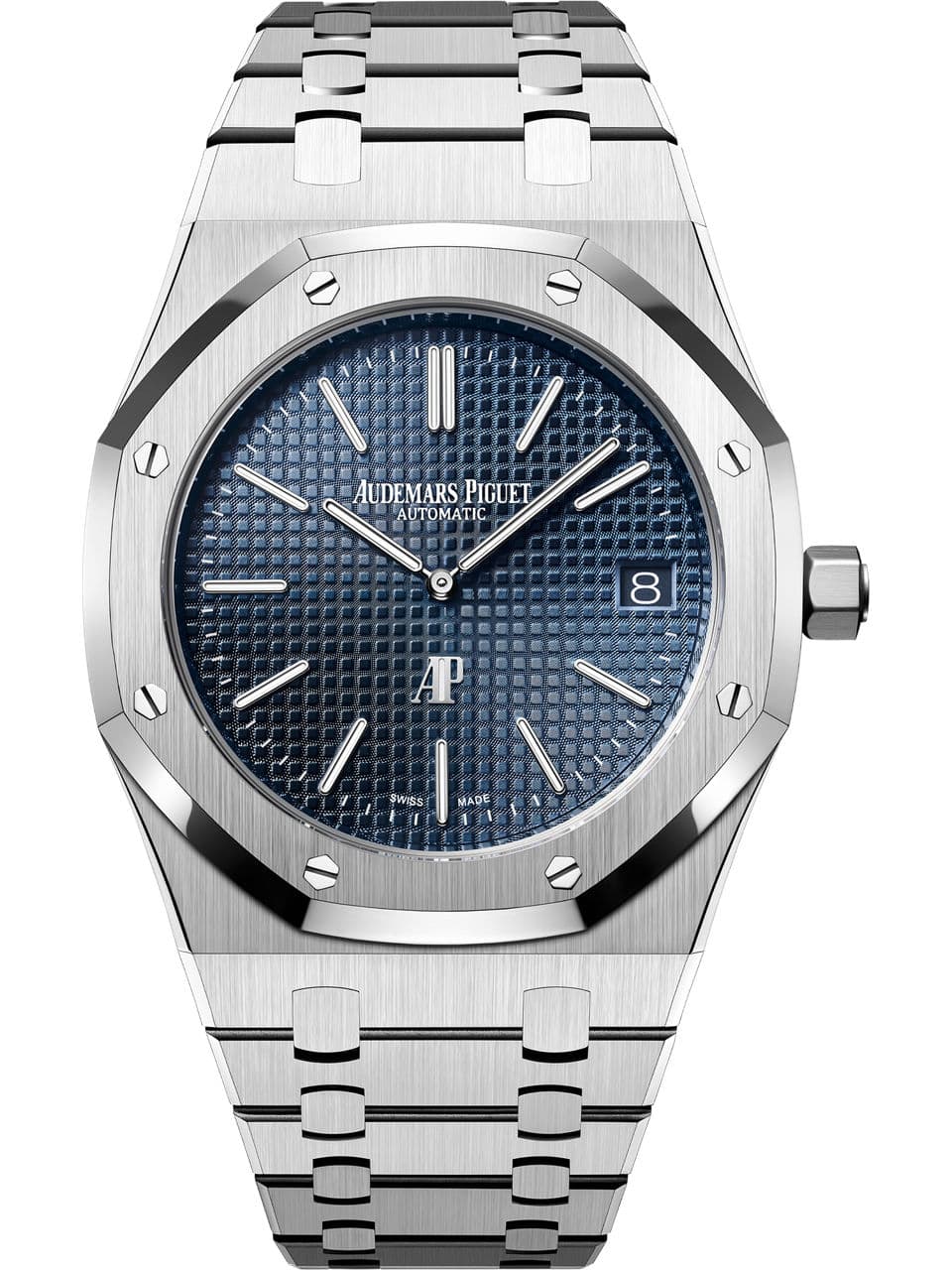
Early pocket-watch cases were precious metal objects; decorative shells that happened to contain a movement. Waterproofing arrived with the Rolex Oyster in 1926, the first commercial watch to combine a screw-down caseback and screw-down crown, making it genuinely sealed against water and dust. The tool-watch era of the 1950s and 1960s pushed case engineering into functional territory: the Blancpain Fifty Fathoms (1953) introduced the rotating bezel as an integral case feature; the IWC Aquatimer pioneered the internal rotating bezel. Modern sports-watch design was rewritten in 1972 when Gérald Genta's Audemars Piguet Royal Oak demonstrated that the case and bracelet together could constitute the entire design language of a watch. Rolex adopted 904L stainless steel across its full line in 1985; a commitment to a metallurgical standard that required retooling its entire production infrastructure.
How it works
The case creates a sealed environment for the movement. The caseback is either screwed down (most waterproof watches) or snap-pressed in; O-ring gaskets at the caseback and crown tube form the primary waterproofing barrier. Case finishing; brushed versus polished surfaces on the same piece; is executed by hand with abrasive tools and defines much of the visual character: a brushed flank reads as functional, a polished bevel reads as refined. The combination of the two on the same case requires each surface to be protected while the adjacent one is worked.