Live pricing is coming soon. Get notified when it is available for this reference.
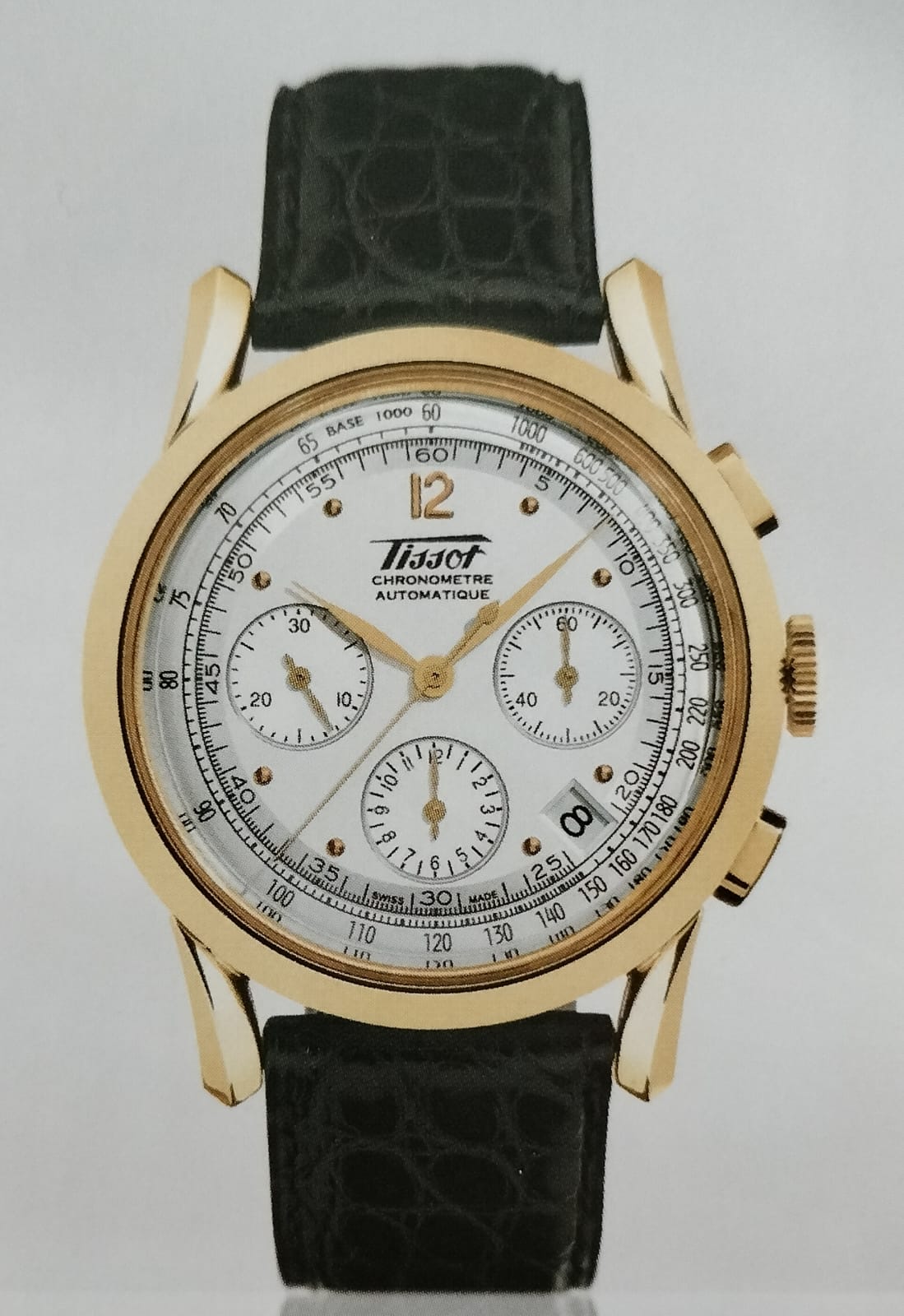
The Heritage Visodate 40mm brings back one of Tissot's most distinctive postwar designs: the sector-style dial with a large date aperture at 3 o'clock that gives the line its name. Where most date windows show a sliver of a disc, the Visodate shows the full numeral, large and legible, the way Tissot did it in the 1950s. For collectors who know their Swiss horological history, this ref is a straightforward acknowledgment of something worth reviving.
Tissot introduced the Visograf and Visodate lines in the early 1950s, distinguished by the large-format date display that used an oversized disc visible through a wide aperture rather than a standard cyclops window. Production of the original ran through the late 1950s and into the 1960s before the design was retired as fashion moved away from sector dials. Tissot revisited the Visodate name in the Heritage collection across several iterations; the current T118.430.16.271.00 was introduced in 2023 and runs the Powermatic 80.811, an ETA-derived movement with an 80-hour power reserve and silicon balance spring.
The sector dial layout, with its clean zones radiating from the center, is drawn directly from the period originals rather than being a loose interpretation.
Inspect the large date disc carefully at purchase: misalignment between the disc and the aperture edge is a known production variance, and a poorly centered date numeral looks worse on a dial with this much negative space. The sector printing on the dial can show smearing or inconsistency at the zone borders under magnification; this is a dial quality control issue, not a service problem, and cannot be corrected after purchase. The Powermatic 80.811 runs at 21,600 vph, slower than most modern movements, which is fine for daily wear but means the seconds hand has a slightly coarser sweep some buyers notice.
Verify the crown threads properly and the case back seats flush; early runs had scattered reports of case back finishing inconsistencies.
New retail sits around $650 to $700 USD through authorized dealers, and the secondary market has not moved significantly above that. Grey market pricing typically lands at a small discount to retail, 10 to 15 percent, making it one of the few cases where buying new from an AD is competitive. There is no meaningful premium for any dial color in this reference yet; the market is treating it as a standard production piece rather than a collector's target, which is accurate for now.
The Powermatic 80.811 is an ETA-based movement and Tissot recommends a service interval of approximately 8 to 10 years under normal use conditions. An independent watchmaker familiar with ETA architecture can service it; a full service including cleaning, oiling, and gasket replacement typically runs $200 to $350 USD outside the manufacturer. Tissot service centers are an option but generally priced higher and slower for a movement at this price tier.
Community + OSINT signals haven’t landed for this reference yet. We don’t publish a rating against zero signal — the number would mean nothing. Editorial body + caliber + market value still surface above; ratings appear once the signal corpus does.
The lozenge-shaped date aperture is the signature element; any round or rectangular window is incorrect for the Visodate.
| Area | What to check | What is correct | Red flag |
|---|---|---|---|
| dial | Lozenge date window shape | Date aperture has a distinctive lozenge shape at 3 exactly as on the original 1957 Tissot Visodate reference | Round or rectangular date aperture; indicates a dial from a different Tissot reference or a non-original dial |
| dial | Period-correct dial printing | Dial text and index style consistent with the 1957 revival aesthetic; Tissot and Visodate text correctly positioned | Modern-style dial printing inconsistent with the vintage revival design; incorrect font or text positioning |
| hands | Period-style hand shape | Hands consistent with the 1957 revival design; dauphine or sword profile appropriate to the Visodate reference |
| Contemporary-style hands inconsistent with the vintage revival aesthetic |