
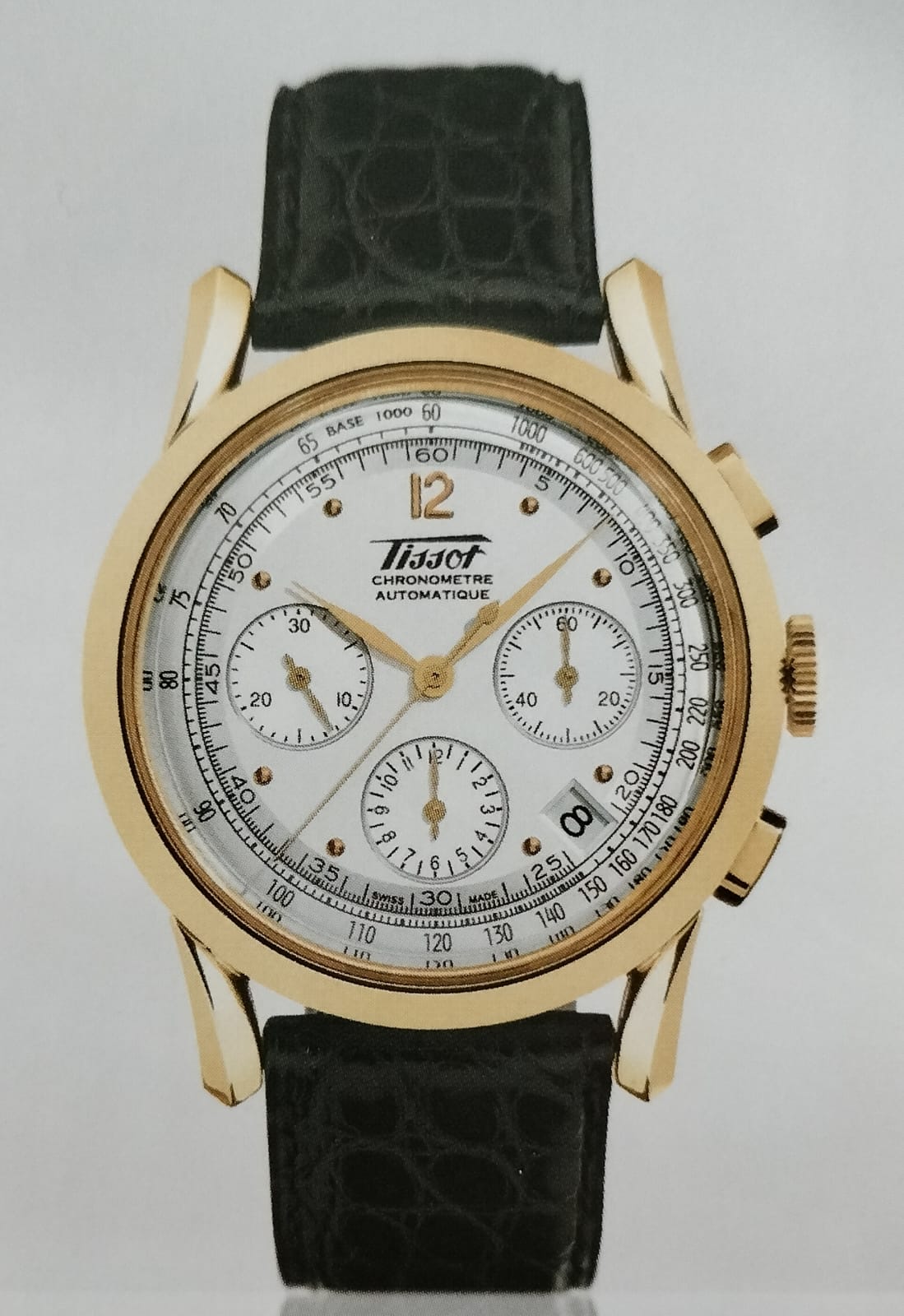


The Tissot Heritage Visodate | family history
The Tissot Visodate has the most distinctive dial in the brand's catalog: a sector-dial layout with color-coded zones separating the hours from the minutes track, in the tradition of 1930s and 1950s aviation and precision instrument dials. The original 1957 reference was a market curiosity; the modern revival attracts collectors who want genuine design at Swiss entry pricing. The Powermatic 80 caliber (80-hour reserve) is the correct movement for a watch that may sit unworn for a week.
Tissot’s vintage-reissue line: the Heritage 1948, Heritage Visodate, Heritage Navigator, and the 2024 PR516. Telegraphs Tissot’s 19th-century archive without leaving the entry-Swiss price band.
1957 · Original Visodate
Tissot introduced the Visodate at the 1957 Basel fair as a precision-legibility dress watch, with the sector-dial color coding derived from aviation instrument panels. The reference was not a commercial success at launch but entered the collector consciousness decades later.
No references from this era in the catalog yet.
2009-present · Modern revival, Powermatic 80
The modern Visodate revival initially used ETA 2824-2 movements; the current generation carries the Powermatic 80 with the 80-hour reserve and silicon balance spring. The sector dial and color-coded zones are faithfully reproduced. Street price is consistently under $700, making this one of the few genuine collector-interest watches at Tissot pricing.
No references from this era in the catalog yet.
How to read this family
Two honest questions for any Visodate buyer:
- Visodate or PRX? The PRX is Tissot's integrated-bracelet sport watch and the brand's current commercial darling. The Visodate is the brand's most design-interesting piece. These are not cross-shopping watches; they serve completely different aesthetics. The Visodate is for the collector who values design history; the PRX is for the collector who wants an accessible sport bracelet watch.
- Is the sector dial worth the compromise on legibility? The sector dial is fully legible once you learn the layout; the color zones actually help time-reading in practice. The compromise is that it requires a slightly different read than a standard chapter ring. The design dividend is real: this dial is more interesting than anything Tissot makes at the price.
Related families: Longines Heritage 1945
Sub-lines
- OpenThe Heritage Visodate: modern reissue of Tissot’s 1953 Visodate, the first watch to display the date as a single dial-side numeral. The Powermatic 80 caliber and 40mm steel case carry the period silhouette.
- OpenThe Heritage Petite Seconde: 40mm dress reissue from Tissot’s 1940s catalog, with a sub-seconds register at 6 o’clock. The ETA Unitas 6498-1 hand-wound caliber is visible through a sapphire caseback.
References in this family


Which ref to buy
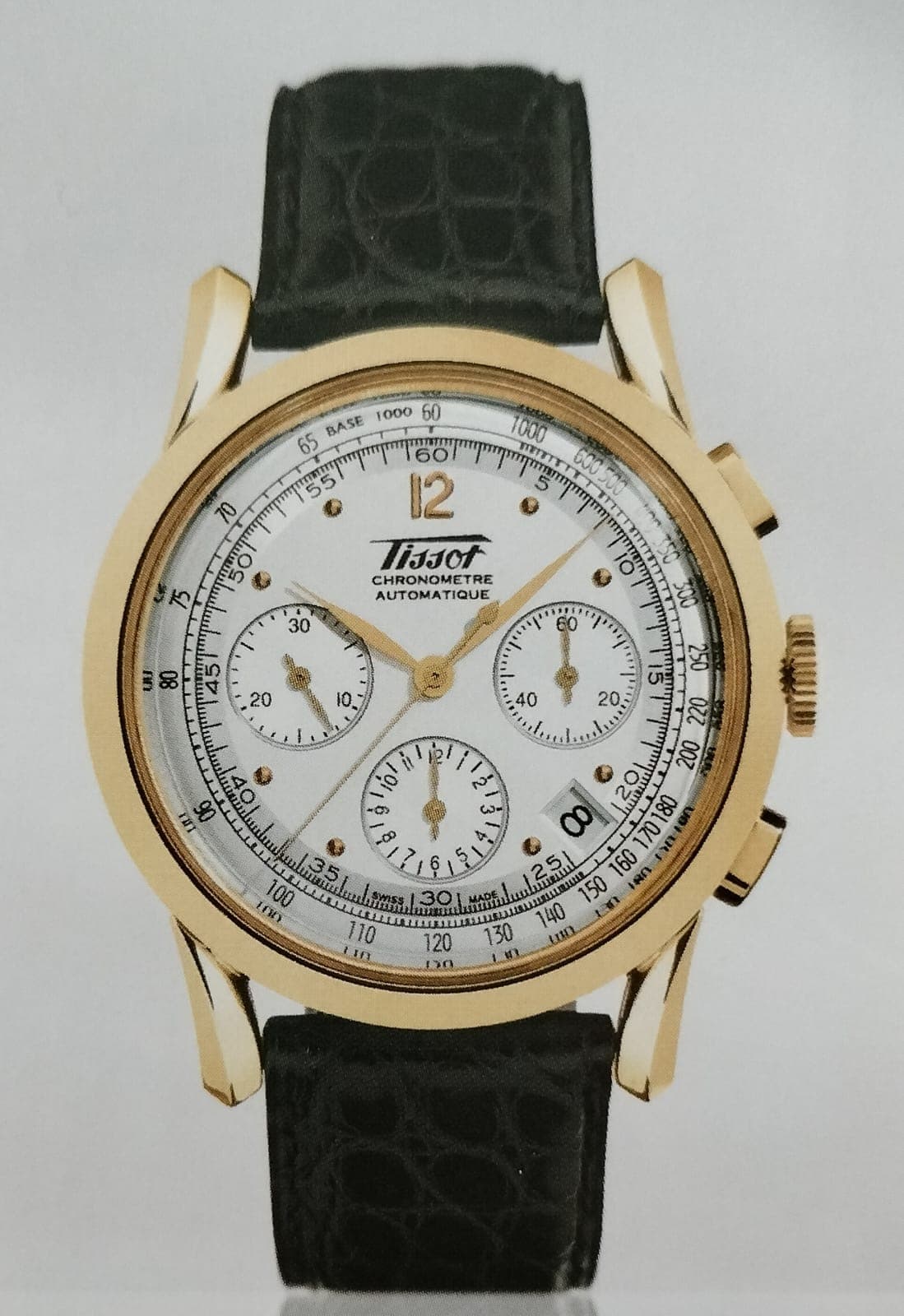
The Heritage line is Tissot's collection of vintage-inspired reissues drawn from the brand's 1948 and earlier archive. Three primary references: the Heritage 1948 (vintage reissue), the Heritage Visodate (offset date at 12 with ETA 2836), and the Heritage Petite Seconde (sub-seconds at 6, cleaner dial). All use Powermatic 80 or Tissot-badged ETA movements.
- 1Open
Heritage 1948 -- faithful reissue of the original 1948 reference, the most historically grounded Tissot in the catalog.
- The case for it:
- The 1948 reissue is dimensionally faithful: small case, original proportions, vintage-correct dial layout. For buyers who want an affordable vintage-styled watch that traces to real history, this is the honest choice.
- Consider instead if:
- The small case size limits the audience. Buyers who want vintage-inspired but need a larger case should look at the Visodate or a different brand.
- 2Open
Heritage Petite Seconde -- sub-seconds at 6, the cleanest dial in the Heritage line.
- The case for it:
- The sub-seconds dial layout is the most elegant in the Heritage family. No date, no clutter. The petite seconde at 6 gives the dial a classic dress watch structure.
- Consider instead if:
- The Powermatic 80 movement visible through the caseback is a solid movement, but the sub-seconds hand is driven by the same caliber -- there is no complication here, just a dial choice.
- 3Open
Heritage Visodate -- date at 12 with a sector dial, the period-correct complication.
- The case for it:
- The Visodate layout -- date window at 12 o'clock, sector dial -- is historically accurate and visually distinctive. It occupies a niche in the vintage-inspired space that very few current production watches fill.
- Consider instead if:
- The date at 12 requires setting the movement to display the date, which is a minor operational quirk. Buyers who want a cleaner dial should prefer the 1948 or Petite Seconde.
Rankings last reviewed 2026-06-07. Editorial perspective only. Not financial advice.