Live pricing is coming soon. Get notified when it is available for this reference.
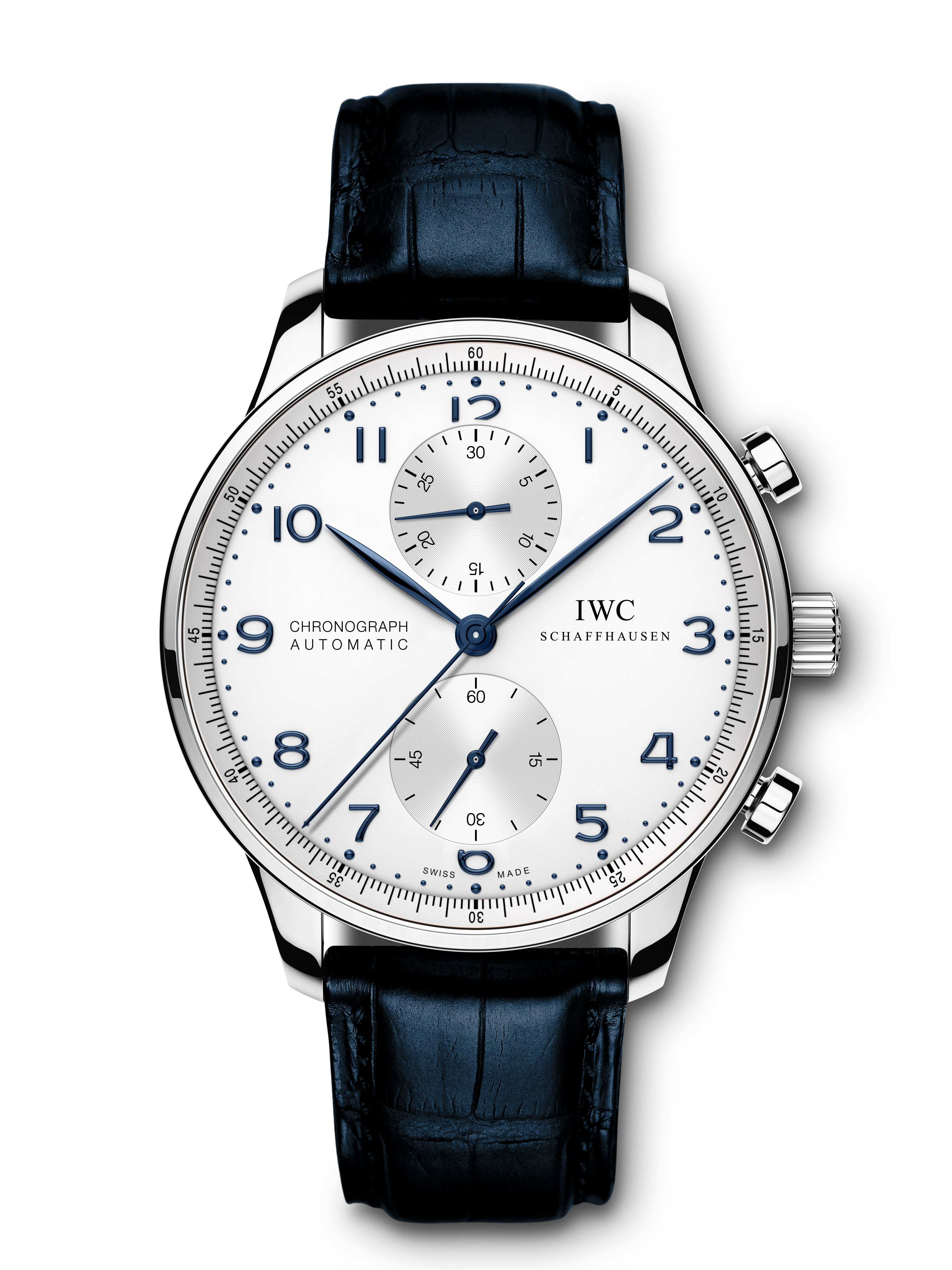
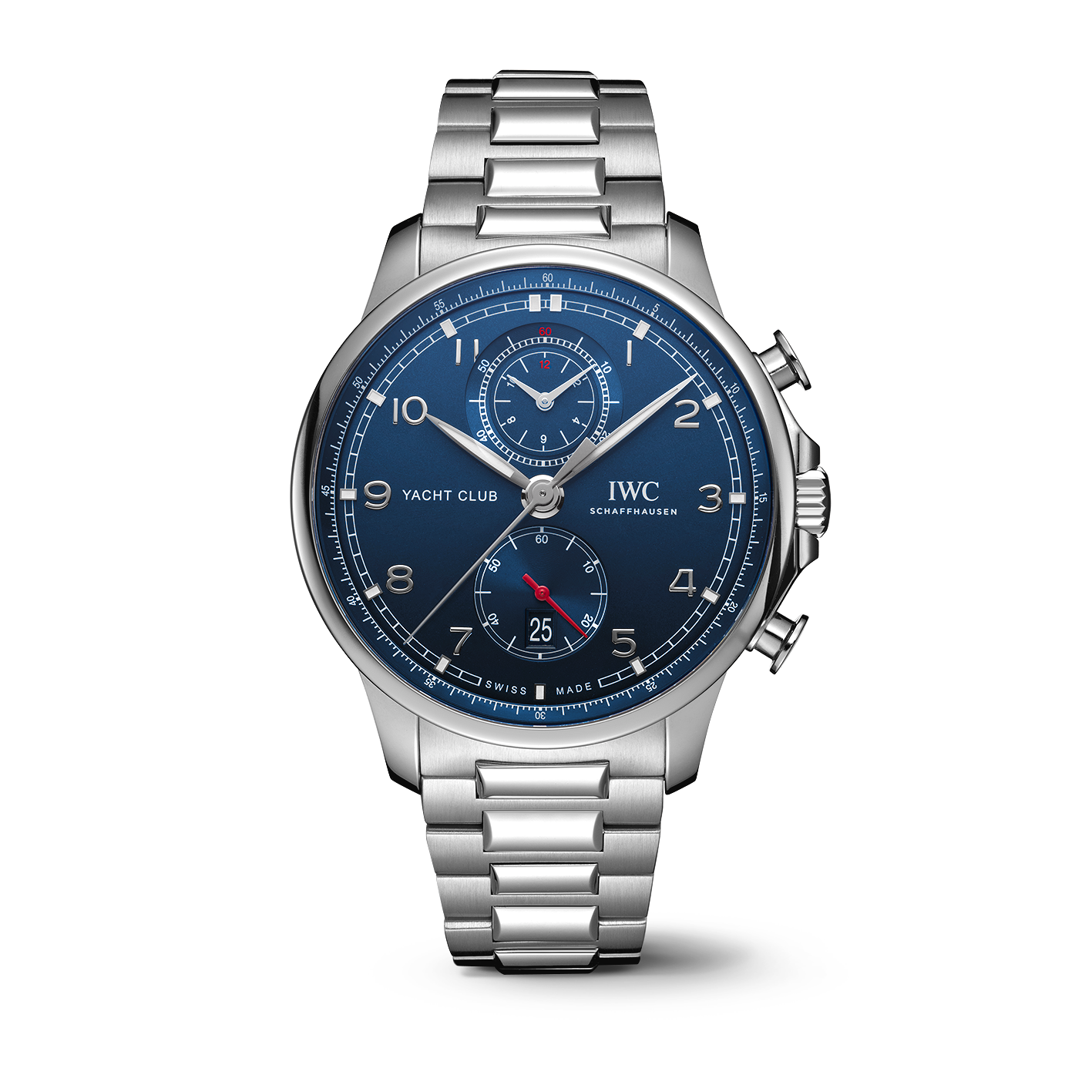
The Portugieser Yacht Club Chronograph is IWC's answer to critics who pointed out that the standard Portugieser Chronograph relied on an ETA Valjoux 7750. The 89361 caliber is fully IWC-developed, built in-house, and integrates a column-wheel and vertical clutch in a case that wears large at 43.5mm. Collectors who want the Portugieser aesthetic with genuine manufacture credentials look here first.
IWC introduced the Yacht Club Chronograph in 2013 as a sportier, more water-resistant companion to the dress-oriented Portugieser line, rated to 60 meters versus the standard chrono's 30. The 89361 is a direct-drive chronograph caliber with a 68-hour power reserve, column-wheel control, and a flyback function -- the pusher at 10 o'clock resets and restarts the chronograph in a single press. A rattrappante (split-second) variant using the 89361 R caliber has been offered in limited runs for buyers who want split-time capability.
Dial options across the production run have included navy blue and anthracite, with the navy variants drawing the most secondary-market interest. The reference has run continuously since 2013 with periodic dial and strap updates but no fundamental movement changes.
Flyback function is worth verifying: press the lower-left pusher at 10 o'clock and confirm the seconds hand snaps to zero and immediately restarts without a separate reset step. Pushers on used examples sometimes develop slop or sticking -- work both pushers through multiple cycles before committing. At 43.5mm the lug-to-lug is substantial; try it on before buying if wrist fit is a concern, since the rubber strap version wears differently than the alligator.
Inspect the ceramic bezel insert for chips at the 12 o'clock position, where it takes the most contact. The 89361 is a complex movement and IWC service is the only realistic option for anything beyond a regulation, so confirm service history and budget accordingly.
Pre-owned examples in steel trade in the $6,500 to $9,000 range depending on condition, box-and-papers completeness, and dial color -- navy commands a modest premium over anthracite of roughly $500 to $800. The rattrappante variants (89361 R) are rarer and price meaningfully higher, often $12,000 and up. The Yacht Club Chrono has not kept pace with appreciation in Patek or AP chronographs, which makes it a strong value proposition for a certified in-house flyback chronograph at this price point.
Retail on current models sits above $15,000, so the secondary market discount is real and persistent.
The 89361 caliber carries an IWC-recommended service interval of approximately 8 years. IWC boutique or authorized service center pricing for a full chrono service typically runs $1,200 to $1,800 USD depending on parts and condition. Independent watchmakers capable of servicing this movement exist but are rare; for warranty protection and genuine parts, IWC service is the practical choice.
Community + OSINT signals haven’t landed for this reference yet. We don’t publish a rating against zero signal — the number would mean nothing. Editorial body + caliber + market value still surface above; ratings appear once the signal corpus does.
Test the regatta countdown timer; it must set correctly for both 5-minute and 10-minute pre-start sequences before purchase.
| Area | What to check | What is correct | Red flag |
|---|---|---|---|
| case | Regatta timer pusher at 10 o clock | Pusher at 10 o clock activates the regatta countdown; operates cleanly with no binding | Pusher at 10 o clock binding or failing to activate countdown; may indicate service need |
| dial | Regatta timer countdown display | Countdown function sets for 5-minute and 10-minute sequences correctly; countdown display advances cleanly | Countdown not advancing correctly; timer not resetting to the correct interval |
| caseback | Cal. 89361 movement | Cal. 89361 confirmed through caseback; regatta complication architecture visible | Any caliber other than 89361; standard chronograph without regatta mechanism |