
The IWC Portugieser | family history
Two Portuguese watch merchants walked into IWC in 1939 and asked for a wristwatch accurate enough for navigation. The case they needed to fit a pocket-watch caliber was larger than anything IWC had made for the wrist: 42mm at a time when 36mm was already considered large. The dial that resulted from fitting a pocket-watch movement into a wrist case gave the Portugieser its signature vocabulary: large printed Arabic numerals, thin baton hands, a railway-track minute ring running from the center of the dial to the chapter ring edge. That vocabulary has not materially changed in eighty-five years.
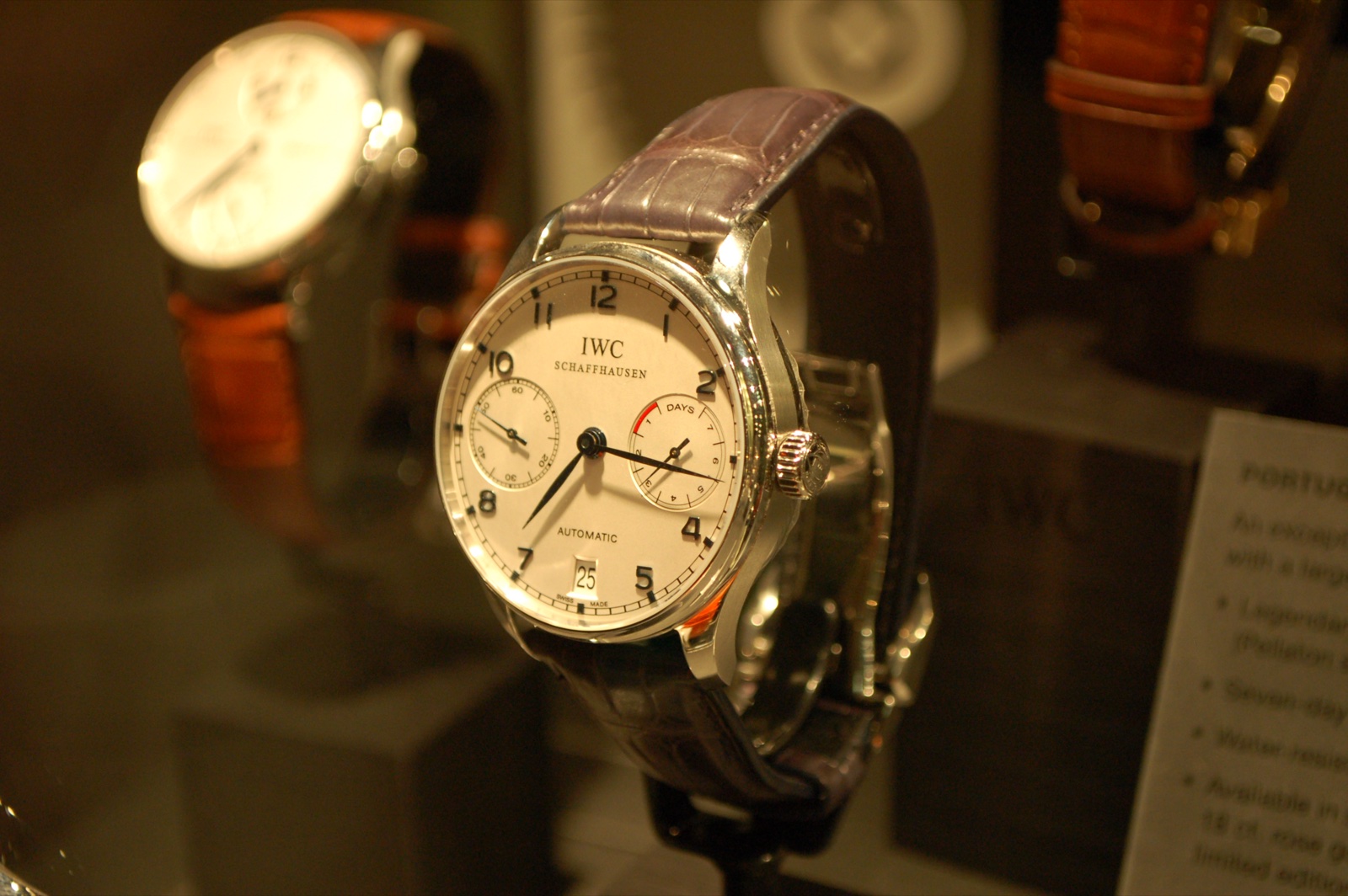
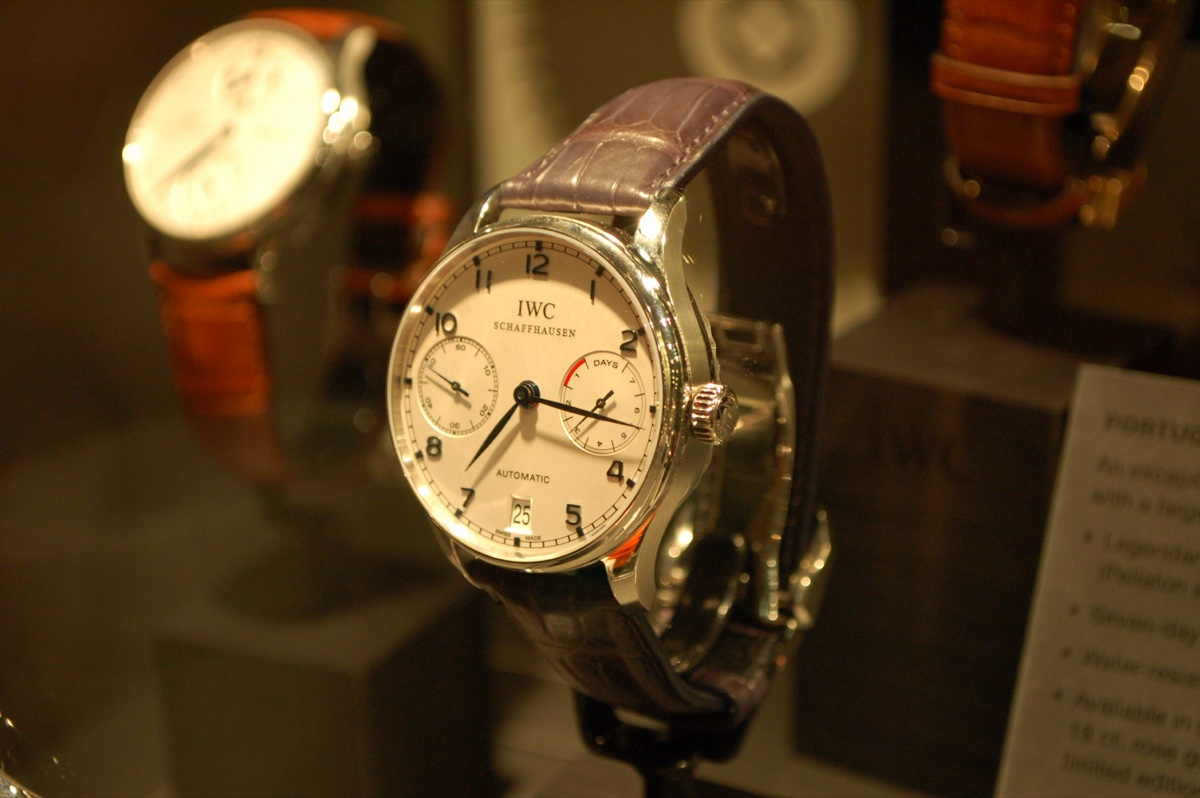
IWC’s large dress watch, commissioned in 1939 by Portuguese importers who wanted a wristwatch with marine-chronometer accuracy. Defined by the Arabic numerals, leaf hands, and railway-track minute ring; the modern Automatic 7-day is the family’s archetype.
1939–1993 · The original Portugieser and the long hiatus
IWC produced the original Portugieser (refs. 325 and 326) from 1939 in small numbers, running Pallweber pocket-watch ebauches in oversized cases. The design was a bespoke commission, not a catalog watch, and production was limited. Through the postwar decades the Portugieser remained a collector's curiosity rather than a commercial line. IWC relaunched the Portugieser in 1993 for the company's 125th anniversary with updated movements but the original dial proportions intact. The 1993 relaunch is where the modern Portugieser story begins.
No references from this era in the catalog yet.
1993–2007 · The Automatic 7-Day and the Chronograph: the modern line defined
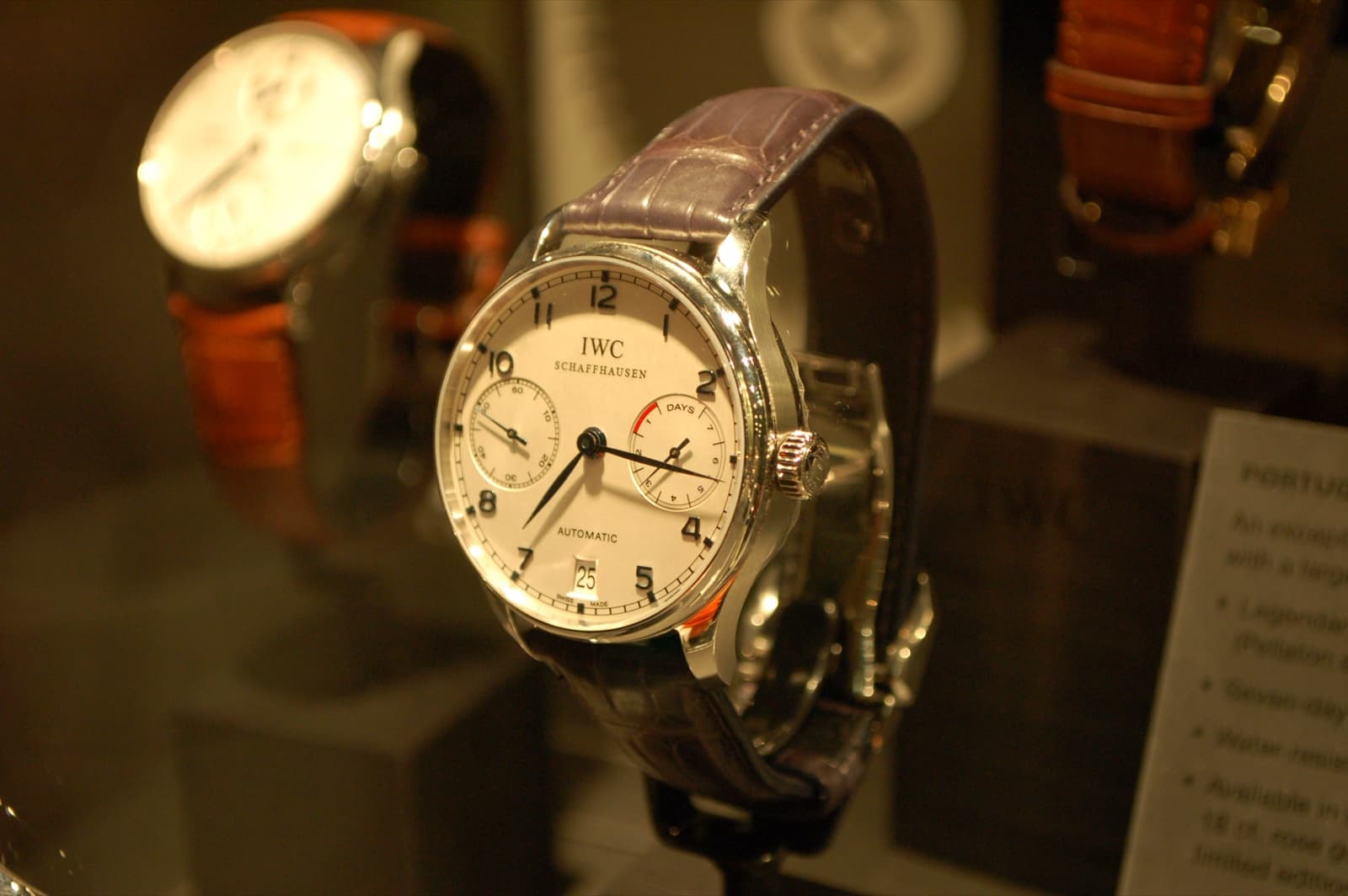
IWC's 1993 relaunch introduced the Portugieser Automatic 7-Day (ref. IW500101): caliber 5000, 7-day power reserve with a retrograde reserve indicator at 3 o'clock, 42mm case. The 7-day movement is the Portugieser's mechanical signature; it answers why a watch this clean needs a large case. The Portugieser Chronograph (ref. IW371480) on Valjoux 7750-derived caliber arrived in the same period. These references established the two commercial anchors of the family that persist today: the automatics with extended reserve and the chronographs.
No references from this era in the catalog yet.
2007–present · The Hand-Wound 8 Days and the modern calibers
IWC introduced the Hand-Wound 8 Days (ref. IW510201) in 2007: caliber 59000-series, manual-wind, 8-day power reserve displayed via a sub-register. The hand-wind construction keeps the case slim. The 8-day reserve means you can set it Sunday and not wind again until the following Sunday; the reserve indicator makes the timing legible. The current Portugieser Automatic (IW500705, 2021) on caliber 52010 updates the 7-day concept with an improved movement architecture and a more legible power-reserve display. The Hand-Wound remains the slimmer, quieter alternative.
- OpenPortugieser Automatic (7-day) · IW500712most soughtThe reference that revived collector interest in the Portugieser family; seven-day power reserve and in-house movement at a dress-watch footprint.
- Open
2010–present · The Chronograph family
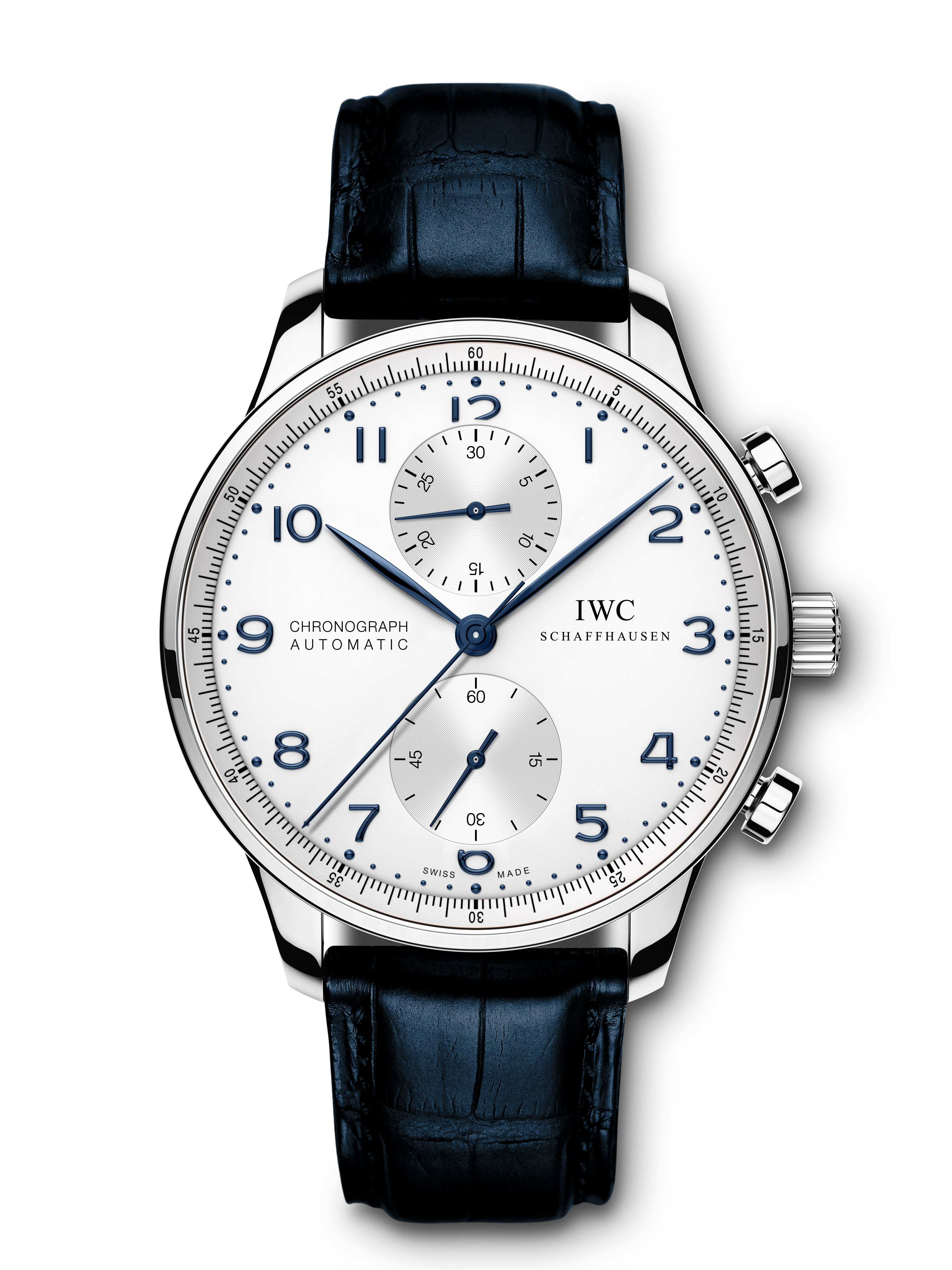
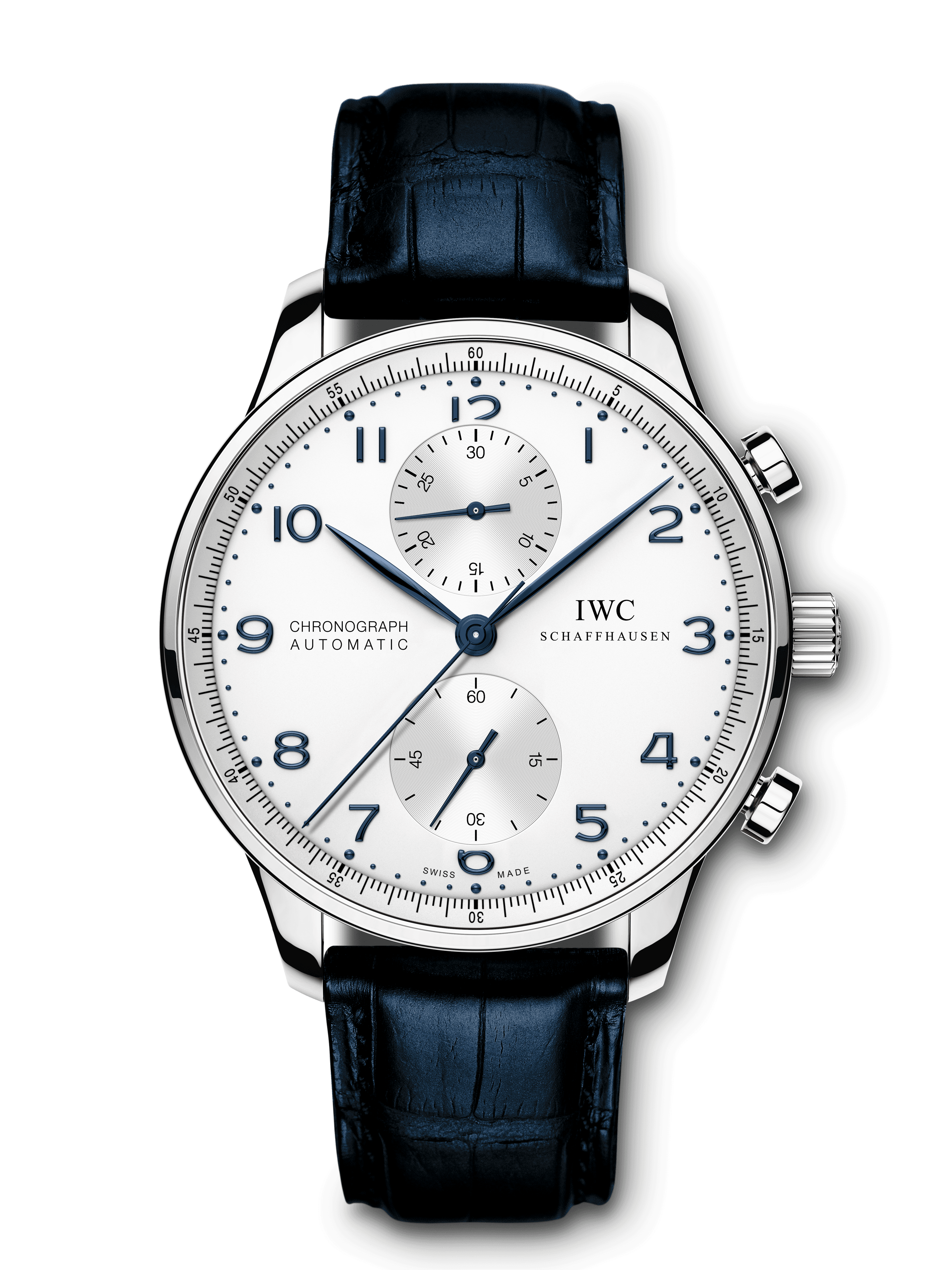
The modern Portugieser Chronograph (IW371601, ref. 3714) is the most-collected reference in the family: 41mm, caliber 69355 (a 60-second column-wheel chronograph with a distinctive single-pusher design on some variants, or two-pusher on the standard). The 42mm Chronograph Rattrapante (IW371202) adds a split-seconds function and is the top of the chronograph range. The standard 41mm Chronograph is what most buyers reaching for a Portugieser Chrono will be handling. The dial is one of the cleanest chronograph layouts at this price: sub-registers at 6 and 12, a tachymetre on the inner chapter ring.
2019–present · The Yacht Club Chronograph and the 40mm Auto
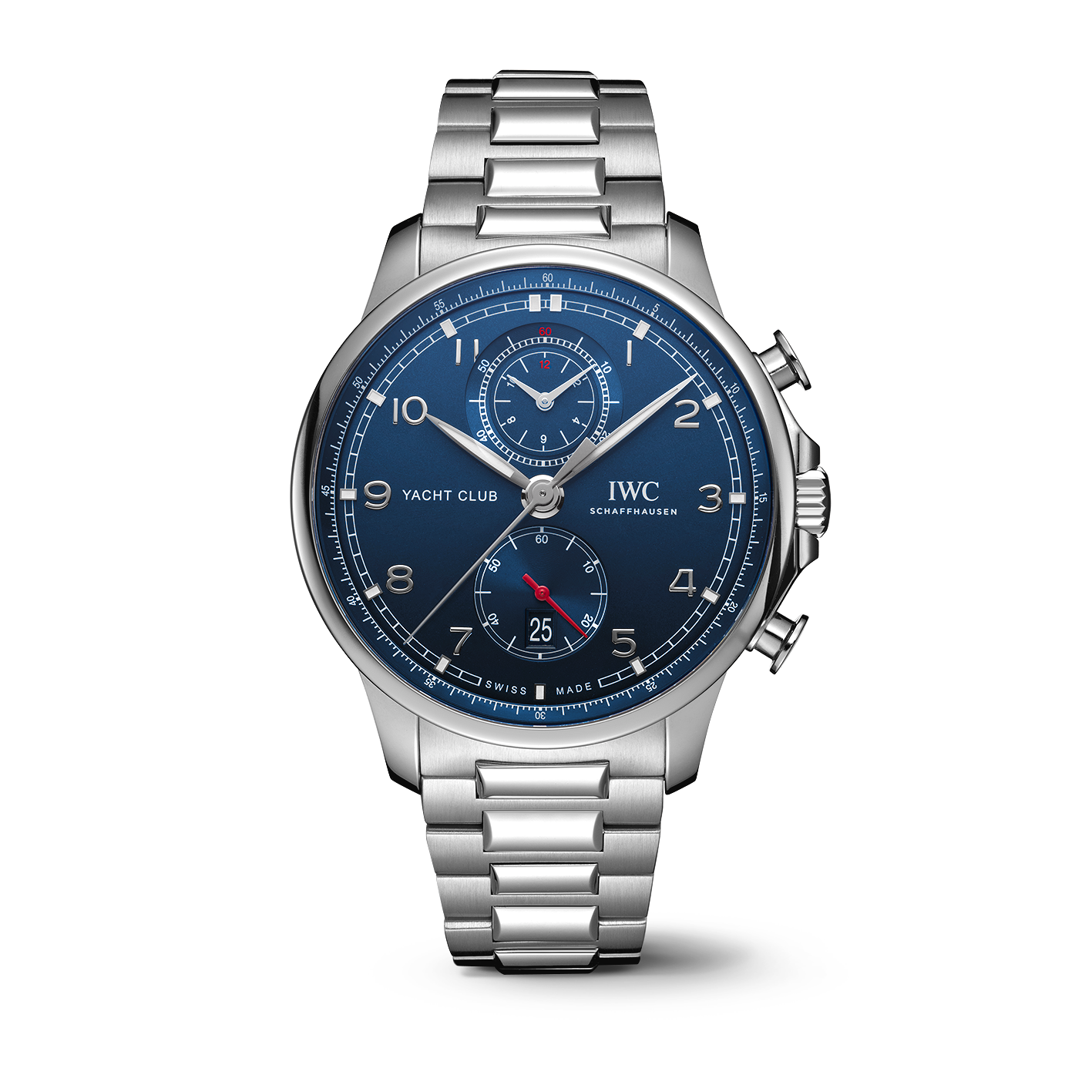
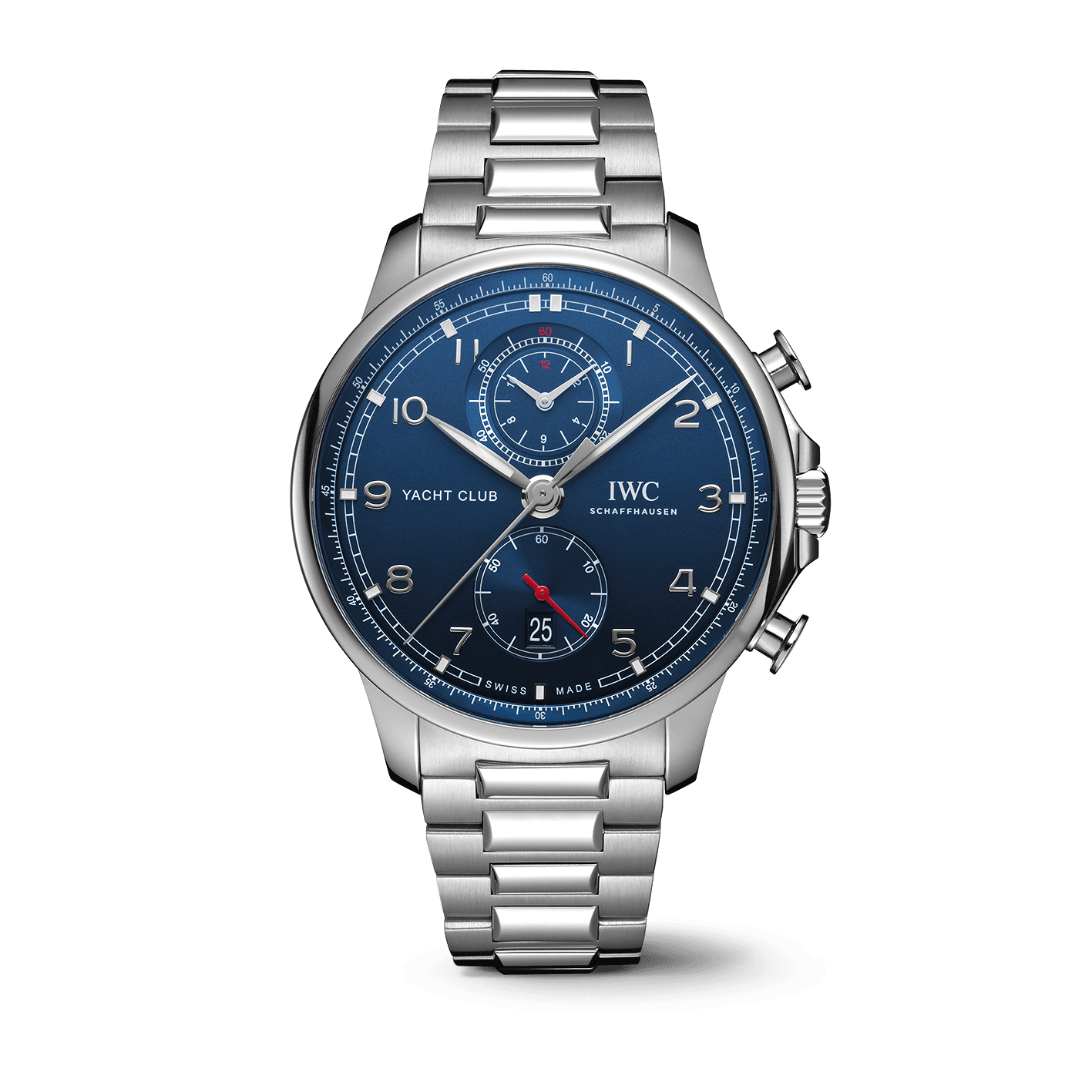
The Portugieser Yacht Club Chronograph (IW391202, 2019) is the sport-dress Portugieser: rubber strap option, 45m water resistance (up from the standard line's 30m), caliber 69380 with a flyback function. It is the Portugieser for buyers who want the dial vocabulary in a more robust package. The Automatic 40mm (IW358305) is the more conservative entry: 40mm vs the traditional 42mm, making it more wearable for smaller wrists without changing the essential design language.

How to read this family
Three honest questions for any Portugieser buyer:
- Automatic 7-Day or Hand-Wound 8 Days? The 7-Day Automatic (caliber 52010) is the dress-sport daily wearer: automatic winding, extended reserve, thicker case. The Hand-Wound 8 Days is the more contemplative choice: thinner profile, manual wind, the ritual of winding. Both display the extended reserve prominently on the dial; the execution differs. For buyers who want a Portugieser as a daily watch that tolerates being on a winder or in a travel bag for a week, the 7-Day Auto is the practical answer. For collectors who want the correct proportions for a watch this clean, the Hand-Wound is slightly slimmer and more architecturally honest.
- Is 42mm too large? The historical reason the Portugieser was 42mm was mechanical necessity; the pocket-watch movement required it. For a modern buyer, 42mm on a dress watch is genuinely large. The current automatic runs 42.3mm; the 40mm variant (IW358305) is the answer if you find 42mm uncomfortable on the wrist. The proportions of the dial are designed for the larger case; the 40mm works but the dial looks slightly sparse. If you can wear 42mm, do. If you cannot, 40mm is the right compromise.
- Portugieser Chronograph or Carrera / Navitimer? The Heuer Carrera (vintage) and the Breitling Navitimer are sport chronographs; the Portugieser Chronograph is a dress chronograph. The Navitimer has a tachymetre slide rule; the Carrera has a racing-instrument aesthetic; the Portugieser has a clean sub-register dial built on a large-format dress template. They are not competing for the same buyer. If you want a chronograph you will wear with a suit as often as with a casual shirt, the Portugieser is the right answer.
Related families: IWC Pilot · IWC Ingenieur · Navitimer
Sub-lines
- OpenThe chronograph branch of the Portugieser: the long-running 3714 reference (1998–present) carried the Valjoux 7750-base cal. 79350 for two decades before the 2020 generation introduced the in-house cal. 69355. Two subdials at six and twelve, applied feuille hands, and the railway-track minute ring of the family.
References in this family
Which ref to buy
The Portugieser is IWC's defining dress-sport crossover -- large case, clean dial, legible typography. It appeals to buyers who want horological seriousness without a case full of complications.
- 1Open
The 46mm seven-day power reserve Portugieser -- the classic configuration.
- The case for it:
- The 46mm cushion-shaped case, the large power reserve indicator, and the cal. 51011 with visible power reserve architecture make this the most photographed Portugieser. Seven-day autonomy is a practical advantage for weekend watches. Strong secondary demand from collectors who want a statement piece.
- Consider instead if:
- At 46mm it wears large. Most wrists under 7.5 inches will find it too big for anything but a formal occasion. The 40mm auto is the better daily choice.
- 2Open
40mm Portugieser Automatic -- the wearable everyday version of the family.
- The case for it:
- Cal. 82100 is a COSC-certified manufacture movement in a 40mm package. Most accessible Portugieser by price. More daily-wear versatility than the 46mm.
- Consider instead if:
- The smaller case loses some of the drama that defines the Portugieser look. Some buyers find the proportions less compelling than the 46mm.
- 3Open
Rattrapante-adjacent chronograph -- two registers, clean layout.
- The case for it:
- The 42mm chronograph keeps the Portugieser's legibility intact. Cal. 89361 has a flyback function and vertical clutch. Better secondary liquidity than the niche complications.
- Consider instead if:
- The 7-day is the ref most people picture when they think "Portugieser." The chrono is a lateral move rather than an upgrade.
- 4Open
Hand-wind with eight-day power reserve -- the most mechanical Portugieser experience.
- The case for it:
- Manually wound movements reward engagement. The subsidiary seconds and the double power reserve bars on the dial are uniquely legible. Undervalued relative to mechanical content.
- Consider instead if:
- Hand-winding is a daily commitment. Less liquid secondary than the auto. Specific buyers only.
- 5Open
Perpetual calendar in the Portugieser case -- rare complication for a large-case watch.
- The case for it:
- Perpetual calendars are the most prestigious calendar complication. IWC's perpetual mechanism is well-regarded and has been refined over decades.
- Consider instead if:
- At this price, Patek and AP offer competing perpetual calendars with stronger brand residual value. The IWC makes sense for buyers who prefer understated provenance.
- 6Open
Sport-inflected chronograph -- the Portugieser with a different character.
- The case for it:
- Larger and sportier than the standard chrono. Targeted at a specific aesthetic preference.
- Consider instead if:
- The original 7-day and 40mm auto have more consistent secondary demand. The Yacht Club reads differently from the classic Portugieser ethos.
Rankings last reviewed 2026-06-06. Editorial perspective only. Not financial advice.