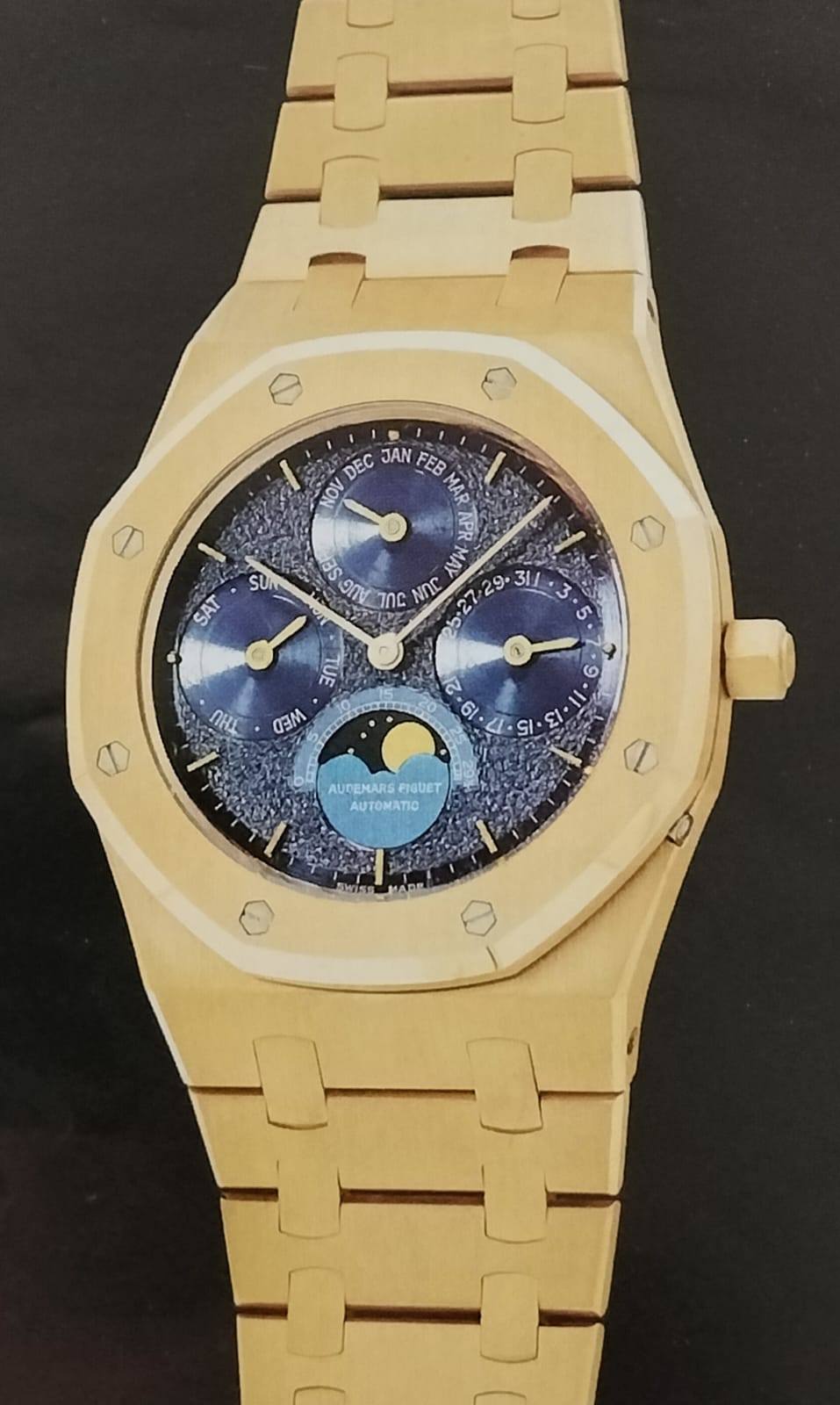
The Royal Oak Day-Date in rose gold is a relatively under-appreciated complication reference compared to the perpetual calendar; secondary prices are fair and represent good value for buyers who want a complete Royal Oak date display.
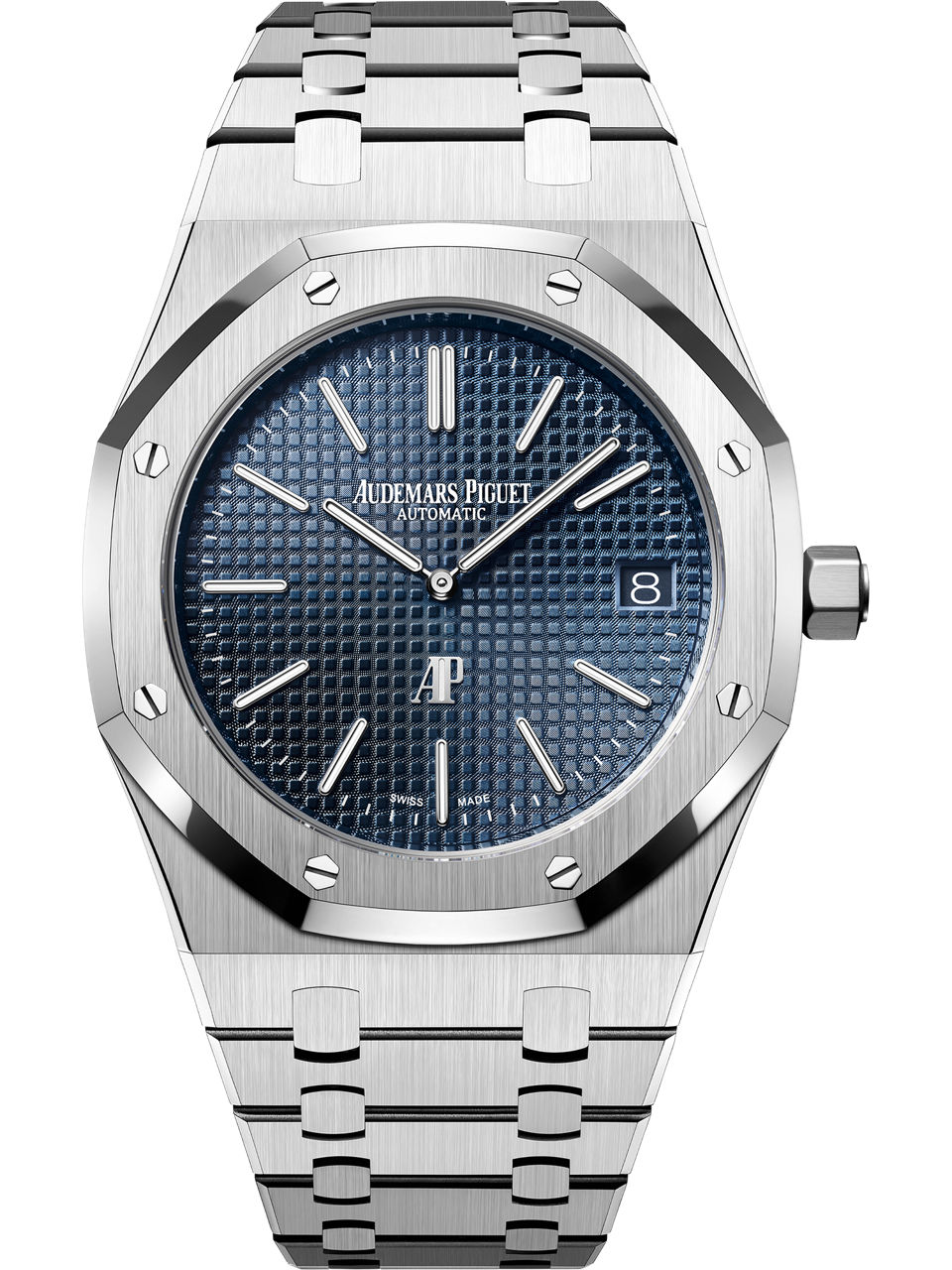
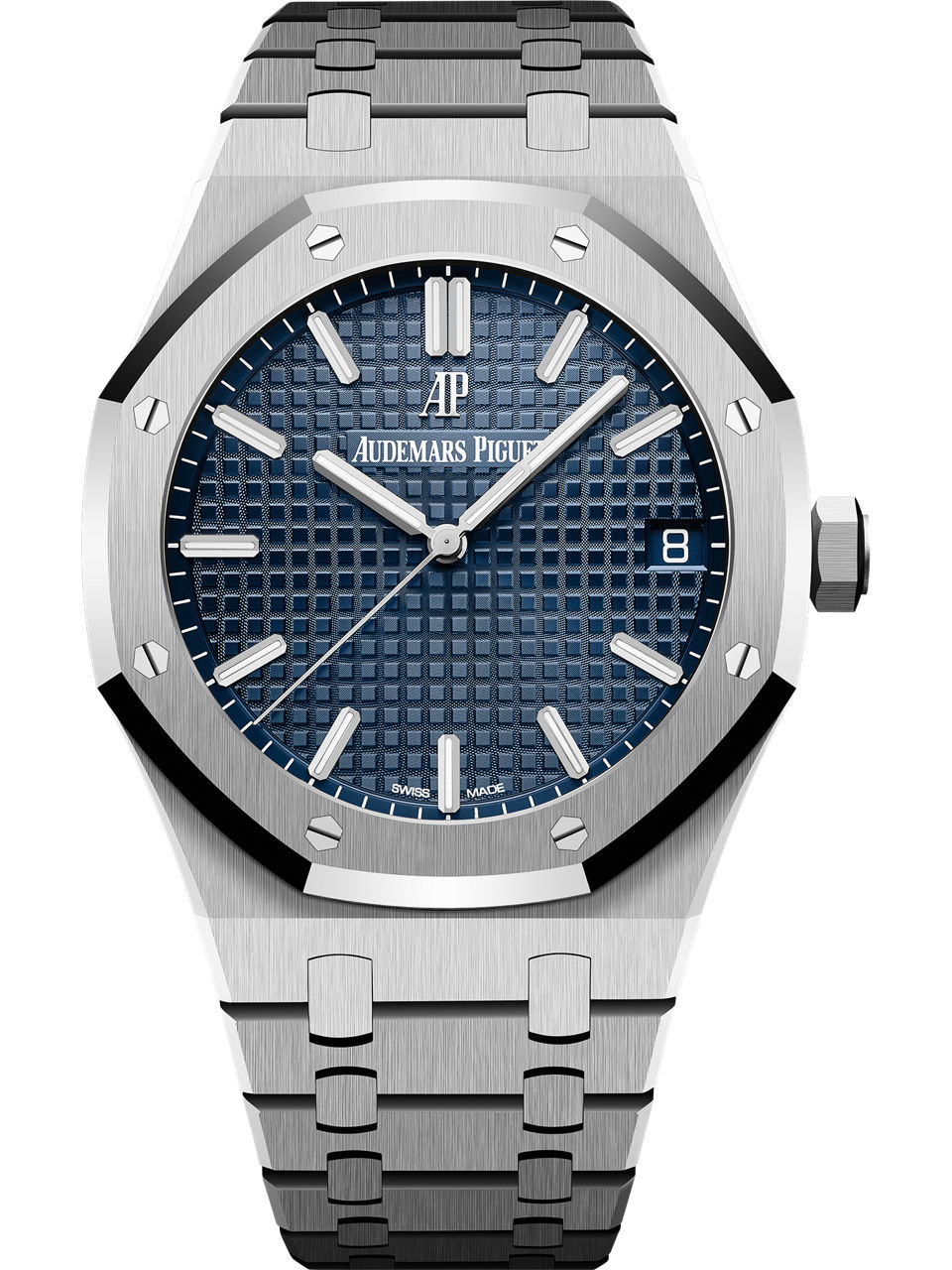
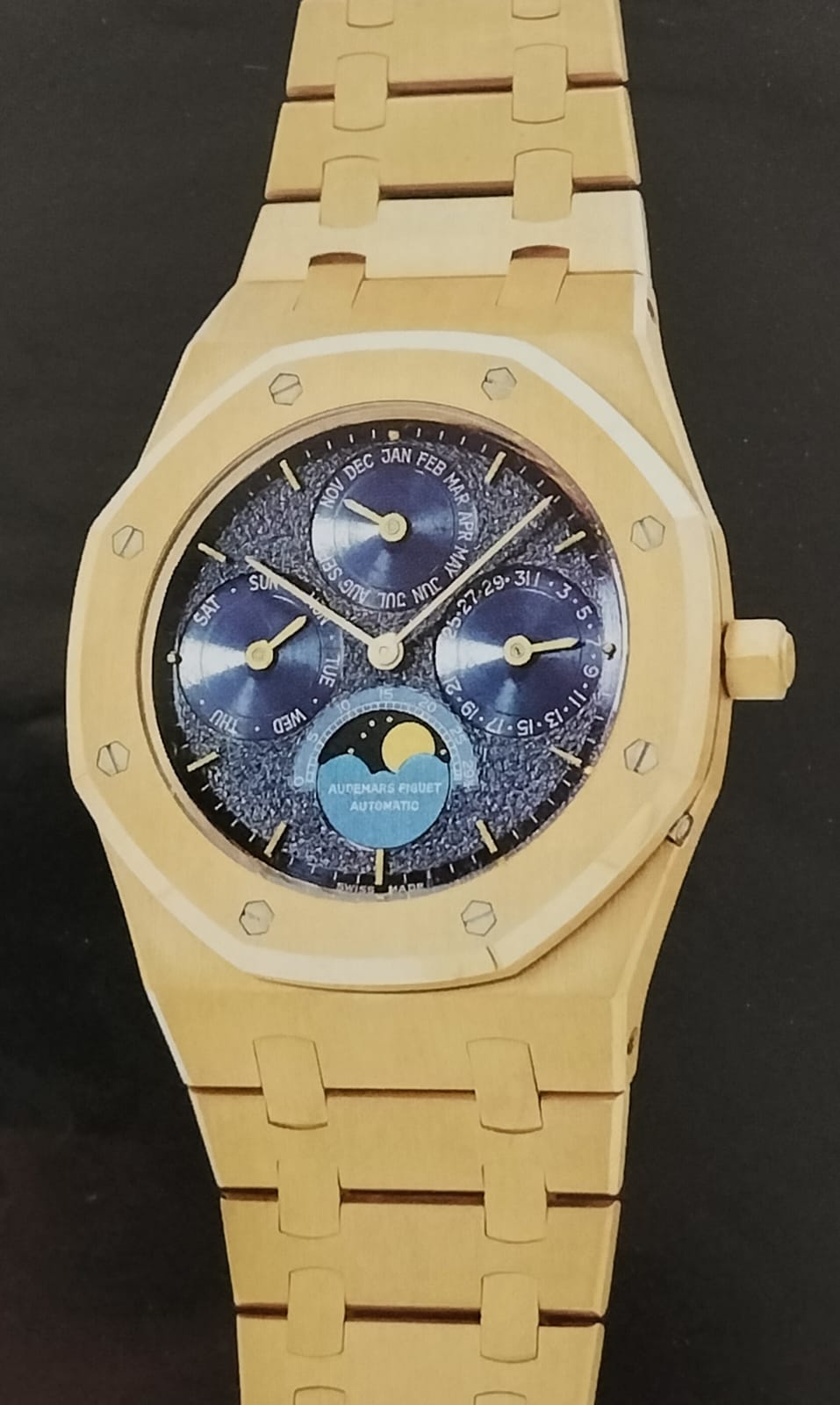
The 26320OR.OO.1220OR.02 is the Royal Oak in rose gold with a day-date complication: two apertures at 6 o'clock showing the day of the week and full date against an integrated dial. It runs the 2120, one of the thinnest automatic movements ever made, keeping the Royal Oak's signature slim profile intact. Collectors who want Royal Oak presence without a sub-dial cluster , and who prefer a bracelet watch that wears under a cuff , tend to choose this over the chronograph.
AP introduced the day-date variant in the Royal Oak line as a natural step up from the three-hand reference, adding a useful complication without disrupting Gerald Genta's original geometry. The 26320OR has been in production since 2012, pairing the rose gold case with the matching 1220OR bracelet for a fully integrated look. The movement inside is the caliber 2120, a peripheral-rotor design that allows a total movement height of 2.45mm , thin enough that the watch sits flat without the rotor visible from the dial side.
A closely related reference, the 26330OR, adds a small seconds subdial; buyers who want a cleaner dial at 6 o'clock favor the 26320OR. Rose gold production volumes are lower than steel, so examples come to market less frequently than the equivalent stainless references.
The 2120's peripheral rotor is a precision component that wears differently than a central rotor , request service records and ask specifically whether the rotor pivot has been inspected. Bracelet stretch is the most visible defect on this reference: examine each link for slop and check the clasp for play, because full bracelet refurbishment from AP is expensive and partial link replacement is rarely invisible. Rose gold cases show fine scratches and polishing wear more readily than steel; look at the case flanks under direct light for over-polishing that rounds the beveled edges, which is irreversible.
The day and date quick-set mechanism runs through a dedicated corrector , test both independently on any pre-owned example, since a sticky corrector can indicate deeper movement work is needed. Finally, confirm the dial originality: aftermarket diamond dials and re-dialed examples exist in the Royal Oak market, and AP authentication records are the only reliable check.
New retail on the 26320OR runs roughly $35,000 to $40,000 USD, but AP's authorized dealer allocation for rose gold Royal Oak is tight and waitlists exist. Pre-owned examples in excellent condition with box and papers have traded in the $32,000 to $38,000 range, occasionally at a slight discount to retail when the grey market softens. Steel Royal Oak day-date references trade at a premium over rose gold on the secondary market because steel allocation is even tighter; rose gold is the more attainable variant for buyers willing to pay retail or near it.
Condition and completeness of bracelet links matter more than usual here because AP link replacements are priced individually and add up fast.
Community + OSINT signals haven’t landed for this reference yet. We don’t publish a rating against zero signal — the number would mean nothing. Editorial body + caliber + market value still surface above; ratings appear once the signal corpus does.
Rose gold Tapisserie has a warm hue; any cool-toned Tapisserie indicates a steel dial swap into a rose gold case.
| Area | What to check | What is correct | Red flag |
|---|---|---|---|
| dial | Tapisserie hue for rose gold variant | Warm, rose-tinted Tapisserie guilloché; applied indices in rose gold matching the case metal; warm overall tone under neutral lighting | Cool-toned or silver Tapisserie indicating a steel-specification dial; index metal color inconsistent with rose gold |
| dial | Day and date display | Full day name on day disc (not abbreviation); date window at 3; disc printing consistent with AP house style | Abbreviated day names; date window in wrong position; disc printing inconsistent with AP specification |
| case | Rose gold case metal | Warm rose gold color consistent throughout case, bezel, and bracelet; no color banding indicating plating | Color banding at wear points; inconsistent tone between case and bracelet links indicating mixed metals |
Editorial estimate. Actual prices vary by condition, date, and box/papers status. Live pricing data is in development.
The caliber 2120 calls for a service interval of approximately 5 to 7 years under normal wearing conditions. AP factory service for this movement runs $2,000 to $3,500 USD depending on parts required, with the peripheral rotor and its pivot being the component most likely to need attention on older examples. Independent watchmakers who are competent with thin AP movements exist but are rare; confirm any non-AP service was done by someone with documented experience on the 2120 before buying.