

The IWC Pilot's Watch | family history
IWC made its first dedicated pilot's watch in 1936: the Spezialuhr für Beobachtungsflugzeuge (Special Watch for Observation Aircraft), a black-dial, large-numerals instrument designed for legibility in a cockpit. The anti-magnetic specifications and the aviation-instrument aesthetic have defined the family ever since. The Mark numbering series that started in the 1940s is the commercial backbone of the IWC pilot lineup; the Big Pilot is the statement piece. Together they make the case that IWC's pilot watches are not a design reference but a functional lineage.
IWC’s aviation line, tracing back to the 1936 Mark IX. The Mark XVIII and its successors are the contemporary core; the Big Pilot and Pilot’s Chronograph extend the family.
1936–1993 · The early Marks: from war instruments to the Mark XI
The IWC Spezialuhr of 1936 established the vocabulary: large case, black dial, Arabic numerals, prominent crown for operation with gloved hands. The Mark XI (1948–1985) was the most significant early commercial reference: procured by the RAF, the Royal Australian Air Force, and other military air forces, it ran on caliber 89 (then 401) with anti-magnetic iron inner case. The Mark XI is the ancestor every modern IWC pilot watch references visually. Original examples in genuine military configuration are in five-figure collector territory and prized for case condition and movement provenance.
No references from this era in the catalog yet.
1994–2012 · The Big Pilot and Mark XV/XVI: commercial expansion
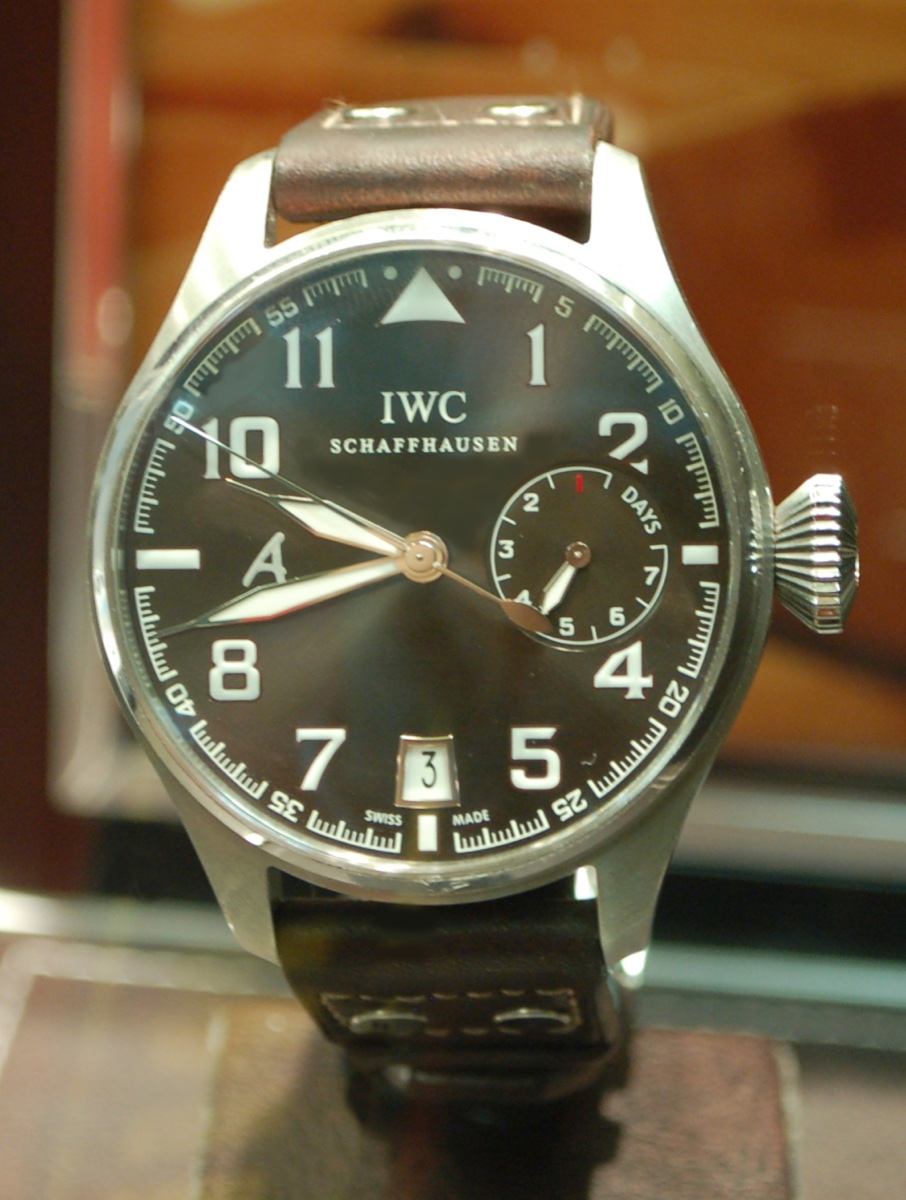
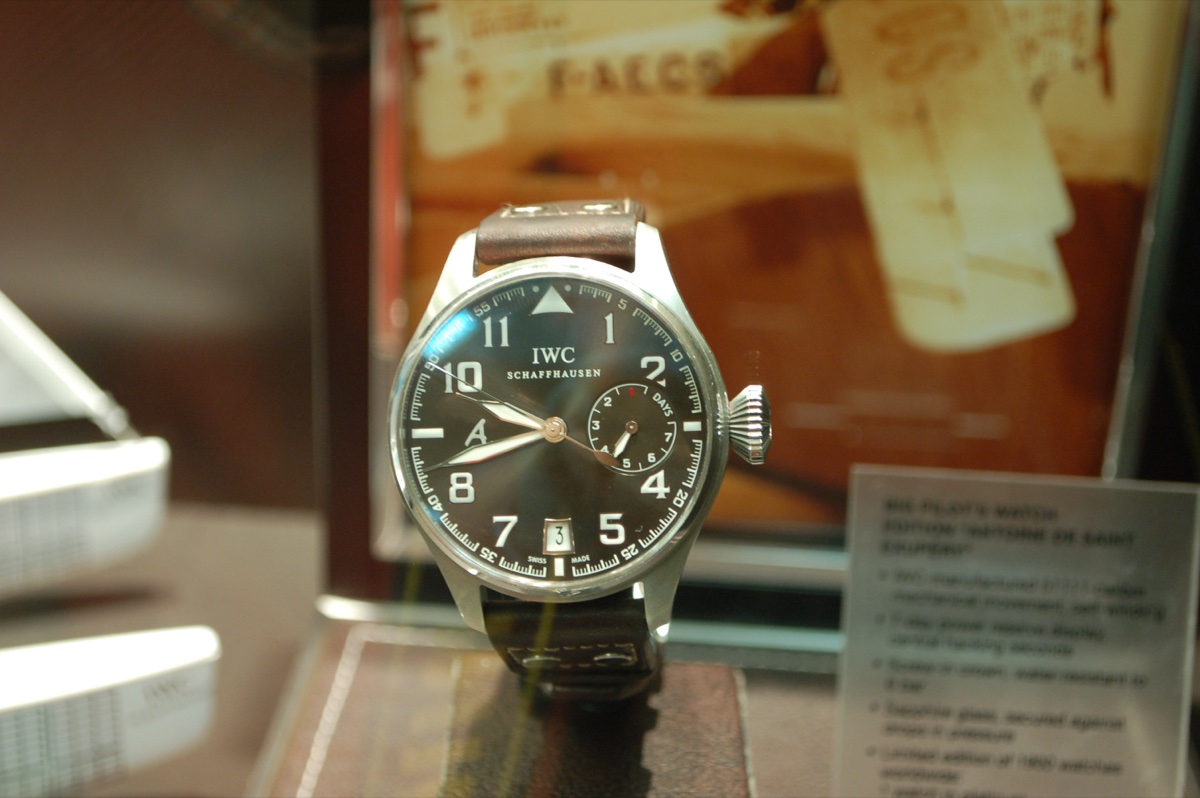
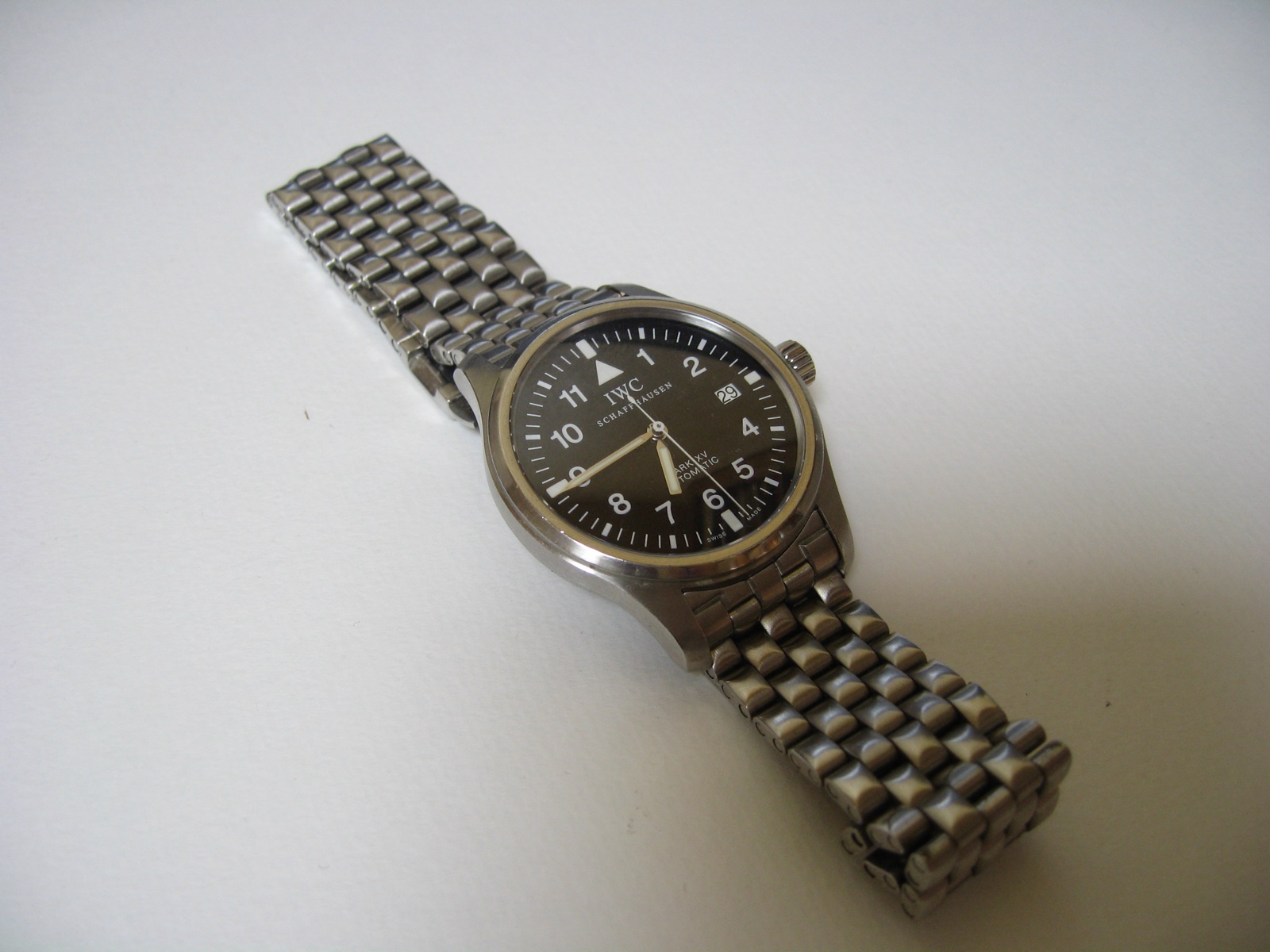
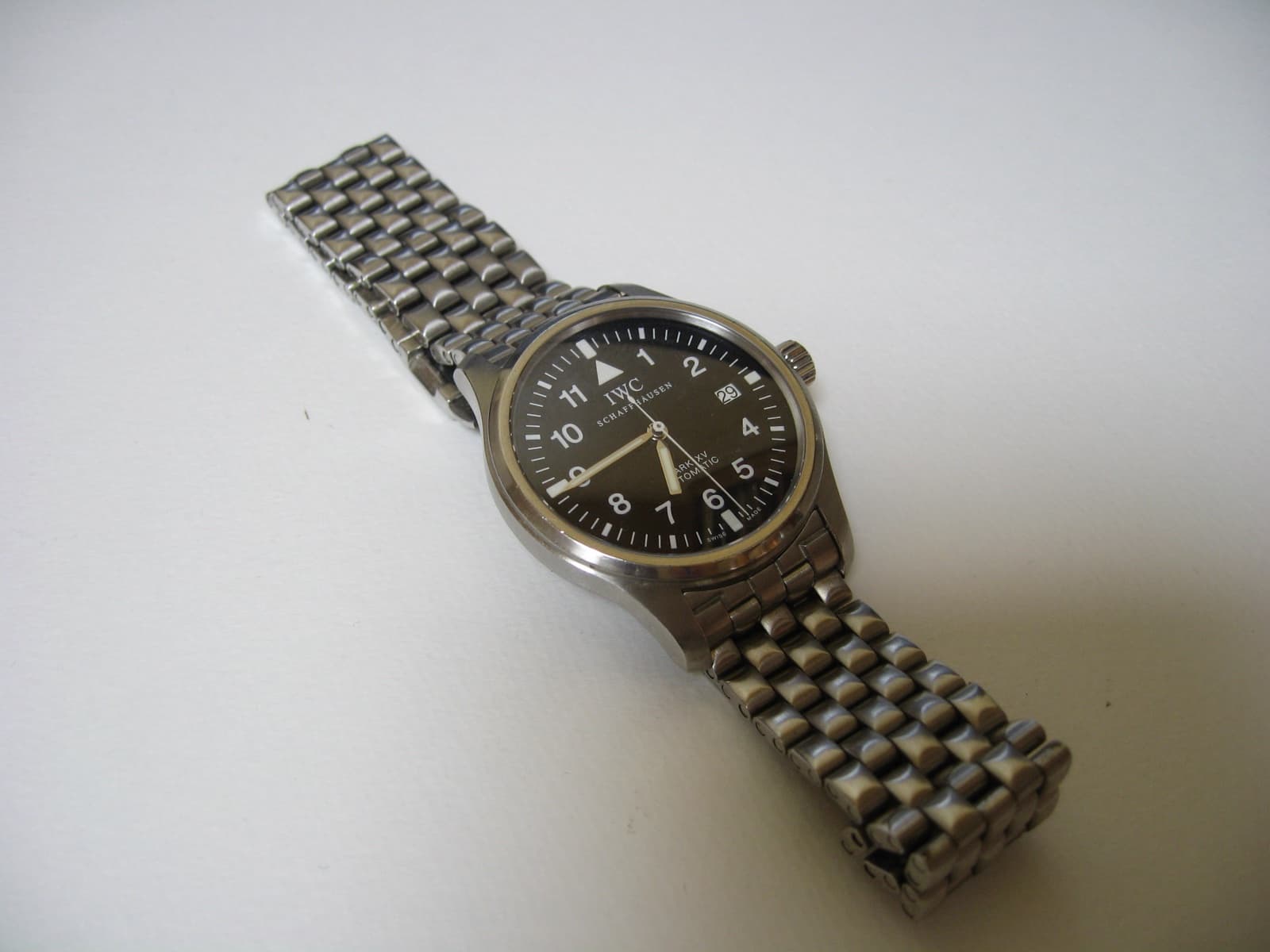
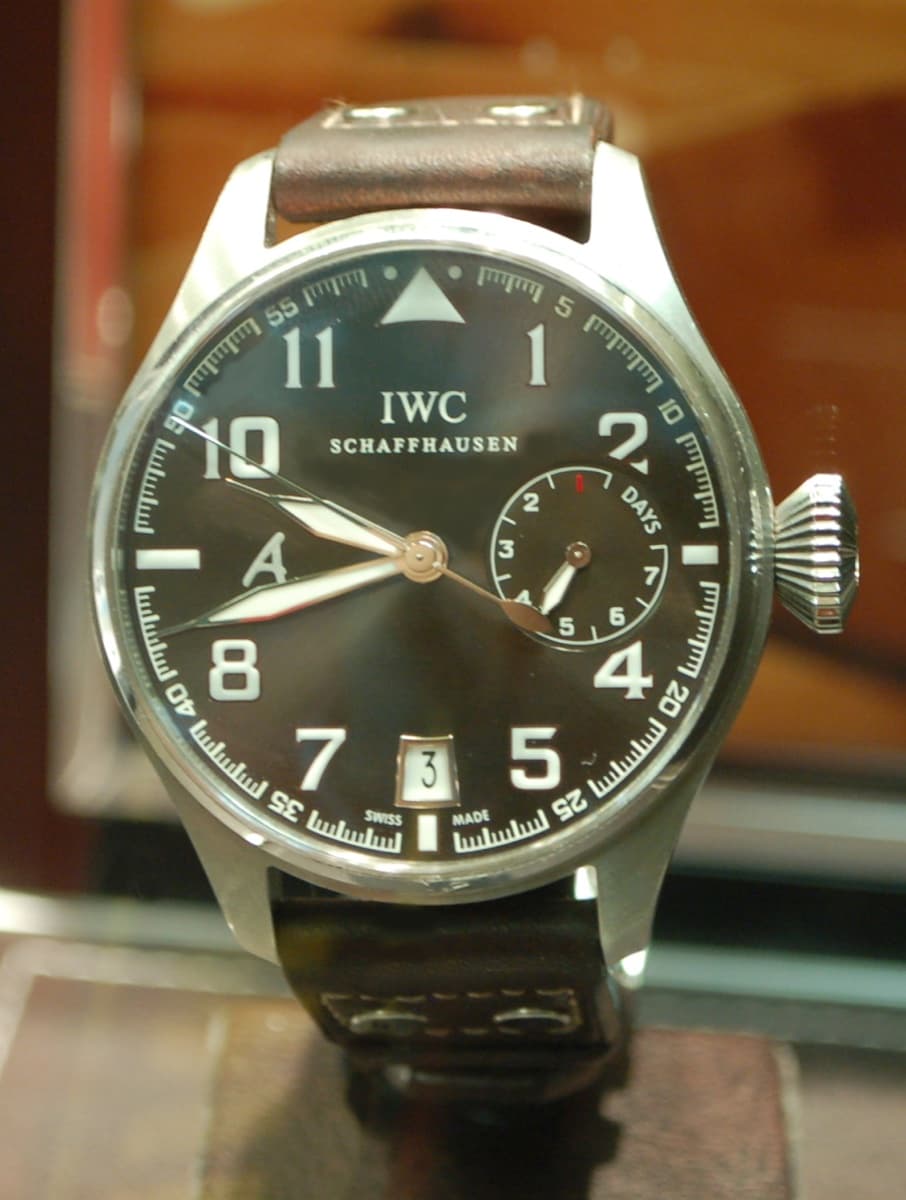
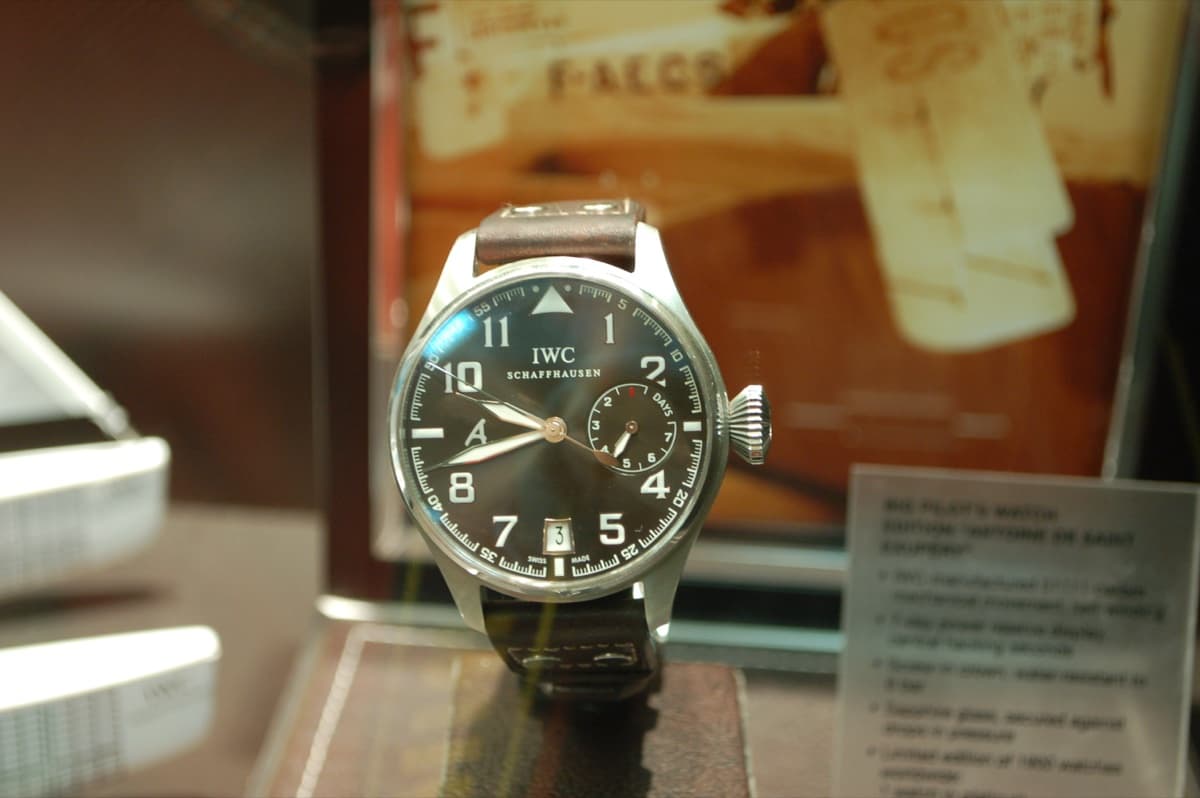
IWC relaunched the Pilot's Watch family commercially with the Big Pilot (ref. IW5002, 1994): 46mm, caliber 51111 seven-day power reserve, hand-wind, the most distinctive IWC in the lineup. The Mark XV (1993–2007) and Mark XVI (2007–2012) updated the core Mark series with in-house movements and refined case proportions. These are the references that established IWC's modern pilot-watch identity among collectors who discovered the brand outside the engineering-watch tradition.
- OpenPilot Mark XV · IW325301sleeperDiscontinued early pilot reference with ETA 2892 trades well below the current Mark XVIII while offering similar utility and better proportions.
2012–2019 · The Mark XVIII: the accessible anchor
The Mark XVIII (IW327001, 2016–present) is the most commercially significant IWC Pilot's Watch in current production: 40mm, caliber 30110 (a Sellita SW300 base, reliable and well-finished), clean black or white dial, screw-back case. The 30110 is not an in-house movement, which is the primary collector objection. IWC is transparent about it; the movement is COSC-certified, properly finished, and functions without issue. For a buyer who wants the IWC pilot aesthetic without the cost of the in-house calibers in the Big Pilot or Mark XX, the Mark XVIII is the honest entry.
- OpenPilot Mark XVIII · IW327011best valueClean pilot typography and in-house Calibre 35111 at an accessible price; the direct successor to the Mark XVII offers genuine tool-watch utility without vintage hunting.

2022–present · The Mark XX: in-house caliber, 40mm
IWC introduced the Mark XX (IW328201, 2022–present) with the in-house caliber 32111: 60-hour power reserve, anti-shock, COSC-certified, 40mm steel case. The Mark XX resolves the primary objection to the Mark XVIII by using a fully IWC-made movement without changing the case proportions or the dial vocabulary. Soft luminous Arabic numerals, a clean aviation-instrument layout, leather strap. The Mark XX is the correct modern Mark for buyers who want both the pilot aesthetic and in-house movement credentials.

2004–present · The Big Pilot 43 and 46: the statement piece
The Big Pilot (IW502001 in its current 43mm form, IW501001 in the 46mm heritage variant) is the IWC pilot watch for buyers who want the most visible expression of the design. Caliber 52110 (43mm, seven-day automatic) or 52110 variant (46mm). The 43mm Big Pilot is the more wearable option; the 46mm is the collector piece that references the original 1940s instrument dimensions. The large crown and the caseback engravings are the signatures that distinguish it from the Mark series.
2009–present · The Pilot Chronograph: 43mm with in-house movement
The Pilot's Watch Chronograph (IW377701, 43mm, caliber 69380 flyback) is the complication anchor of the family: a column-wheel flyback chronograph with a 46-hour power reserve in the pilot-watch case. The flyback reset function simplifies lap-time recording (one push to restart rather than stop-reset-start). The 43mm case is noticeably larger than the 40mm Mark series; buyers coming from the Mark XVIII should handle both before committing.

How to read this family
Three honest questions for any IWC Pilot buyer:
- Mark XVIII (Sellita) or Mark XX (in-house): does the movement matter? The Mark XVIII uses a Sellita SW300 base finished to COSC standard. The Mark XX uses the in-house caliber 32111. Both are reliable, well-finished movements; the Sellita is more widely serviced, the IWC caliber is more proprietary. For buyers who care about in-house credentials and the long-term brand story, the Mark XX is the correct choice at a higher price. For buyers who want the pilot aesthetic and do not intend to be purists about movement provenance, the Mark XVIII is available at a meaningful discount.
- Pilot Watch or Portugieser as a first IWC? The Pilot's Watch (Mark XX, 40mm) is the sport-dress entry: aviation-instrument dial, more casual positioning, works with jeans and a jacket. The Portugieser (41–42mm) is the dress-watch entry: large pocket-watch-derived numerals, thinner profile, works with suits. Both are in-house movements. If you want IWC's sport identity, Pilot's Watch. If you want IWC's dress credibility, Portugieser.
- Big Pilot 43mm or 46mm? The 46mm Big Pilot is the heritage size reference to the 1940s instruments; it is genuinely large and requires a wrist of 18cm+ to wear without looking oversized. The 43mm is the more wearable modern version: still clearly a large watch, still makes the statement, fits a wider range of wrists. For buyers who want the Big Pilot as a daily watch rather than an occasional statement, 43mm is the correct starting point.
Related families: Portugieser · Ingenieur · Longines Spirit
Sub-lines
- OpenThe Pilot Mark sub-line: descendants of the 1936 Mark IX through the Mark XVIII and beyond. The least-complicated entry to the IWC Pilot family.
- OpenThe 46.2mm (and now 43mm) large-case Pilot, drawn from the 1940 B-Uhr Pilot’s Watch, with the oversized conical crown sized for gloved hands. The 2021-onward 43mm IW329301 expanded the family to smaller wrists without giving up the silhouette.
- OpenThe chronograph branch of the IWC Pilot: typically a 43mm steel case, day-date apertures at three, and the cal. 79320 (modified Valjoux 7750) in the long-running 3777 reference. The Pilot Chronograph is IWC’s most-traded daily-wearable chrono.
- OpenThe oversized heritage branch: the 48mm IW324703 resurrects the proportions of the original 1940 B-Uhr Luftwaffe pilot watch, with the conical crown, AR-coated convex crystal, and wire lugs that defined the wartime original. Strictly time-only, built for collectors who want the full period experience on the wrist.
References in this family
- OpenIWC Pilot Mark XVIII · IW327011best valueClean pilot typography and in-house Calibre 35111 at an accessible price; the direct successor to the Mark XVII offers genuine tool-watch utility without vintage hunting.
- OpenIWC Pilot Mark XV · IW325301sleeperDiscontinued early pilot reference with ETA 2892 trades well below the current Mark XVIII while offering similar utility and better proportions.
- Open
- Open
- Open
- Open
- Open
Which ref to buy
IWC Pilot watches have drifted from their military roots into lifestyle territory -- but the core lineup still delivers honest legibility and reliable movements at a reasonable price for the tier.
- 1Open
Current 43mm Big Pilot with cal. 52110 and 7-day power reserve -- the definitive IWC and the correct choice.
- The case for it:
- Cal. 52110 with 168-hour power reserve is a genuine differentiator. The 43mm case is large but purposeful. The most IWC watch IWC makes.
- Consider instead if:
- At 43mm it is a statement watch, not a versatile one. The Mark XX is a more wearable everyday option.
- 2Open
Current Mark XX at 40mm -- clean pilot aesthetic, honest daily wear, the most versatile IWC.
- The case for it:
- The Mark XX is understated, legible, and correctly sized. The best argument for IWC as an everyday watch.
- Consider instead if:
- If you want the full Big Pilot experience, the 43mm is the watch. The Mark XX is a more conservative choice.
- 3Open
Chronograph with flyback function and cal. 89365 -- for pilots and collectors who actually use the timing function.
- The case for it:
- Flyback chronograph is a legitimate functionality upgrade over standard pushers. In-house movement with good service support.
- Consider instead if:
- Chronograph adds significant size and cost. If you do not use the function, the Big Pilot 43mm or Mark XX are better value.
- 4OpenIWC Pilot Mark XVIII · IW327011Consider
Transitional Mark XVIII -- solid watch superseded by the Mark XX, available at discount.
- The case for it:
- Mark XVIII examples can be found in excellent condition at below-current production prices. Good entry to the Mark lineage.
- Consider instead if:
- The Mark XX is a meaningful improvement. Unless the price differential is significant, buy the current production.
- 5Open
46mm vintage Big Pilot with pocket watch movement inside -- a historical piece that wears its origins literally.
- The case for it:
- The 46mm ref is historically derived from WWII observer watches and the pocket watch caliber is an interesting curiosity.
- Consider instead if:
- 46mm is unwearable for most people. The watch is large as a deliberate provocation, not a practical choice.
- 6Open
Vintage Mark XV with manual movement and older proportions -- for collectors who want the pre-modern Mark lineage.
- The case for it:
- The Mark XV has correct pilot proportions and a case that holds its shape well. Manual wind adds a ritual the current lineup lacks.
- Consider instead if:
- Service requirements and parts availability are concerns with the Mark XV. The Mark XX is a better daily watch.
- 7Open
48mm heritage observer watch replica -- accurate to WWII proportions, costume-level large, for completists only.
- The case for it:
- If historical fidelity to the WWII observer watch is the goal, this is the most accurate modern interpretation.
- Consider instead if:
- At 48mm this is unwearable as a daily watch. A very specific collector acquisition with thin secondary market.
Rankings last reviewed 2026-06-06. Editorial perspective only. Not financial advice.