Retrograde
A hand that sweeps forward then flies back to the start
What it is
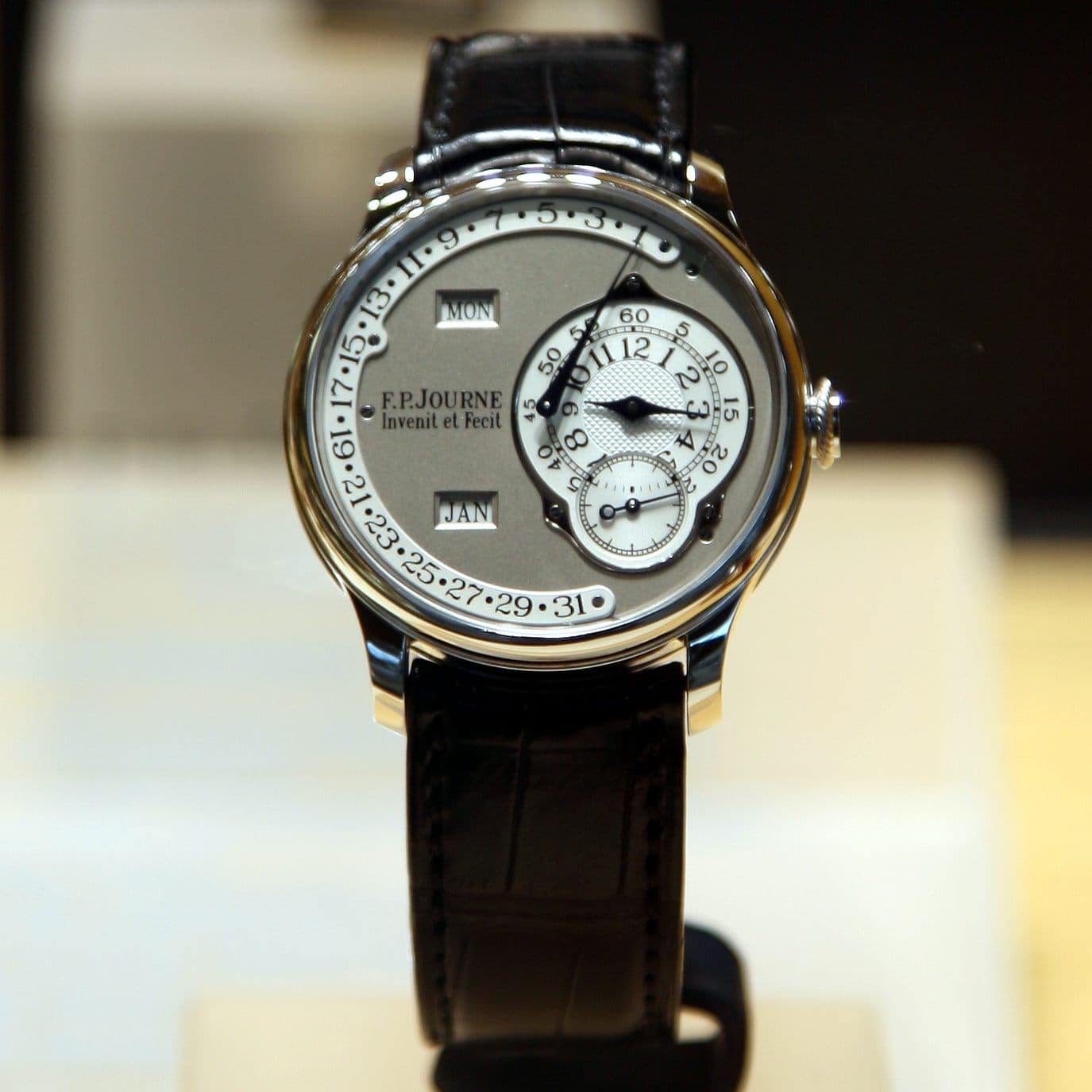
A retrograde display uses a hand that travels across a linear or fan-shaped arc rather than a complete circle. At the end of its arc; the end of the minute, hour, date period, or other displayed unit; the hand flies back to its starting position in a fraction of a second and begins sweeping forward again. Retrograde date displays (counting from 1 to 28, 30, or 31 and then flying back to 1) and retrograde seconds are the most common applications.
History
Retrograde displays were common in 19th-century pocket watches for date and equation-of-time functions. The modern revival in wristwatches was led by Jaeger-LeCoultre and Patek Philippe. A retrograde date; the most common application; sweeps across a fan scale and then returns instantly. A. Lange & Söhne's 1815 Annual Calendar uses retrograde displays for both the day of the week and the month, arranged as balanced fan scales on either side of the dial. The visual drama of the return; the hand snapping back under spring tension; is a significant part of the appeal.
How it works
A cam shaped with a gradual working surface and a steep return ramp is driven by the normal gear train. A spring-loaded follower rides the cam; as the cam turns through the working surface, the follower advances the retrograde hand across the arc. When the follower reaches the steep return ramp, the spring driving the hand against the cam forces it back to zero in a fraction of a second. The sharpness of the return is a quality marker: a slow or staggered flyback indicates weak spring force or worn cam geometry.
Parts required
Retrograde cam (profiled for the specific function: date, day, seconds, or other), cam follower, return spring, retrograde hand arbor
In the catalog
Related
- Jumping hour: The hour snaps forward instantaneously at the exact minute
- Date: The most common watch complication; and the most corrected