Jumping hour
The hour snaps forward instantaneously at the exact minute
What it is
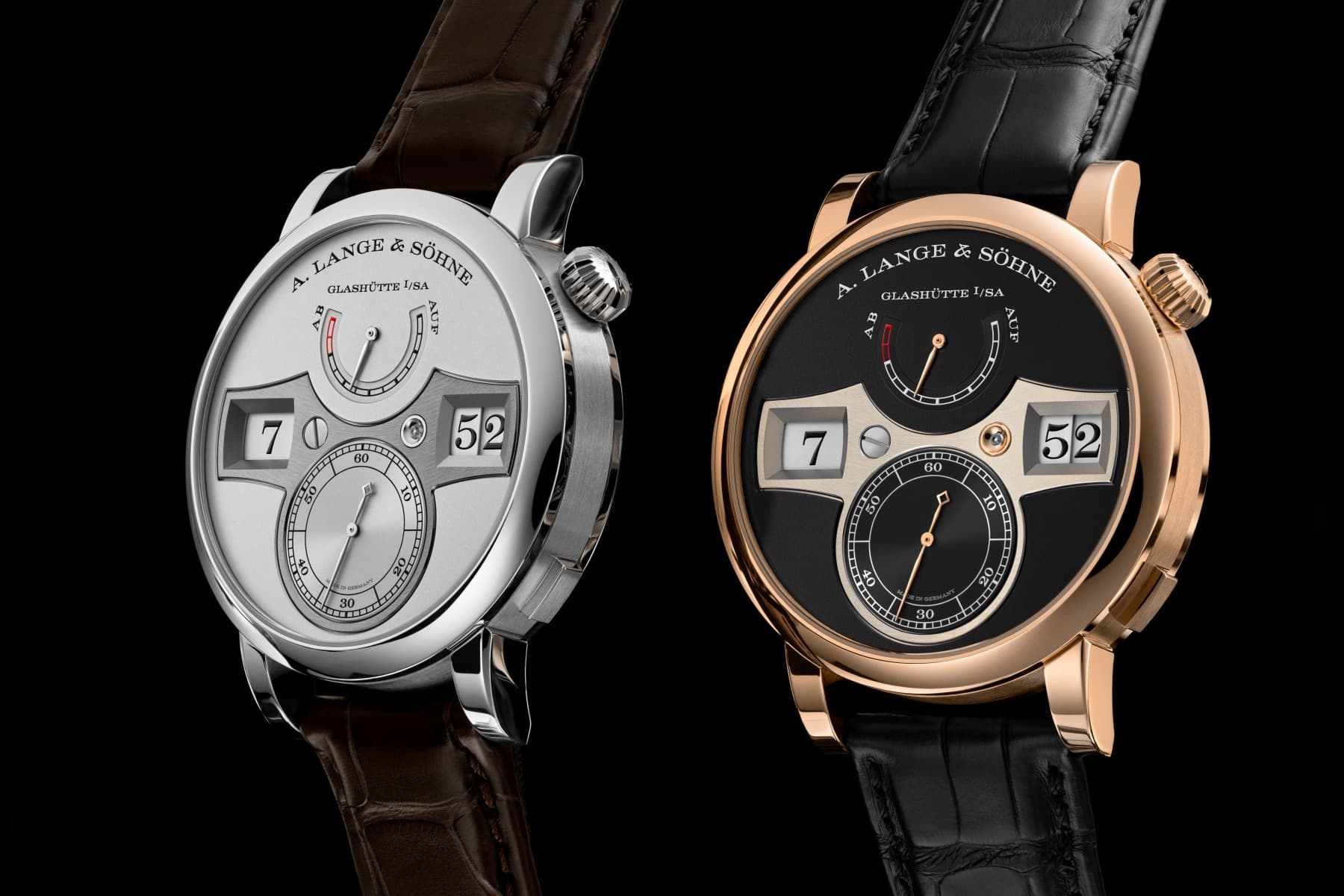
A jumping hour display replaces the conventional hour hand with a disc or aperture showing the current hour as a numeral. The disc does not advance gradually as a conventional hour hand does; it snaps forward instantaneously at the exact moment of each hour. The result reads more like a digital display than an analogue watch, showing an unambiguous hour with no interpolation needed.
History
Jumping hour displays date to the late 18th century in pocket watches. In the modern wristwatch era, the Louis Vuitton Tambour Mystérieuse (2002) and the Audemars Piguet Royal Oak Concept Jumping Hour are notable examples. The IWC Portugieser Sidérale Scafusia (2010) uses a jumping hour as part of one of the most complex wristwatches ever produced. Independent makers including De Bethune and Urwerk have used jumping hours in avant-garde movement architectures.
How it works
Energy builds in a spring over the course of one hour as the cannon pinion advances. At the exact hour, a release mechanism triggers the stored energy to discharge, driving the hour disc one position forward in a fraction of a second. The disc then locks into its new position via a detent until the energy accumulates again for the next hour.
Parts required
Energy-storage spring (accumulates torque over the hour), hour disc with printed numerals, release detent, return mechanism, corrector for setting
In the catalog
Related
- Retrograde: A hand that sweeps forward then flies back to the start
- Date: The most common watch complication; and the most corrected