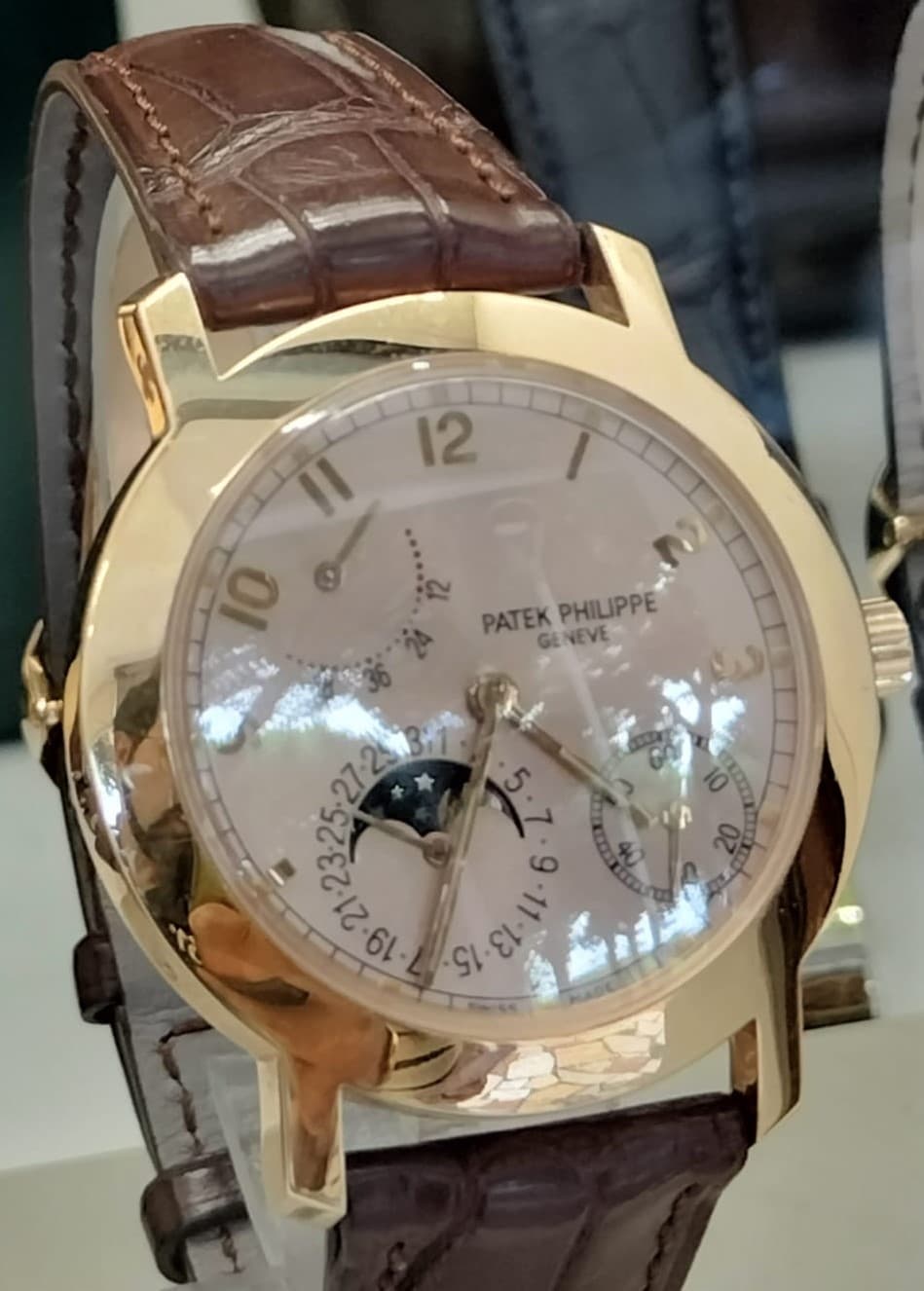
Quarter repeater
Chimes hours and quarter-hours on demand
What it is
A quarter repeater chimes the current time to the nearest quarter-hour on demand via a slide mechanism. It strikes the full hours on a low gong and the completed quarter-hours as a combined (low-high) double strike, but does not measure individual minutes. At 2:47, it would strike two low tones and three combined tones. Because it needs only two snail levels (hours and quarters) rather than three, the mechanism is meaningfully simpler and more compact than a minute repeater.
History
The quarter repeater preceded the minute repeater historically; telling time to the nearest quarter was sufficient for most 18th-century needs. Breguet produced quarter repeaters in the pocket-watch era as an accessible version of the striking complication. The simpler mechanism enables a thinner case profile; which is why some contemporary dress watches have adopted the quarter repeater as a way to offer an audible complication without the thickness penalty of a full minute repeater. The complication remains in production at Breguet, Patek Philippe, and several independent makers.
How it works
The same slide mechanism as a minute repeater operates the striking train, but the snail system reads only two levels; hours and quarters; rather than three. Two gongs and two hammers produce the low tone for hours and the combined tone for quarters. Pressing and releasing the slide causes the hammers to strike in the correct sequence: all accumulated hours first, then all accumulated quarter-hours, stopping there without counting individual minutes.
Parts required
All-or-nothing piece, spring and rack system (two snail levels), two gongs, two hammers, fly governor, slide mechanism with stem
In the catalog
Related
- Minute repeater: Strikes the time in chimes on demand
- Grande sonnerie: Strikes the time automatically as it passes; the most demanding audible