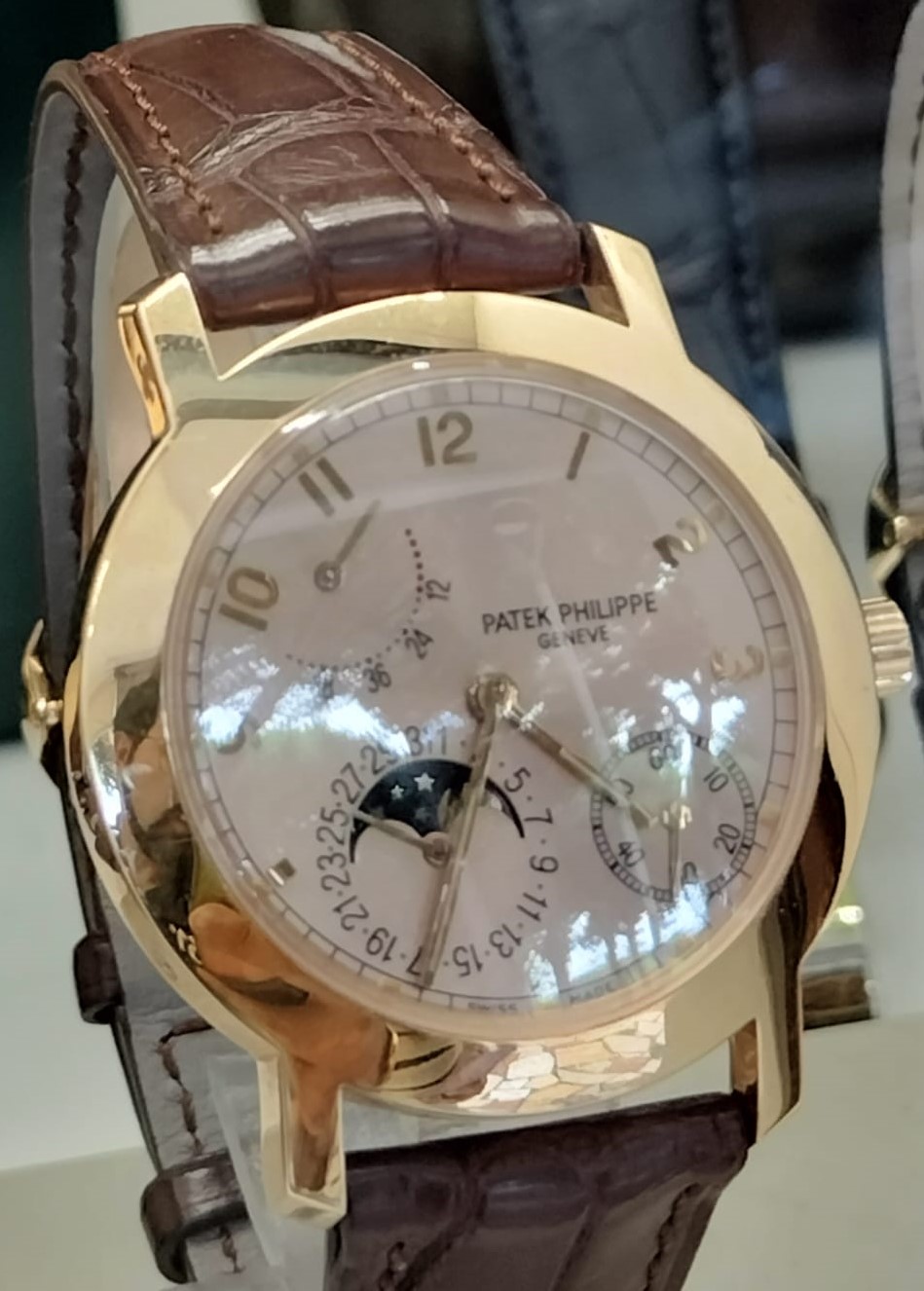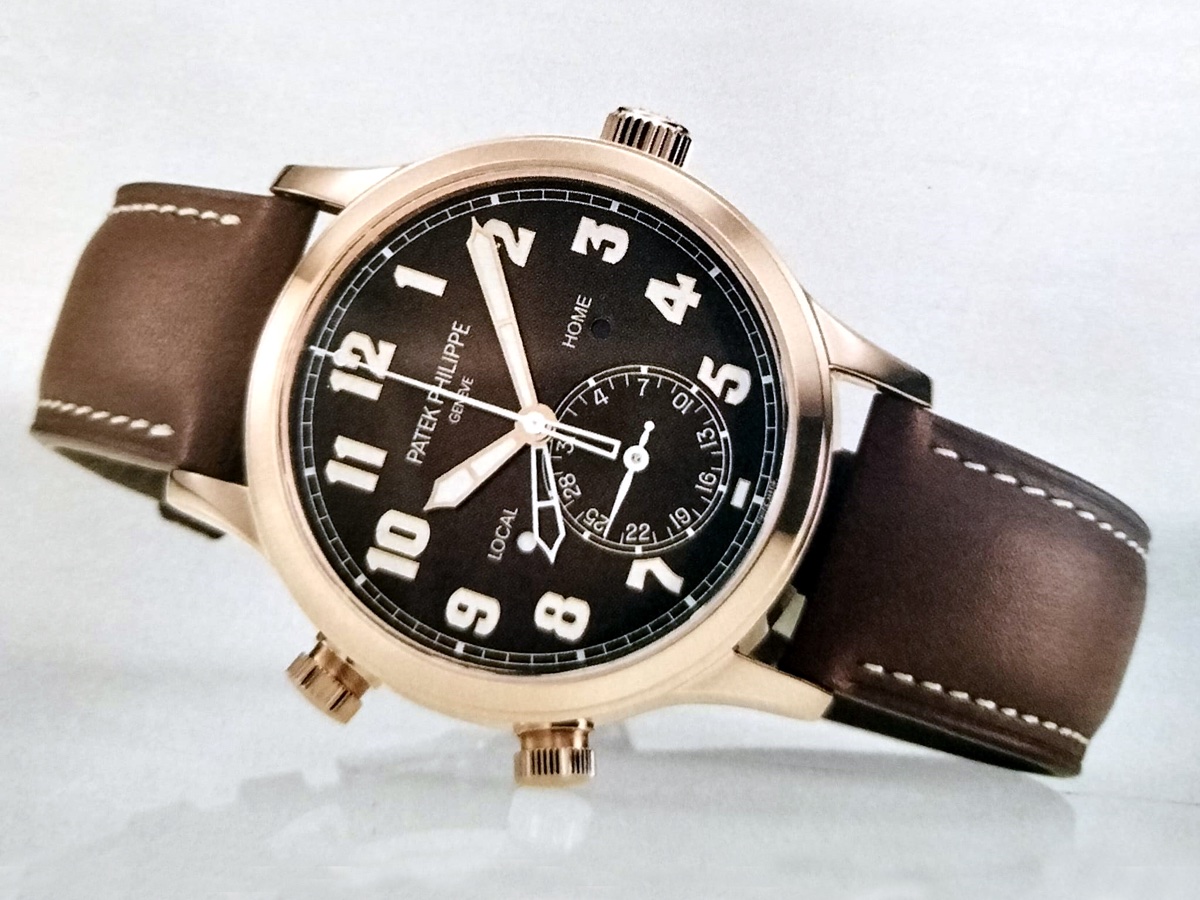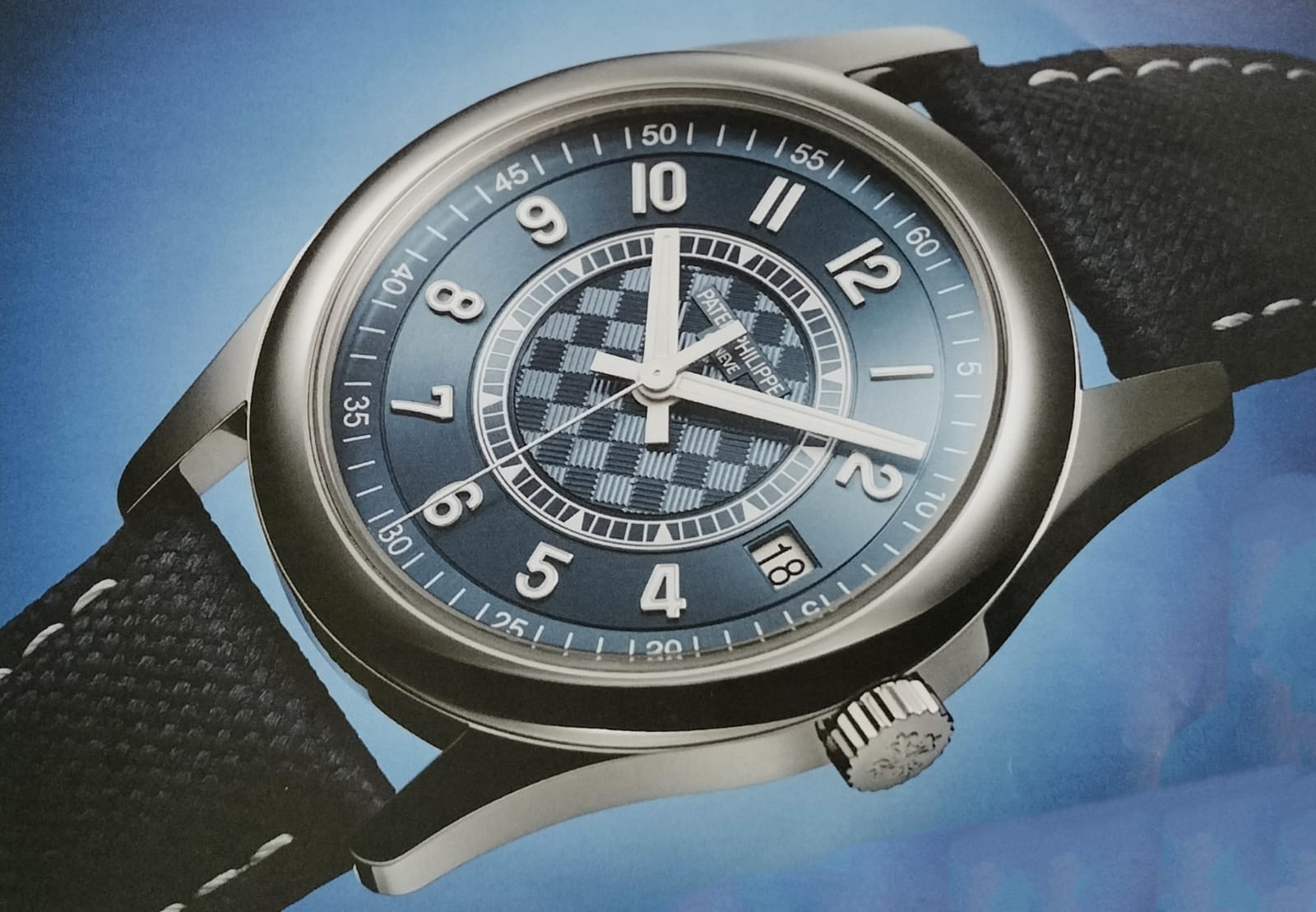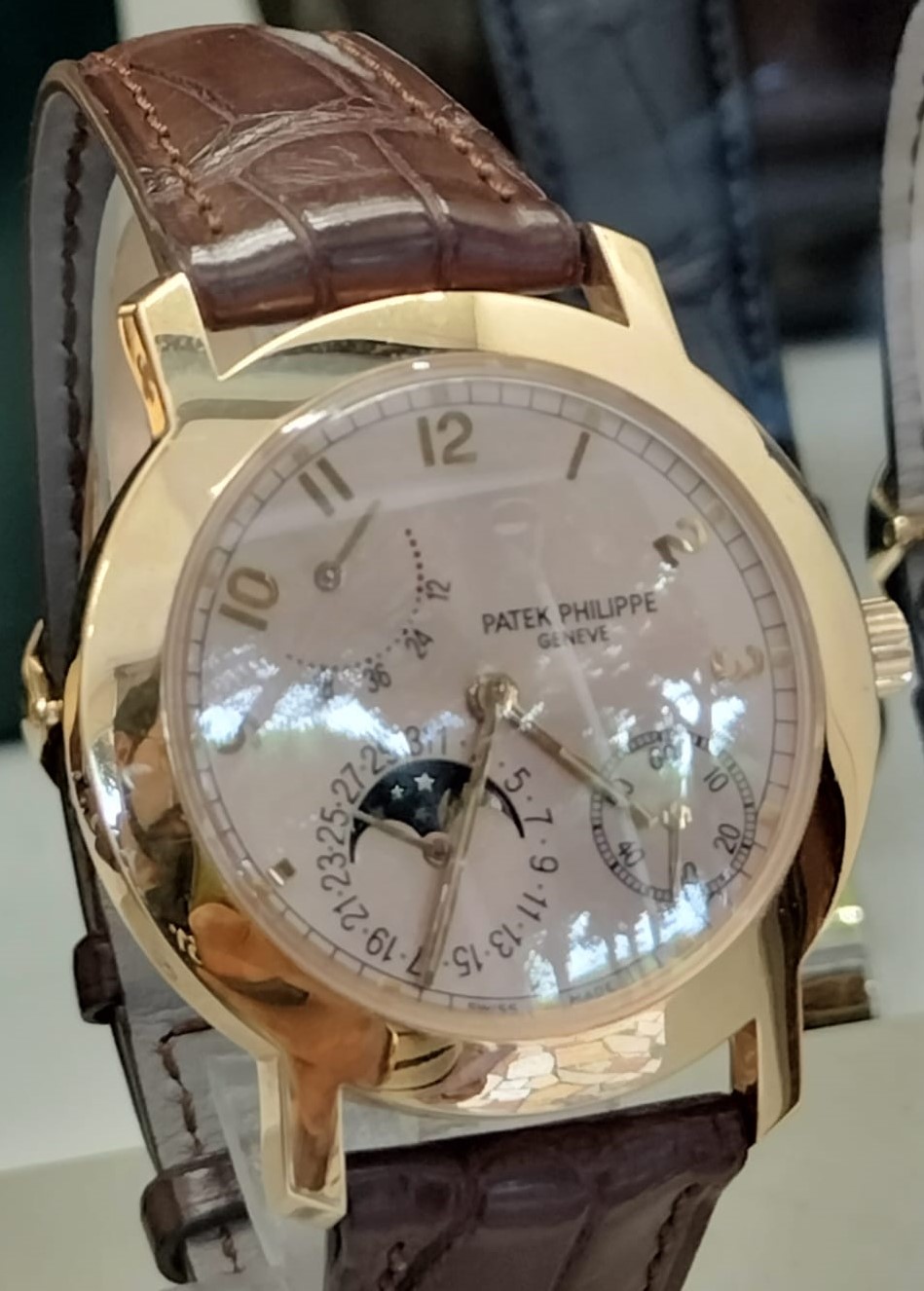
The 5196 Calatrava in steel (5196A) represents the entry point; yellow gold examples command considerably more, and platinum references approach $50,000 in the secondary market.
Editorial estimate. Actual prices vary by condition, date, and box/papers status. Live pricing data is in development.
The Calatrava 5196 is the textbook expression of Patek's dress-watch language, 37mm, hand-wind caliber 215 PS with small seconds at six, applied baton indices, dauphine hands. Produced 2004 through 2019 across white-gold, rose-gold, yellow-gold, and platinum cases, the 5196 is the descendant of the 96 reference (1932) and the cleanest small-format Calatrava of the modern era. Discontinued in favor of the 5226 family in 2021.
Patek launched the Calatrava 96 in 1932, designed to a brief that explicitly rejected the heavily-decorated dress watches of the era. The 5196 (2004) returned that pared-back design language to the catalog at a slightly more wearable 37mm case (the 96 was 30.5mm). The caliber 215 PS is a hand-wind with subsidiary seconds, the same movement Patek has used across multiple Calatrava references for the small-format dress line.
Case materials include rose gold (5196R), white gold (5196G), yellow gold (5196J), and platinum (5196P, with the signature platinum diamond at six o'clock). Production ran through 2019; the 5226 succeeded it with a slightly larger 40mm case.
Common things to check: case-material verification (platinum 5196P trades at a substantial premium over the gold variants, verify the platinum diamond at six o'clock and the case-back hallmark); papers (a 5196 without papers is essentially unsellable at this price tier. Patek extracts from the archive are the standard verification); dial originality (Patek dials are heavily service-replaced, verify the 'Patek Philippe Genève' wordmark printing and the indices for crisp gold-applied work); the case profile is subtly different across the four metal variants, verify case-back dimensions against published references; strap (Patek-supplied alligator with branded buckle is the gold standard; aftermarket replacements are common and acceptable but should be priced accordingly).
Yellow-gold and rose-gold 5196 examples trade in the $20,000-$26,000 range through 2025-2026; white-gold examples trade similarly; platinum 5196P variants trade meaningfully higher (high-$20,000s to $40,000+ depending on dial). The 5196's quieter market relative to the steel sport Pateks means it sees less speculation; pricing has been stable through the 2021-2022 spike and the correction. The 5196 is one of the best-value modern Pateks for a buyer who wants the Geneva-stamp dress watch without the Nautilus / Aquanaut tax.
Service is Patek-direct or through Patek's authorized service network. Expect 6-12 month turnaround and a four-to-five-figure service bill. The caliber 215 PS is a robust hand-wind; service intervals of 5-7 years are typical.
A recent Patek service certificate is a meaningful value lift; an example with a decade-plus since last service should be priced with the cost of a full service factored in.
Community + OSINT signals haven’t landed for this reference yet. We don’t publish a rating against zero signal — the number would mean nothing. Editorial body + caliber + market value still surface above; ratings appear once the signal corpus does.
Cal. 215 PS signed movement with correctly executed lozenge-shaped indices and hobnail bezel texture authenticate the Calatrava 5196
| Area | What to check | What is correct | Red flag |
|---|---|---|---|
| movement | Cal. 215 PS manual-wind | "215 PS" engraved; manual-wind (no rotor); ultra-thin profile; "Patek Philippe Genève" signed; Geneva Seal decoration on bridges; screws with beveled and polished slots; power reserve approximately 44 hours | Rotor present (Cal. 215 PS is manual); incorrect calibre; Geneva Seal decoration absent; movement architecture inconsistent with ultra-thin manual profile |
| case | Hobnail bezel and case proportions | Hobnail (clous de Paris) engraved bezel with uniform pyramid pattern; 37mm diameter; yellow or white gold per variant; thin case profile; push-pull crown without guards; exhibition caseback on most examples | Hobnail pattern inconsistent in depth or pitch; bezel without texture (smooth bezel indicates different Calatrava reference); case diameter inconsistent with 5196 |
| dial | Applied lozenge indices and signing | Applied gold lozenge-shaped (diamond-shaped) hour markers; no Arabic or Roman numerals on base 5196; "Patek Philippe" at 12; "Calatrava" and "Genève" below; white lacquered dial; no date window | Date window present; Roman numerals applied to lozenge variant; applied indices not flush with dial; sector dial treatment on a claimed standard-dial reference without documentation |