Minute repeater
Strikes the time in chimes on demand
Two hammers strike two gongs in sequence; low tones for hours, combined tones for quarter-hours, high tones for minutes.
What it is
A minute repeater chimes the current time acoustically on demand when a slide on the side of the case is pushed and released. It expresses the time as: one low-tone strike per hour, one combined (low-high) strike per completed quarter-hour past the hour, and one high-tone strike per minute past the last quarter. Reading a minute repeater requires counting the sequence, not reading a hand; it is the most theatrical and most appreciated audible complication in watchmaking.
History
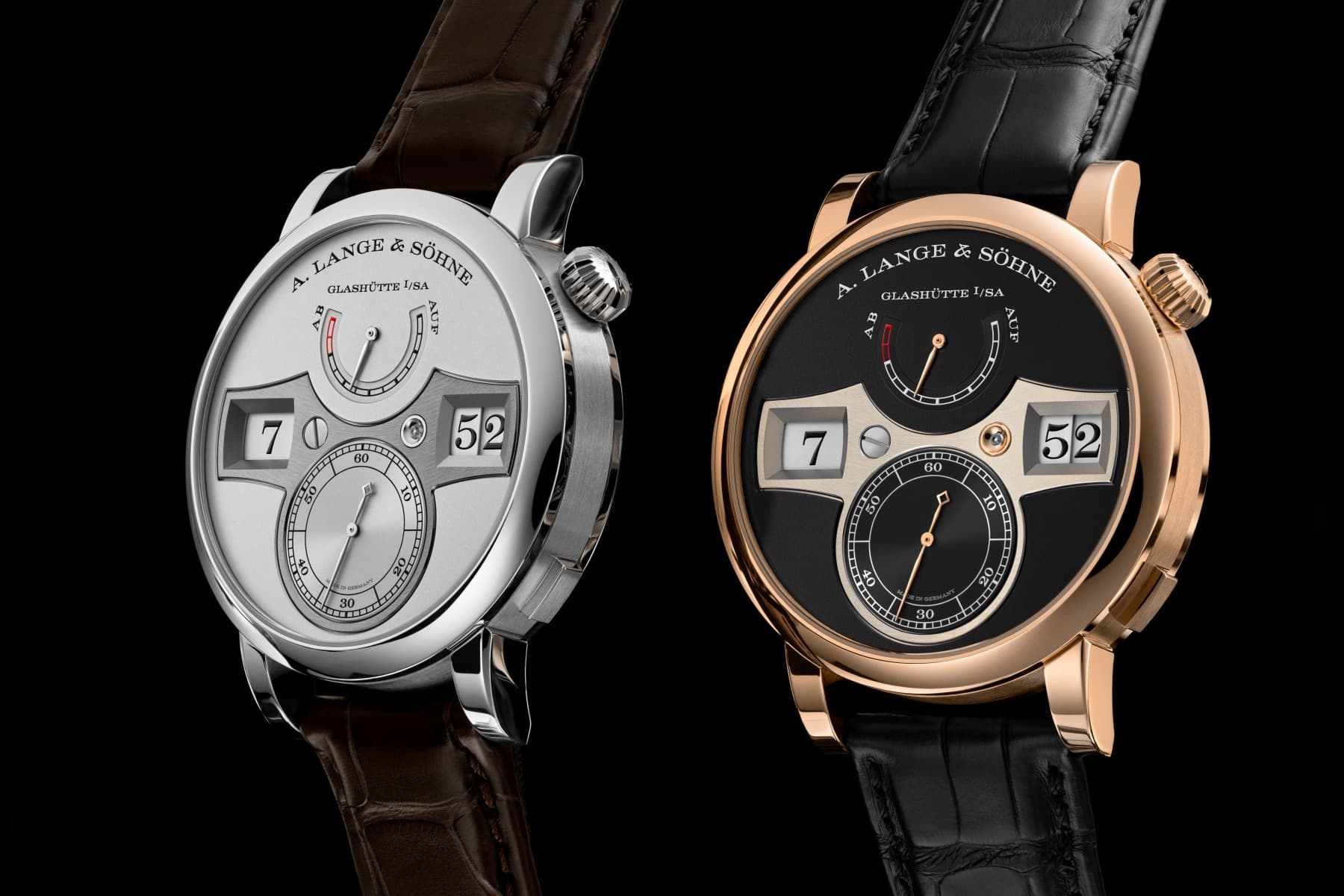
Minute repeaters were invented in the late 17th century as devices for telling the time in darkness. Edward Barlow created an early striking mechanism around 1676; the slide-operated minute repeater as it is known today dates to the late 18th century. By 1850 it was the benchmark of watchmaking skill. Today, Patek Philippe's references 3979 and 5178, the Lange Zeitwerk Minute Repeater, the Audemars Piguet Royal Oak Minute Repeater ref. 26065, and the Grand Seiko Kodo represent active examples of the art. Acoustic quality; the clarity, tone, and sustain of the gongs; is the final differentiator among minute repeaters and varies enormously even among top-tier pieces.
How it works
Pushing the slide loads a rack-and-snail system that reads the current time from three concentric snails; one for hours, one for quarter-hours, one for minutes; by allowing spring-loaded fingers to drop to the current position. Releasing the slide allows stored spring energy to drive a fly governor (which controls striking speed) while two hammers strike two gongs in the programmed sequence: hours on the low gong, quarter-hours as combined strikes, remaining minutes on the high gong.
Parts required
Approximately 250–350 components total: all-or-nothing piece, repeating mainspring or shared barrel, rack-and-snail system (three snail levels), two gongs, two hammers, fly governor, slide mechanism with stem, strike-train detent system
What makes it difficult
Every component in the striking mechanism must sequence correctly on every operation, for decades without failure. The acoustic quality depends on the gong's material (gold, steel, or tungsten), its attachment method (threaded into the movement or soldered to the plate), the case's acoustic chamber design, and whether the movement plate is optimised to transmit sound. A repeater that strikes the correct sequence but sounds dull is technically correct and commercially inferior. The all-or-nothing piece; which prevents a partial chime if the slide is not fully depressed; is a watchmaking sub-problem in itself. Fitting a repeater into a thin sport-watch case (AP Royal Oak) is significantly more difficult than in a thicker dress-watch case, because the acoustic volume and movement thickness are in direct competition.
In the catalog
Related
- Quarter repeater: Chimes hours and quarter-hours on demand
- Grande sonnerie: Strikes the time automatically as it passes; the most demanding audible
- Tourbillon: A rotating cage that carries the entire escapement