Mesh / Milanese Bracelet
A woven metal band with continuously linked flexible mesh
What it is
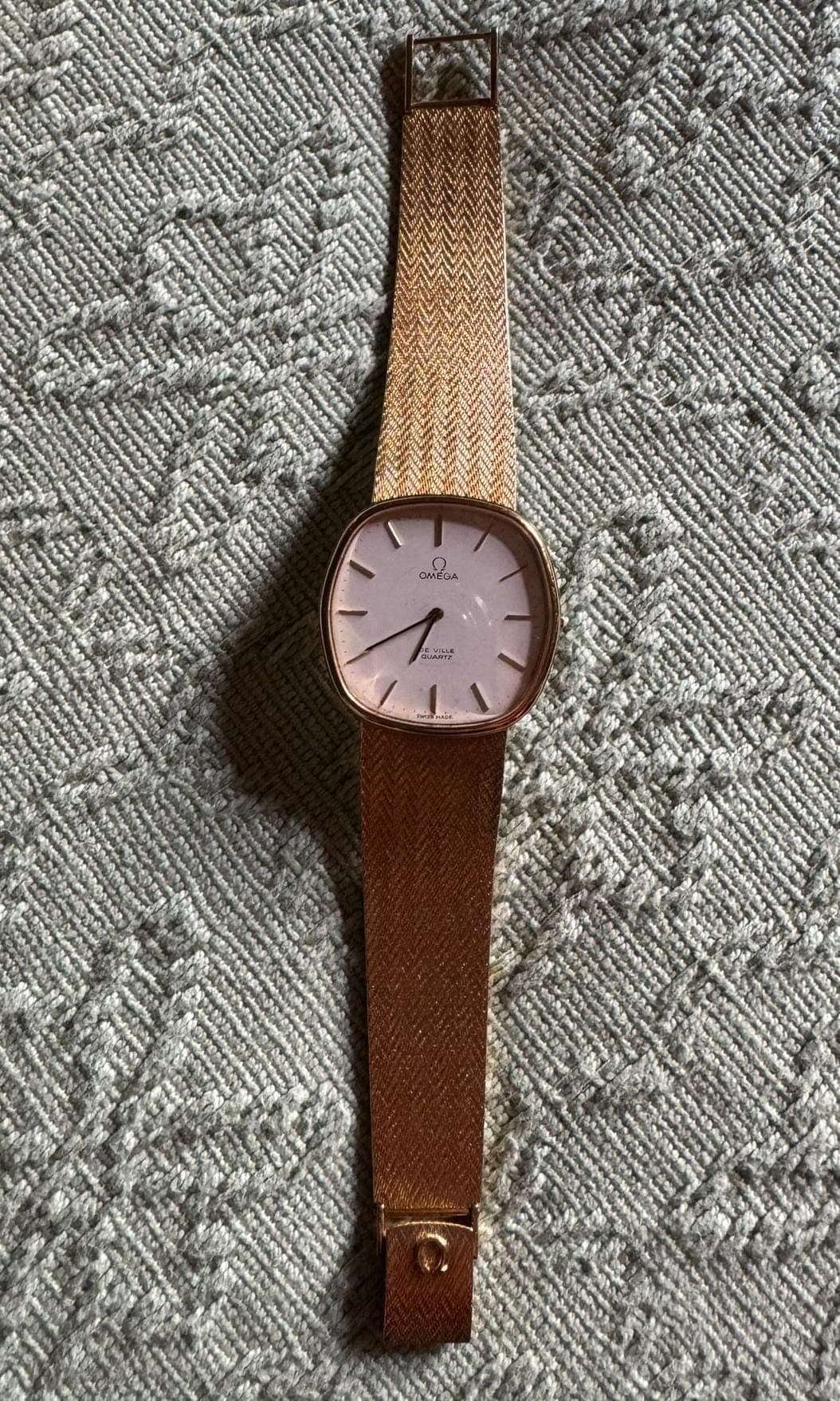
A woven metal band with continuous links forming a flexible mesh. The "Milanese" name comes from its 19th-century Italian origins. Stainless steel mesh is most common. Mesh bracelets are flexible, comfortable, and retain heat, which some wearers dislike in warm weather. They require periodic cleaning as dirt accumulates in the mesh structure. Common on dress watches and slim contemporary designs.
History
The Milanese mesh weave was developed in Milan in the 19th century and adapted to watch bracelets in the early 20th century. It was a common bracelet type on women's watches through the mid-20th century; its adoption on men's watches followed the general trend toward slimmer, more dress-oriented designs. Omega used mesh bracelets on De Ville variants; several smaller Swiss and German manufacturers use it on their thinnest references because the mesh adapts to case curvature that a rigid-link bracelet could not follow. The variable-clasp mesh bracelet, where the mesh slides through a folding clasp rather than using fixed-length links, allows continuous rather than stepped sizing.
How it works
Individual metal wires are woven into a flat, continuous sheet and cut to width. The bracelet attaches to the case via solid end links and spring bars. The mesh stretches slightly lengthwise when pulled, which gives it its characteristic comfort. On a quality mesh bracelet, the weave density is consistent across the full width; on cheaper versions, the weave loosens near the edges. The clasp on a mesh bracelet is typically a flat fold-over design that grips the mesh at any point along its length, providing continuous sizing adjustment.
In the catalog
Related
- Bracelet / Strap: The band that holds the watch on the wrist
- Clasp: The fastening mechanism on the bracelet or strap
- Lugs: The projections that hold the strap or bracelet