Jubilee Bracelet
Rolex's five-link dress bracelet
What it is
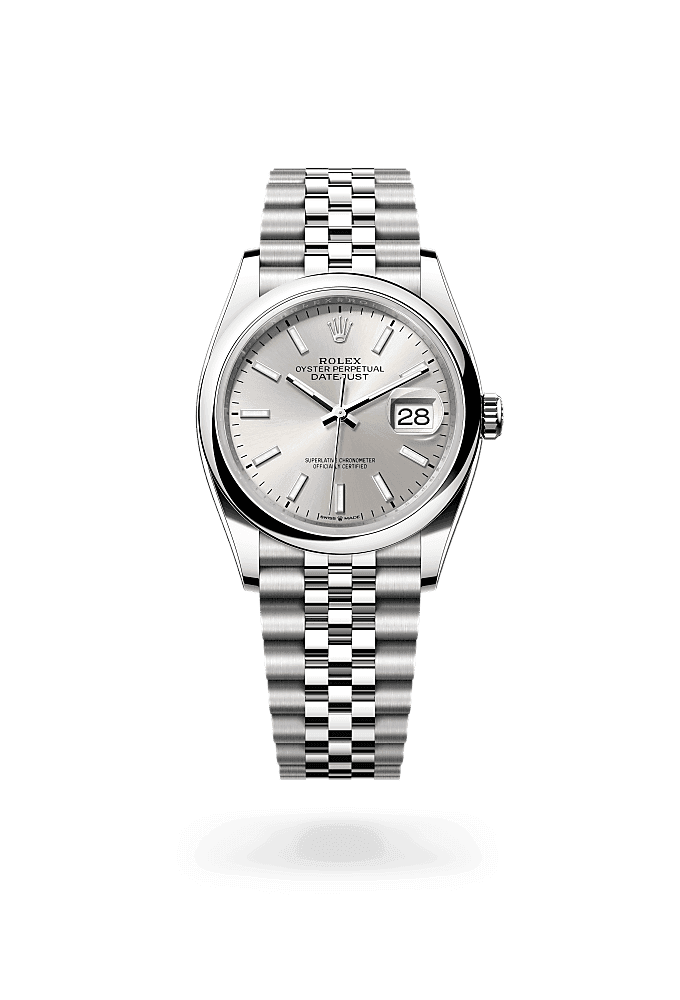
Rolex's five-link bracelet, introduced in 1945 alongside the Datejust. The alternating polished and brushed links run longitudinally across the bracelet width. The smaller links give the Jubilee more flexibility than the Oyster and a softer contact against the skin. Originally paired with dressier Rolex references; some collectors prefer it on sport watches for its comfort over long wear.
History
The Jubilee was designed to accompany the Datejust at its 1945 launch, marking Rolex's 40th anniversary. It remained exclusively pairing with the Datejust for decades before Rolex extended it to other references. A debate among collectors exists between Oyster-on-Datejust and Jubilee-on-Datejust; the Jubilee is the more historically correct choice for the reference, but the Oyster reads as more utilitarian and contemporary. On the GMT-Master II Pepsi (reference 126710BLRO), the Jubilee returned in 2018 after years of the model wearing the Oyster exclusively, and was received as a meaningful design upgrade.
How it works
The five-link-per-row construction creates more pivot points across the bracelet width, which is what produces the increased flexibility relative to the three-link Oyster. The Jubiloc clasp (current production) is a folding deployant with micro-adjustment. Link removal follows the same pin-driving process as the Oyster bracelet. The bracelet tapers from the 20mm lug width to a narrower clasp section.
In the catalog
Related
- Bracelet / Strap: The band that holds the watch on the wrist
- Clasp: The fastening mechanism on the bracelet or strap
- Lugs: The projections that hold the strap or bracelet
- End Links: The bracelet links that attach directly to the case at the lugs
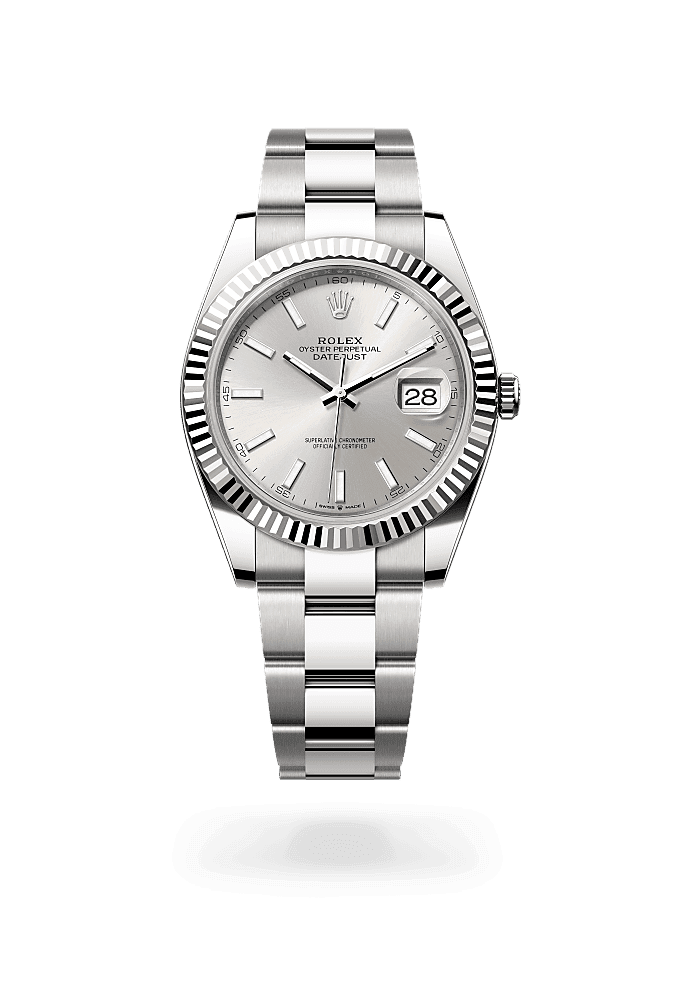
- Oyster Bracelet: Rolex's solid three-link bracelet