Live pricing is coming soon. Get notified when it is available for this reference.
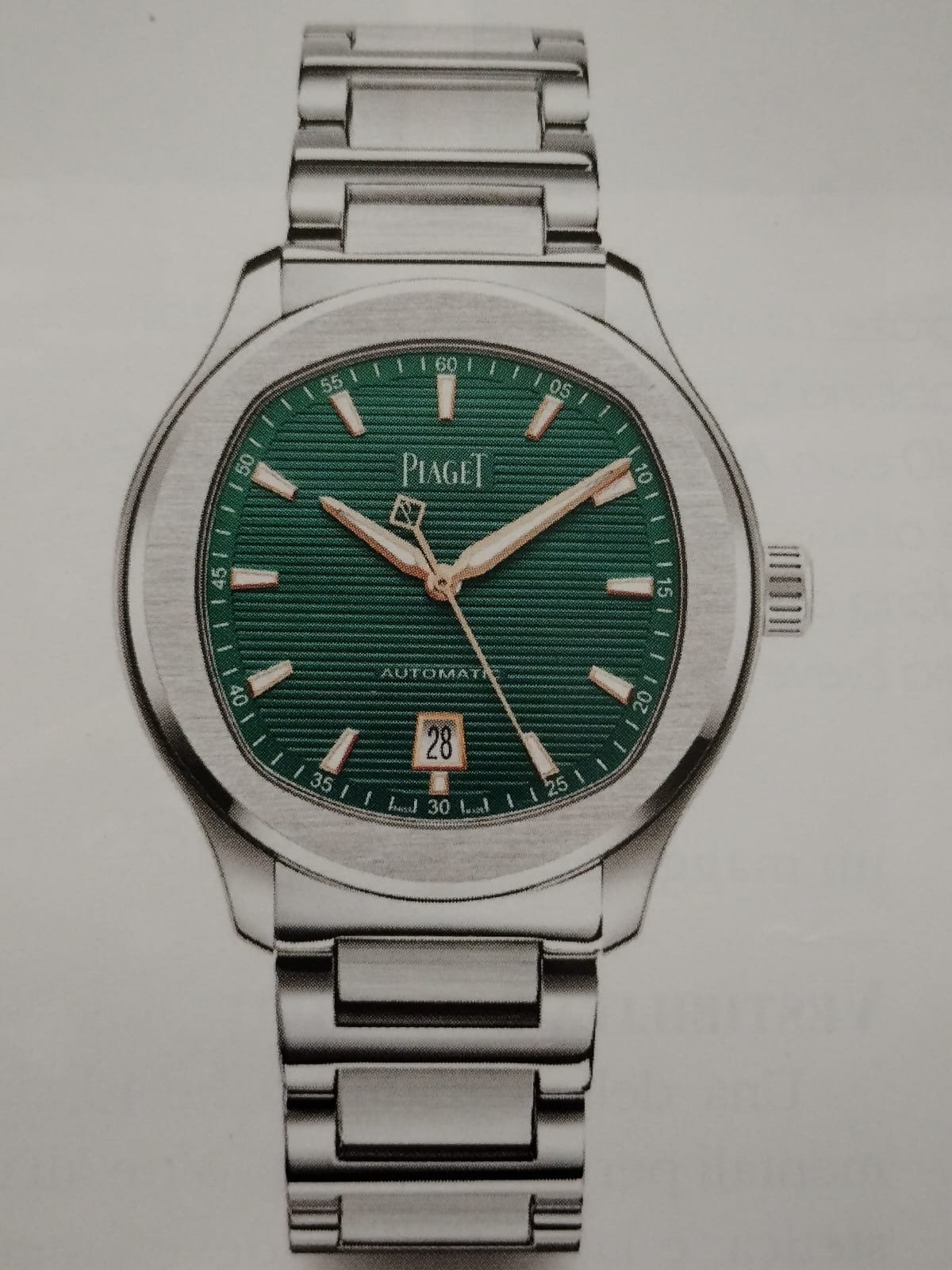
Piaget spent decades as the house for ultra-thin gold dress watches, so the Polo S represents a genuine pivot: a steel, integrated-bracelet sport watch with real water resistance and an in-house automatic movement. It is not a rebadged dress watch in a steel case. It is a credible entry into a crowded category, and Piaget earned it.
The Polo name traces to 1979, when Piaget produced an integrated gold bracelet watch with a distinctly sporty silhouette at a time when the house was synonymous with Altiplano-thin dress pieces. That original Polo was a boutique object for wealthy generalists. The current Polo S, introduced in 2016, is the brand's first serious attempt to compete in the steel sport watch segment on value terms, not prestige alone.
The 42mm case pairs with an integrated bracelet that Piaget refined substantially from the 2016 debut, addressing early complaints about bracelet finishing and clasp quality. It sits in a market landscape alongside the Royal Oak and Nautilus, which is a difficult neighborhood, but the Polo S does not pretend to be those watches.
Early production examples (2016-2018) have reported bracelet stretch and clasp wear faster than expected for the price category; inspect the bracelet links and clasp engagement carefully on any pre-owned example. The dial finishing on some references can look thin under harsh light compared to what the price implies. The 42mm sizing is on the larger end and the lug-to-lug is generous, so wrist-fit matters more than the diameter number suggests.
Because Piaget is not a mass-market steel sport watch brand, parts availability and authorized service can involve longer wait times than Rolex or AP. Resale demand exists but is softer than the Royal Oak or Nautilus tier, so buy because you want the watch, not as a speculative hold.
Pre-owned Polo S automatics in steel trade well below retail, which makes them genuinely interesting on value grounds. A buyer willing to do due diligence on bracelet condition can find a clean example at a meaningful discount to new. Piaget has not artificially constrained supply the way some houses have, so secondary market pricing reflects real demand rather than artificial scarcity.
The caliber 1160P is a Piaget in-house automatic, a 46-jewel movement with a 44-hour power reserve, running at 21,600 vph. Piaget recommends service intervals of approximately five years. Because the 1160P is proprietary, service should go to an authorized Piaget service center or a watchmaker with documented experience on Piaget calibers.
Community + OSINT signals haven’t landed for this reference yet. We don’t publish a rating against zero signal — the number would mean nothing. Editorial body + caliber + market value still surface above; ratings appear once the signal corpus does.
Any bracelet movement at the lug interface indicates wear or incorrect replacement; verify the end-links are Piaget-signed.
| Area | What to check | What is correct | Red flag |
|---|---|---|---|
| bracelet | Lug interface fit and end-link signing | Bracelet meets the case with zero gap and no lateral movement; end-links are Piaget-signed | Any gap at the lug interface; lateral play in the bracelet at the lug; unsigned or aftermarket end-links |
| bracelet | Bracelet link finishing | Alternating brushed and polished links with consistent finishing; Piaget-signed clasp with correct taper | Uniformly polished or uniformly brushed links; unsigned clasp; taper inconsistent with factory bracelet |
| movement | Cal. 1160P via caseback | Exhibition caseback showing Piaget in-house Cal. 1160P with Piaget decoration | Non-Piaget movement; ETA or Sellita substitution; solid caseback on exhibition-spec model |