Live pricing is coming soon. Get notified when it is available for this reference.
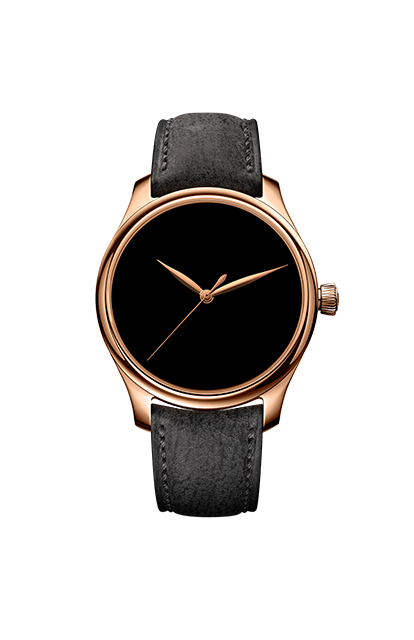
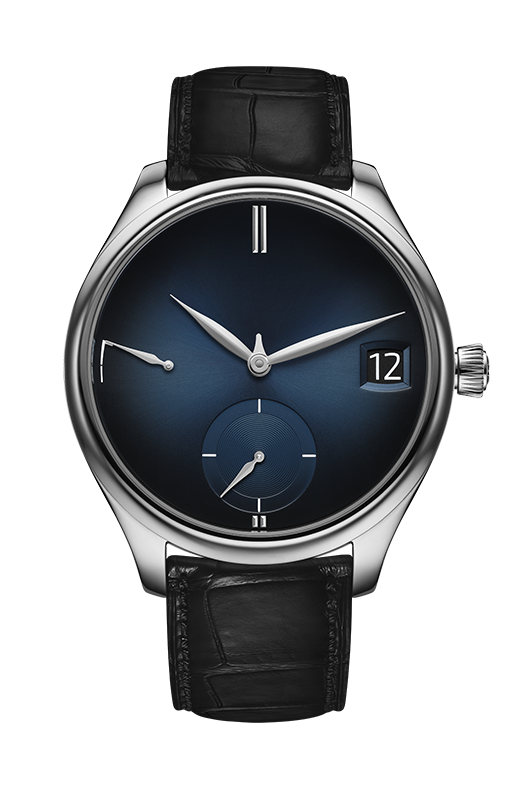
The Endeavour Small Seconds is H. Moser's purist case for doing less. Rose gold, fumé dial, subsidiary seconds at 6 o'clock, nothing else. It is the cleanest expression of what the Endeavour line set out to be.
H. Moser introduced the Endeavour Small Seconds in 2014 as the dress sibling to the center-seconds Endeavour, giving the line a quieter, more classical option. The shift to a subsidiary seconds dial at 6 o'clock slows the eye and suits the watch's unhurried character.
The 38.8mm diameter sits at the boundary between old-school dress sizing and modern wearability, a deliberate choice by Moser to avoid the bloat that came for much of Swiss dressmaking in the 2010s. Since launch the reference has remained essentially unchanged, which is itself a statement from a brand that could easily chase novelty. Fumé dials with their gradient fade from center to edge became closely associated with this watch, and Moser has leaned into that association ever since.
The rose gold case limits the audience and limits resale flexibility, since rose gold wears differently from steel and patinas in ways some buyers dislike. Dial color matters enormously here: the fumé gradient varies across production runs and color batches, so two nominally identical references can look quite different side by side. The 38.8mm lug-to-lug measurement means fit on larger wrists can look small, and the absence of a crown guard means the winding crown, though flush, is exposed to side impacts.
Buyers should verify the dial has no spotting or fading inconsistencies under good light, as fumé dials can show handling marks that are hard to address without a full service. Earlier examples may show case wear that is difficult to refinish correctly without losing the satin and polished transitions Moser specifies.
The Endeavour Small Seconds trades at a meaningful discount to its retail price on the secondary market, which makes it one of the better value entries into a house that is otherwise gaining collector recognition quickly. Rose gold variants hold value less predictably than steel, but demand has been steady among buyers who prioritize the fumé dial aesthetic. Condition is the dominant pricing variable: pristine dials command a significant premium over examples with any handling history.
The HMC 327 is an in-house automatic developed and finished entirely at H. Moser's Schaffhausen manufacture. Service intervals are rated at approximately 3 to 4 years, and Moser recommends the movement be returned to an authorized service center given the proprietary architecture.
Independent watchmakers with experience on high-grade Swiss lever escapements can service it competently, but sourcing parts outside the authorized network can be slow.
Community + OSINT signals haven’t landed for this reference yet. We don’t publish a rating against zero signal — the number would mean nothing. Editorial body + caliber + market value still surface above; ratings appear once the signal corpus does.
In-house movement with Minerva-caliber clarity of finishing; the fumee or enamel dial is the most important authentication element.
| Area | What to check | What is correct | Red flag |
|---|---|---|---|
| caseback | HMC 327 in-house architecture | HMC 327 movement with Moser-specific bridge layout and small seconds complication visible | ETA or Sellita architecture; movement swap |
| dial | Fumee or enamel dial quality | Uniform fumee gradient or pristine enamel; exceptional depth and finish quality | Uneven gradient; damaged enamel; non-genuine dial |
| dial | Small seconds subdial | Small seconds at 6 o'clock running continuously; subdial track centered | Non-running small seconds; off-center subdial |