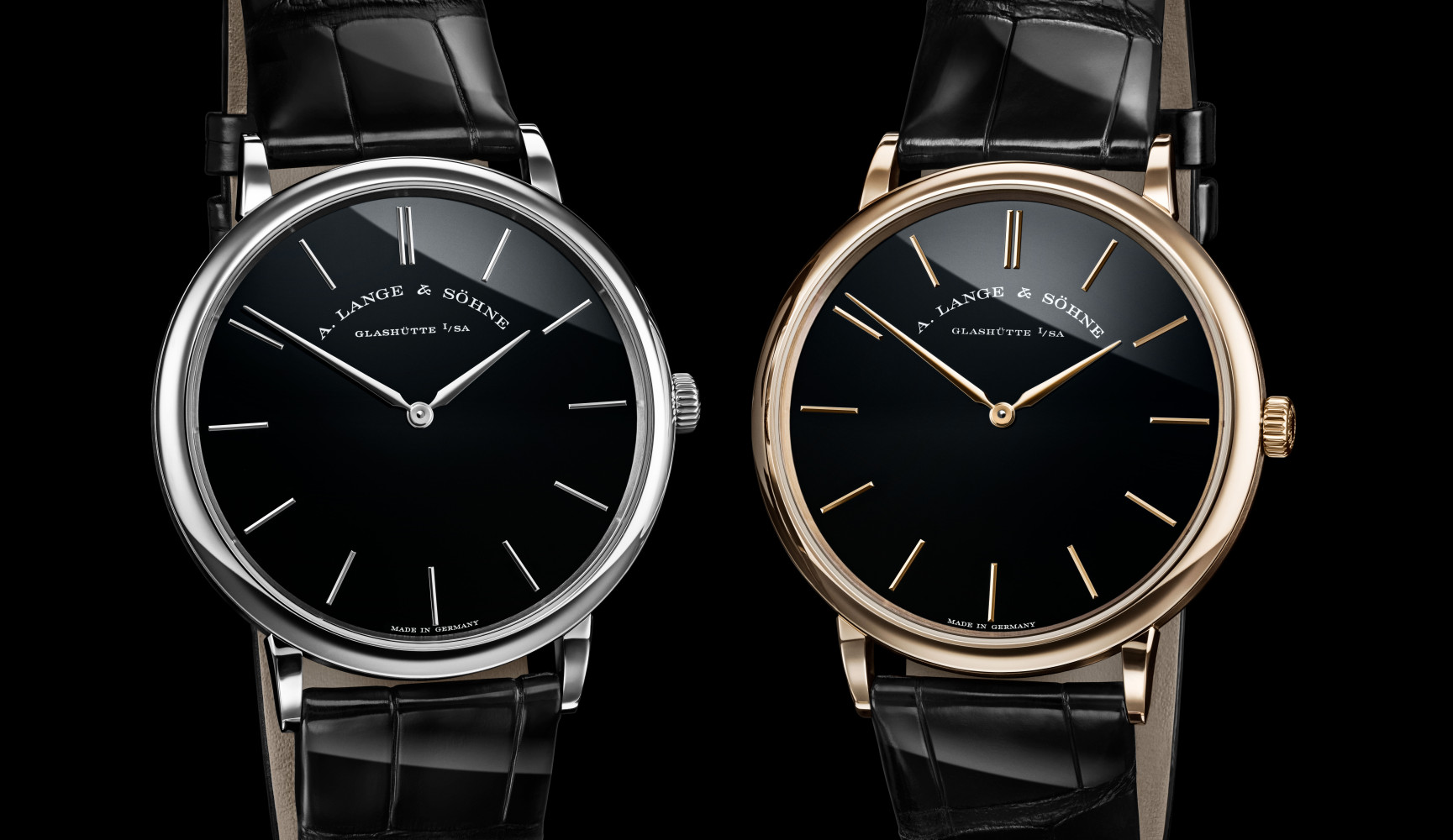
The Master Ultra Thin in steel occupies a quiet niche for thin-watch purists; secondary prices are stable without significant scarcity premium, making it an honest value at the right price.
The Master Ultra Thin 38mm is Jaeger-LeCoultre's answer to a specific question: how thin can an automatic dress watch get without becoming a complications exercise? Powered by caliber 896/1 at just 3.3mm thick, it is the thinnest JLC automatic in regular production. Collectors who care about wrist presence under a shirt cuff reach for this reference first.
JLC introduced the Q1218420 in 2014 as part of a renewed focus on ultra-thin dress watchmaking, offered exclusively in rose gold and white gold to position it clearly above the stainless steel Master Control line. The caliber 896/1 is a proprietary automatic beating at 28,800 vph with a 38-hour power reserve, housed in a case measuring 38mm across and well under 8mm in total height. No significant dial or case revisions have occurred since launch; the reference has remained consistent in its silver opaline dial with applied indices.
The rose gold variant (Q1218420 is rose gold with silver dial) has historically outsold the white gold equivalent. This is not a limited or discontinued reference, and supply from authorized dealers remains steady.
The thin movement makes case flex a real concern on secondhand examples: inspect the case back for scratches from improper opening tools, which often signals a service history that did not use a watchmaker familiar with the reference. The crown and stem on ultra-thin movements are proportionally more vulnerable than on standard-depth calibers, so check crown action for slop or grittiness before buying. Dial condition matters more here than on most dress watches because the silver opaline surface shows fingerprints, moisture blush, and UV fading clearly, and dial restoration on JLC is expensive relative to the watch's market value.
Confirm the bracelet or strap is original if the listing shows a leather strap, as aftermarket straps with incorrect lug widths can scratch the 18k case flanks.
New retail in rose gold sits around $12,500 USD; white gold adds roughly $2,000 to $3,000 at retail. Secondhand rose gold examples in excellent condition typically trade between $7,500 and $9,500, making this one of the more accessible entry points into 18k JLC dress watches. The reference does not carry a speculative premium and is not flipped by dealers at inflated prices, which is a genuine advantage for the buyer.
Expect polished examples with box and papers to command the top of that range; anything without papers should price accordingly.
Caliber 896/1 carries a recommended service interval of 7 to 10 years. JLC boutique servicing for this caliber runs approximately $800 to $1,200 USD depending on parts required, with independent watchmakers familiar with ultra-thin movements often coming in at the lower end. Given the movement's thinness, insist on a watchmaker who has handled 896/1 or comparable thin calibers before, since inexperienced hands on a movement this shallow cause more damage than they fix.
Community + OSINT signals haven’t landed for this reference yet. We don’t publish a rating against zero signal — the number would mean nothing. Editorial body + caliber + market value still surface above; ratings appear once the signal corpus does.
At roughly 7mm total height, the ultra-thin case makes crystal seating and crown health the two most critical inspection points; any play in these components risks movement damage.
| Area | What to check | What is correct | Red flag |
|---|---|---|---|
| crystal | Sapphire crystal seating | Crystal is flush with the case bezel all around; no gaps visible at any point; crystal does not move when gentle lateral pressure is applied | Any gap between crystal and case; crystal that moves or flexes under gentle pressure; condensation under the crystal indicating seal failure |
| crown | Crown winding function and play | Crown winds with smooth, progressive resistance that increases uniformly through the power reserve; no lateral play in the crown; crown screws down or pulls out cleanly | Lateral play in the crown indicating worn stem; grinding sensation during winding; erratic resistance suggesting damaged mainspring or worn click spring |
The Master Ultra Thin houses Cal. 849, a manually wound movement at 1.85mm thin, making the complete watch 7.6mm deep. The thinness is the defining characteristic and the first thing to verify on any presented example.
Editorial estimate. Actual prices vary by condition, date, and box/papers status. Live pricing data is in development.
| dial | Silver sunray dial integrity | Silver sunray finish is pristine with no cracks, lifting, or discoloration; applied dauphine hands with no contact scratches on dial; small seconds subdial at 6 correctly printed | Cracks in the dial, especially around hour marker feet; lifting dial edges; contact scratches from hands that indicate improper service reassembly |
| case | Ultra-thin case profile | Case measures approximately 7.1mm in total height; case edges are crisp and polished; no distortion from impact; 38mm diameter | Case height inconsistent with ultra-thin specification; dented or distorted case from impact; case diameter not matching 38mm specification |
| movement | Cal. 896/1 at 2.1mm thickness | Cal. 896/1 manual-wind ultra-thin; 45-hour power reserve; movement is visible through caseback with JLC architecture; hand-winding only | Automatic rotor visible (indicating movement swap); movement height inconsistent with Cal. 896/1; non-JLC architecture |
|