The Rolex Explorer | family history
The Explorer is the most wearable Rolex in the sport catalog. 36mm (recently updated to 36mm again after a detour through 39mm), no date window, no bezel complications, black dial, three-hand automatic. The design is 70 years old and has barely moved. There is a strong argument that the Explorer is what a watch should be. The connection to the 1953 Everest expedition is well-documented. Rolex equipped the British team including Edmund Hillary and Tenzing Norgay with ref. 6350s (and possibly 6098s). The Explorer name and the subsequent ref. 6610/1016 lineage honored that. None of that history is speculative marketing; the watches were there.
Born from the 1953 Everest expedition. Pared-back, time-only, designed to do nothing wrong: the Rolex that traded fewest aesthetic compromises for legibility under stress.
1953–1963 · The pre-1016 Explorers (6350, 6610)
The 6350 (1953–1954) and 6610 (1954–1963) established the Explorer template: black dial, 3-6-9 Arabic numerals at the three cardinal positions, Mercedes hands, 36mm steel case. These were tool watches, not luxury goods; the Rolex branding and COSC certification came later. The 6350 is associated with the Everest expedition; the 6610 ran at Rolex's standard movement quality of the period. Vintage market; not in the catalog.
No references from this era in the catalog yet.
1963–1989 · The ref. 1016: the grail Explorer
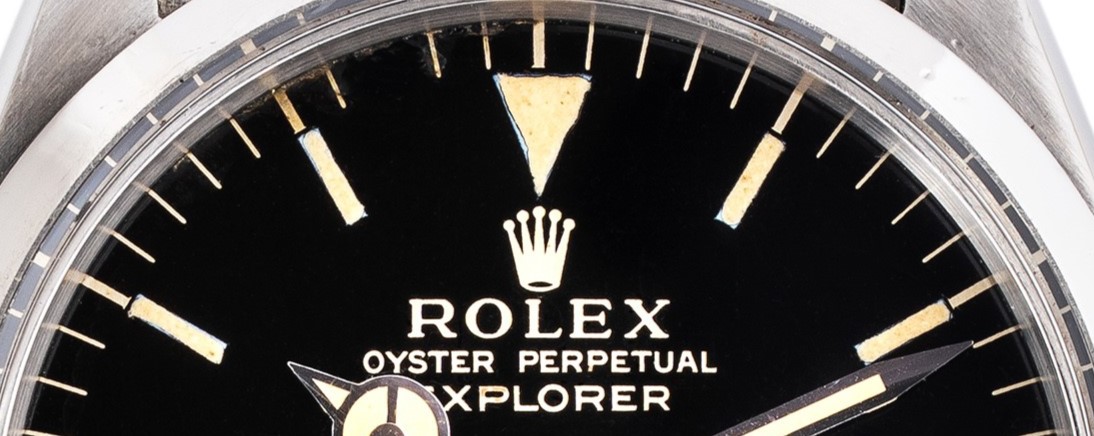
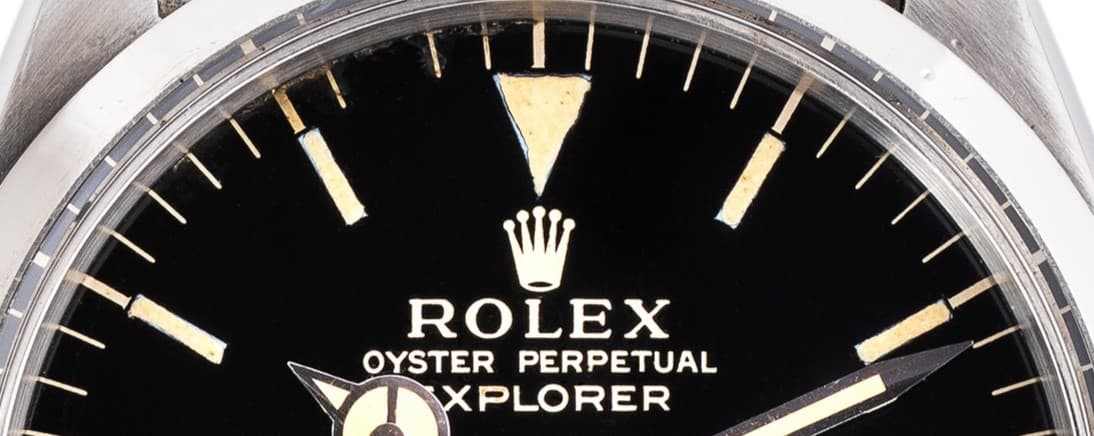
The 1016 is the watch collectors call the definitive Explorer. Twenty-six years of production, calibers 1560/1570 initially then the improved 1570 throughout, matte dial aging to tropical variants that now command five-figure premiums. The 36mm case with its slim profile and bare bezel aged better than almost any other Rolex production reference. Caliber 1570 is a high-beat automatic of the period; the COSC-certified variant is the reference's own mark of precision. A clean 1016 in original condition remains the serious Explorer collector's target.
- OpenExplorer (vintage, "the 1016") · 1016most soughtThe long-running matte-dial Explorer produced from 1963 to 1989; vintage collectors treat this as the most correct-proportioned Explorer ever made.
1990–2010 · The 14270 and 114270: sapphire crystal arrives
The 14270 (1990–1999) moved the Explorer to sapphire crystal and caliber 3000, retaining the 36mm case. The 114270 (2001–2010) updated to caliber 3130 (higher-beat balance bridge). Both are the transitional Explorers: cleaner than the vintage 1016 in condition terms, less expensive than pre-1989 examples, frequently undervalued by buyers focused on ceramic-era sport watches. The 114270 in particular trades as a value reference in the Rolex ecosystem.
No references from this era in the catalog yet.
2010–2021 · The 214270: the controversial 39mm expansion
Rolex expanded the Explorer to 39mm in 2010 with the 214270. The first iteration had a contested lume pip layout that Rolex corrected in 2016 (the 'Mk II' dial). Caliber 3132. For collectors who wear 39mm cases naturally, the 214270 is a clean sport watch at a discount to the re-shrunken 36mm 224270. For purists who want the canonical Explorer proportions, it is the generation to skip. The size debate is genuine; there is no objective right answer.
No references from this era in the catalog yet.
2021–present · The 224270: back to 36mm
Rolex returned the Explorer to 36mm in 2021 with the 224270: caliber 3230 (Chronergy escapement, 70-hour reserve), updated lug proportions, updated dial layout. The market received it well. The 36mm return was a direct acknowledgment of collector preference for the historical proportions. The 224270 is the current production Explorer; it sits alongside the Explorer II 226570 (42mm GMT, separate but related family) as the two Explorer variants Rolex currently makes.
No references from this era in the catalog yet.
How to read this family
Three honest questions for any Explorer buyer:
- Vintage 1016 or modern 224270? The 1016 is the grail: a well-worn 36mm watch that looks better with patina than most watches do new. Authentication and condition are the variables that determine price; a clean original-dial example runs $7,000-$15,000+ depending on dial type. The 224270 is the current production with modern specs and retail availability. Both are legitimate; they are different watches. The 1016 is the collector's choice; the 224270 is the wearer's shortcut.
- 36mm or 39mm? Rolex's own decision to return to 36mm in 2021 after the 2010–2021 detour is the clearest possible answer: 36mm is the correct Explorer size. The 39mm 214270 trades at a discount to the 224270 precisely because the market concurred. If you wear 39mm daily, the 214270 is excellent value. If you want the canonical Explorer, 36mm.
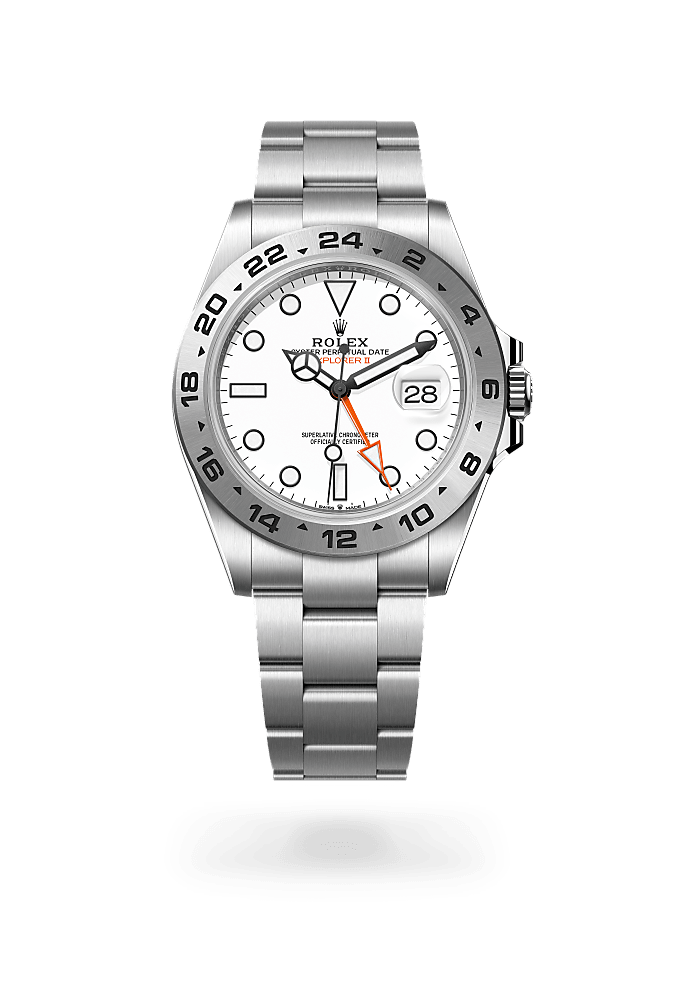
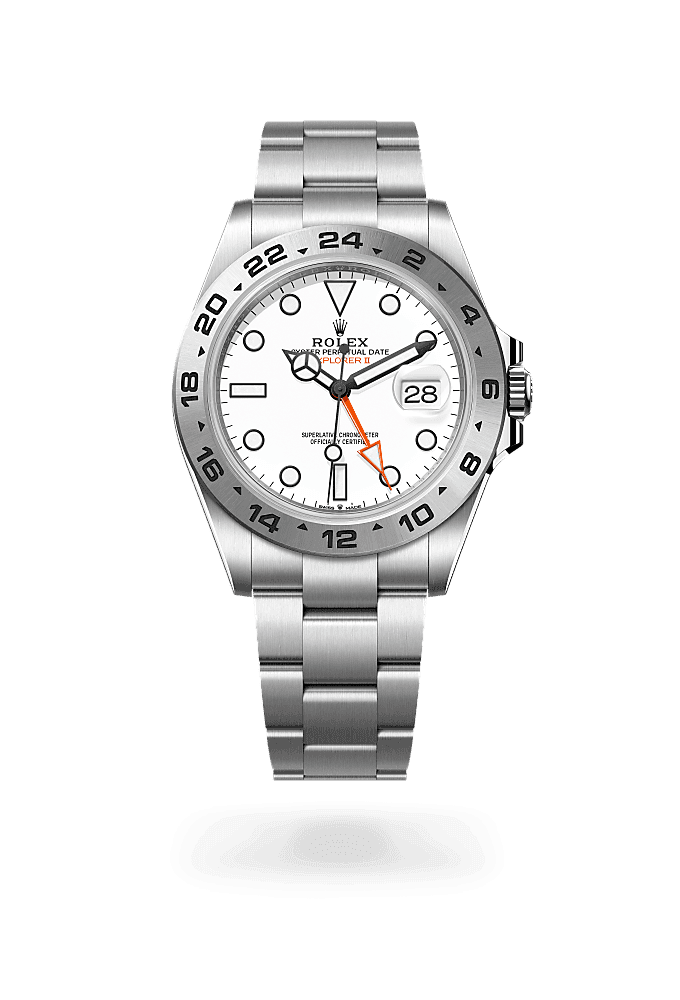
- Explorer I or Explorer II? They are different watches. The Explorer I (224270) is the clean three-hand no-date 36mm watch this narrative covers. The Explorer II (226570) is a 42mm GMT with a large second-time-zone hand and an orange 24-hour chapter ring. The Explorer II is for people who want a GMT function in an Explorer-aesthetics package; the Explorer I is for people who want the simplest Rolex sport watch available.
Related families: Submariner · GMT-Master · Datejust
Sub-lines
References in this family
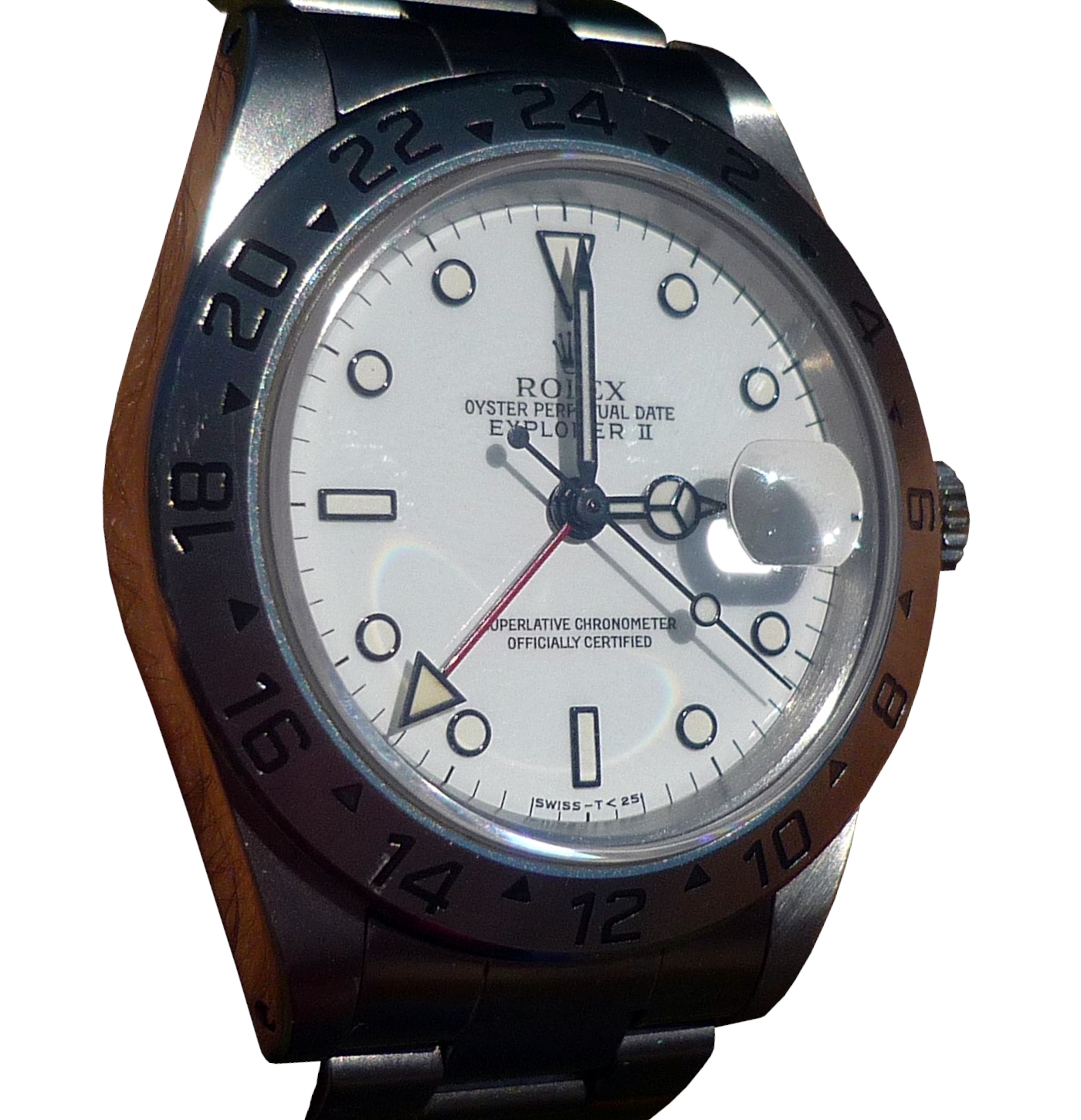
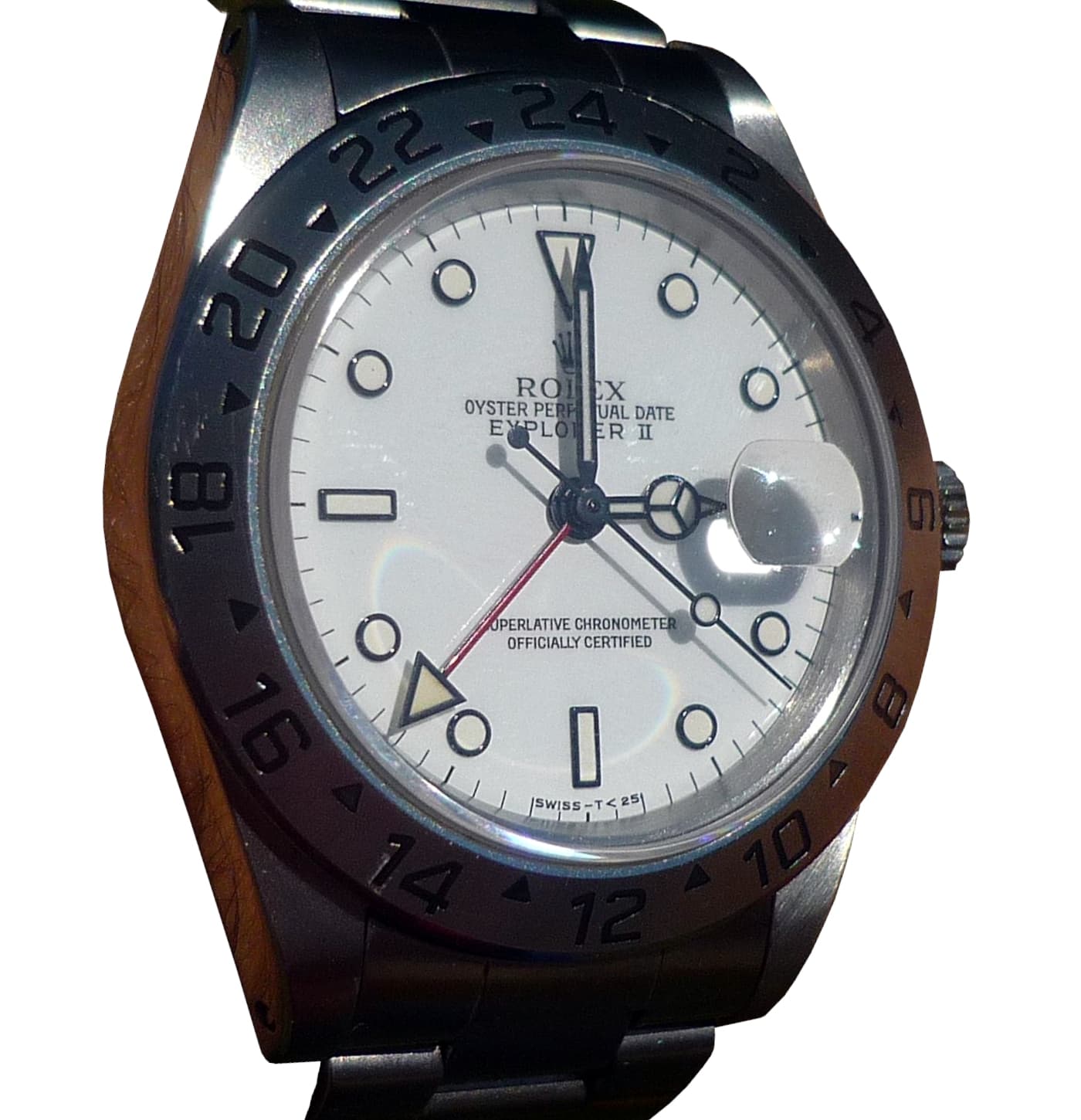
- OpenRolex Explorer II (Polar) · 16570best valueThe "polar dial" white version is an Explorer II that many collectors prefer to current production at a secondary price still below new retail equivalent.
- OpenRolex Explorer (vintage, "the 1016") · 1016most soughtThe long-running matte-dial Explorer produced from 1963 to 1989; vintage collectors treat this as the most correct-proportioned Explorer ever made.
- Open
Which ref to buy
The Explorer is the purist Rolex -- no complications, clean dial, the most honest configuration in the lineup. The 1016 is the vintage grail; the Explorer II is a different animal.
- 1Open
The vintage 1016 -- the definitive Explorer and one of the great watch designs of the 20th century.
- The case for it:
- Cal. 1520 or 1570, 36mm case, clean dial with 3-6-9 markers, no date. The 1016 ran from 1963 to 1989 with nearly identical appearance -- a design that needed no updates. Multiple dial variants tracked by serial range. The pre-1984 matte dial examples are the collector focus.
- Consider instead if:
- Vintage buying with significant authentication requirements. The 1016 market is well-documented but also well-faked at the dial level. Budget for authentication.
- 2Open
The modern Explorer II -- 42mm case, cal. 3285, a legitimate GMT.
- The case for it:
- Cal. 3285, 70-hour power reserve, 42mm case. The orange GMT hand is a signature design element. The Explorer II is a genuine GMT complication in a clean case -- accessible at retail relative to the GMT-Master.
- Consider instead if:
- At 42mm it is larger than most buyers expect. If you want a smaller explorer-style watch, the standard Explorer 36mm or 40mm is a better fit.
- 3Open
The "Polar" Explorer II -- iconic white dial with white GMT hand.
- The case for it:
- The 16570 in Polar white dial configuration is a cult reference with a specific collector following. More affordable than the current 226570 on secondary. A complete different visual character from the black dial.
- Consider instead if:
- The 16570 uses cal. 3185 (older movement). The 226570 is mechanically superior. Buy the 16570 for the aesthetics and history, not the mechanics.
Rankings last reviewed 2026-06-06. Editorial perspective only. Not financial advice.