Learn how the gmt / dual-time works →
GMT watches
References in the Grail Atlas catalog carrying the gmt complication.
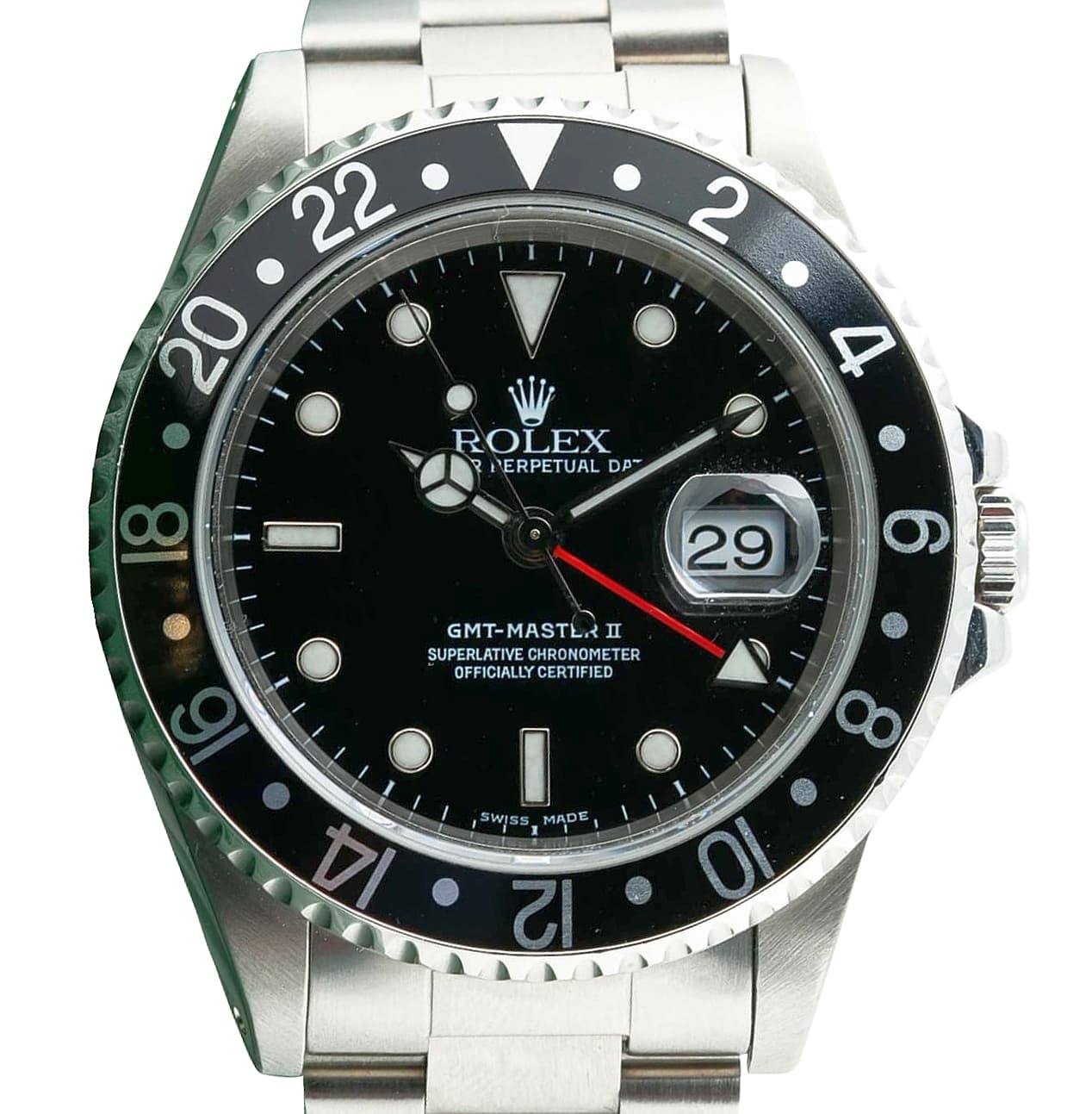
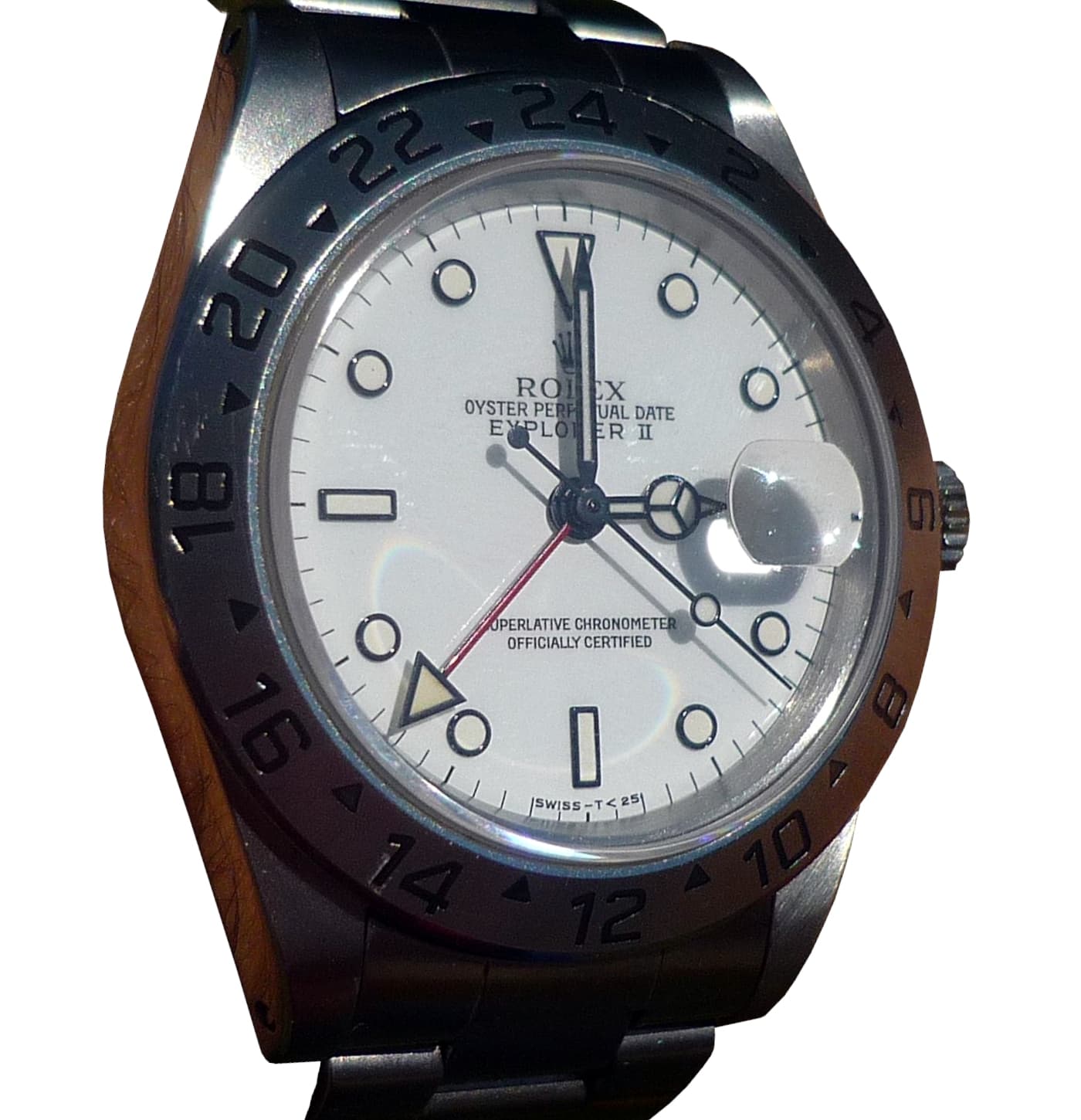
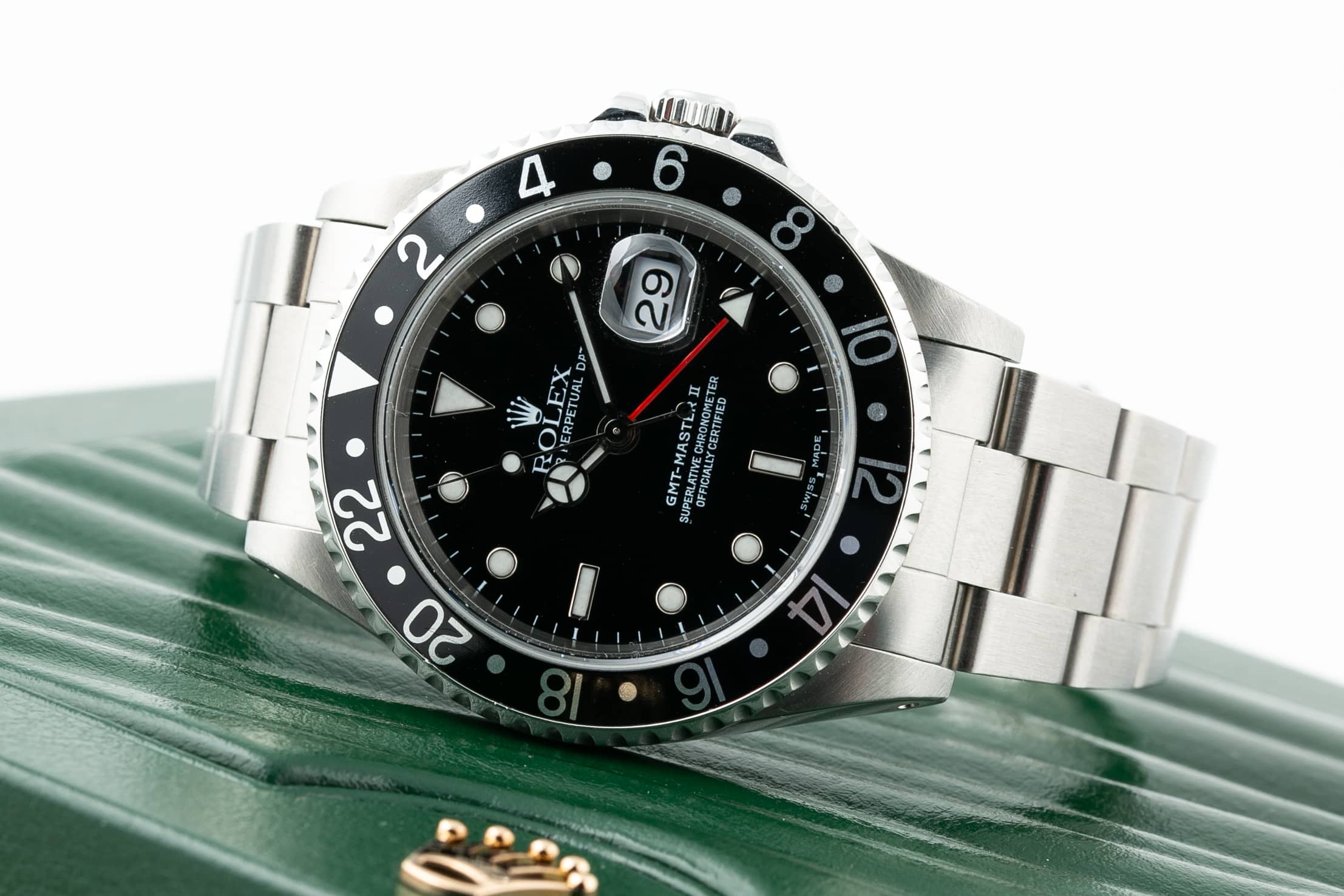
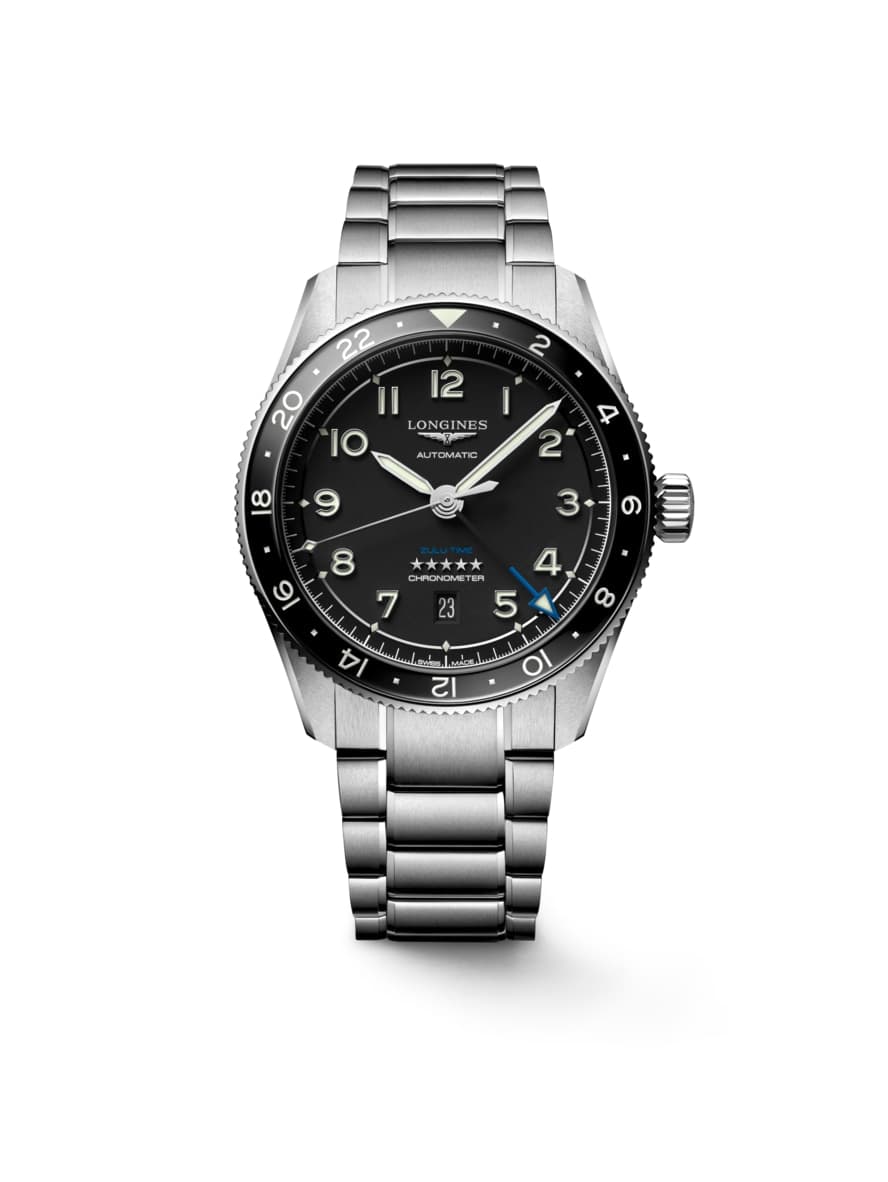
A GMT watch tracks a second timezone via an independently-set 24-hour hand read against a 24-hour bezel or ring. The complication was developed by Rolex with Pan American Airways in the mid-1950s for transatlantic pilots, and the GMT-Master that resulted set the template the category still follows: red-and-blue bezel, fourth hand, ability to read home time and local time at a glance.
Notable references
The Rolex GMT-Master II 126710BLNR (the "Batman") and 126710BLRO (the "Pepsi" on Jubilee) are the category's gravitational center. The Tudor Black Bay GMT (M79830RB) is the most cited alternative in the under-$5k tier. Grand Seiko's SBGE series and the Omega Aqua Terra Worldtimer offer a different aesthetic register. For traveler-GMT lineage, the IWC Pilot's Watch Timezoner and Patek Philippe 5990 sit further up the price column, the latter combining GMT with a flyback chronograph.
How to shop one
The first decision is true-GMT vs. office-GMT. A true GMT (also called a flyer or caller GMT depending on which hand jumps) lets you change the local hour hand independently when crossing time zones without stopping the seconds, the Rolex GMT-Master II works this way, as does the Tudor Black Bay GMT. An office GMT moves the 24-hour hand in independent increments instead, which is less useful for actual travel. Look at the movement spec sheet; the marketing copy will not always say it plainly.
The second decision is bezel material and orientation. A 24-hour bi-directional bezel turns the watch into a third-timezone reader. A fixed bezel (some Grand Seiko, the Omega Aqua Terra Worldtimer) keeps the dial cleaner but loses the function. Ceramic vs. aluminum is mostly cosmetic in this category, aluminum patinas, ceramic does not.
Common pitfalls
First-time GMT buyers often discover after purchase that their watch is an office-GMT and feel cheated. Read the movement specification before buying, especially on chronograph-GMT combinations where the second-timezone function is sometimes an afterthought. Second pitfall: the Rolex GMT-Master II 16710 (the pre-ceramic generation) and the 126710 series trade on very different curves, the older steel-and-aluminum references have crossed into vintage pricing while the current production is held back by allocation games at authorized dealers. Pre-owned at a reputable specialist is often the realistic path.