Equation of time
The difference between solar time and mean time, displayed on the dial
What it is
The equation of time is the difference between apparent solar time (sundial noon) and mean solar time (clock noon). It varies throughout the year because Earth's orbit is elliptical and its axis is tilted; two effects that cause the sun to cross the meridian up to 16 minutes early or 14 minutes late relative to mean time. The complication displays this difference via a dedicated hand on the dial, allowing a watch owner to know how many minutes ahead or behind a perfectly positioned sundial the watch currently reads.
History
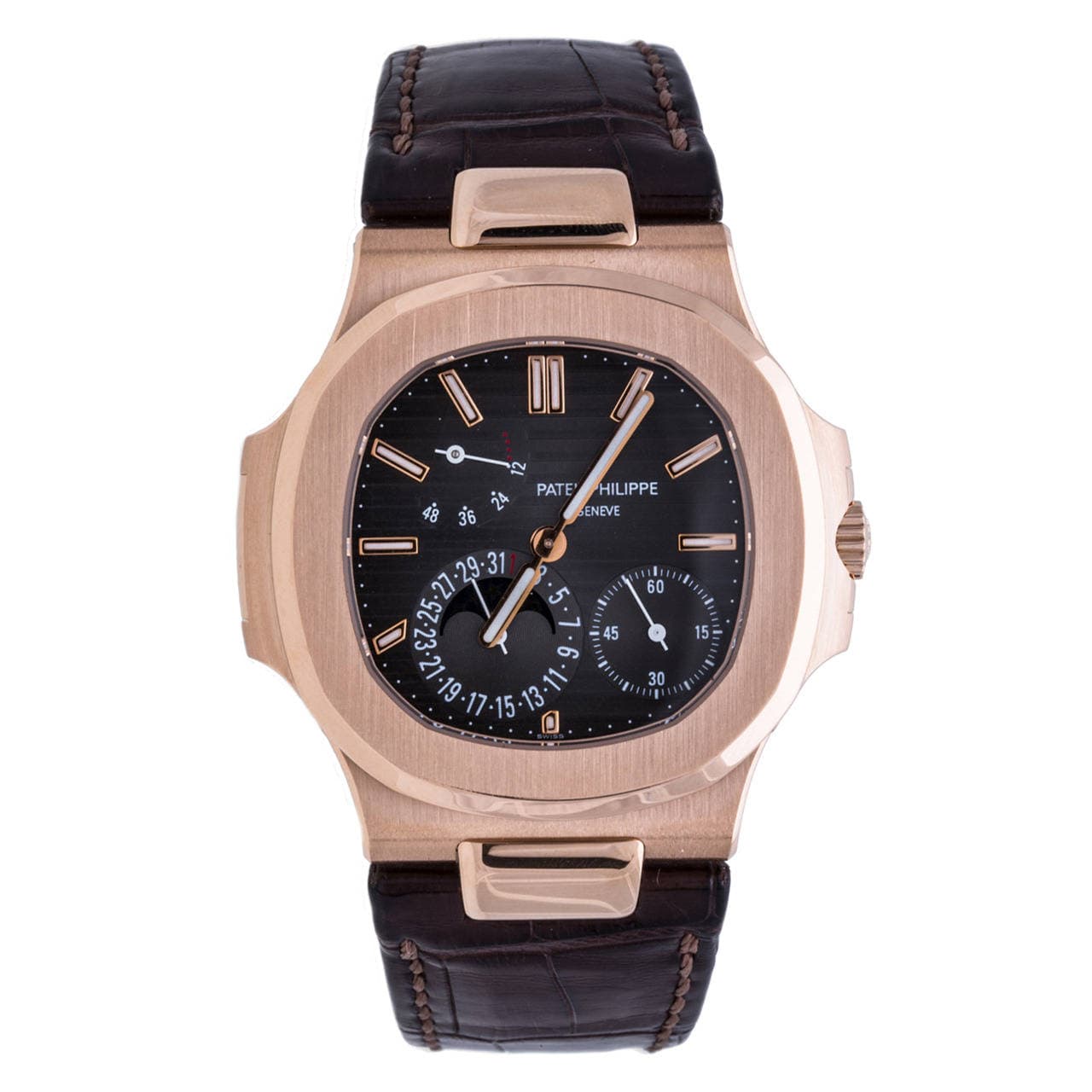
The equation of time was practically useful for setting clocks from sundials in the 17th and 18th centuries. Breguet made equation-of-time pocket watches; in modern wristwatches the complication is philosophical rather than practical. Patek Philippe references 5016 and 5960 carry equation-of-time displays; Blancpain produces the Villeret Équation du Temps Marchante, which displays both mean time and solar time simultaneously on two separate minute hands. The equation-of-time complication is almost always paired with a perpetual calendar, since you need to know the date to know the current equation value.
How it works
A kidney-shaped annual cam (one rotation per year) drives a differential lever. The lever's position relative to the cam changes with each day of the year, representing the current equation value. A dedicated hand on the dial shows how many minutes ahead or behind the sun the watch currently runs. The cam profile must reproduce the equation-of-time curve for all 365 days with sub-minute accuracy; the curve is mathematically derived from astronomical data and has an irregular shape that cannot be reduced to a simple geometric form.
Parts required
Annual cam reproducing the equation-of-time curve, differential lever, equation-of-time hand and arbor, annual driving wheel (shared with or separate from the perpetual calendar driving train if combined)
What makes it difficult
The equation-of-time cam must reproduce an irregular mathematical curve derived from astronomical data across all 365 days with sub-minute accuracy. The curve is not a simple ellipse or sinusoid and requires a precisely profiled kidney shape with no geometric shorthand. CNC machining makes this more tractable than historical hand-cutting methods, but the cam still requires a profile that closely matches the actual astronomical equation; deviations accumulate across the year and are directly readable on the display. Pairing with a perpetual calendar adds a further 200+ components to the movement.
In the catalog
Related
- Perpetual calendar: Programs every month length, including leap years, through 2100
- Moonphase: A display of the current lunar phase