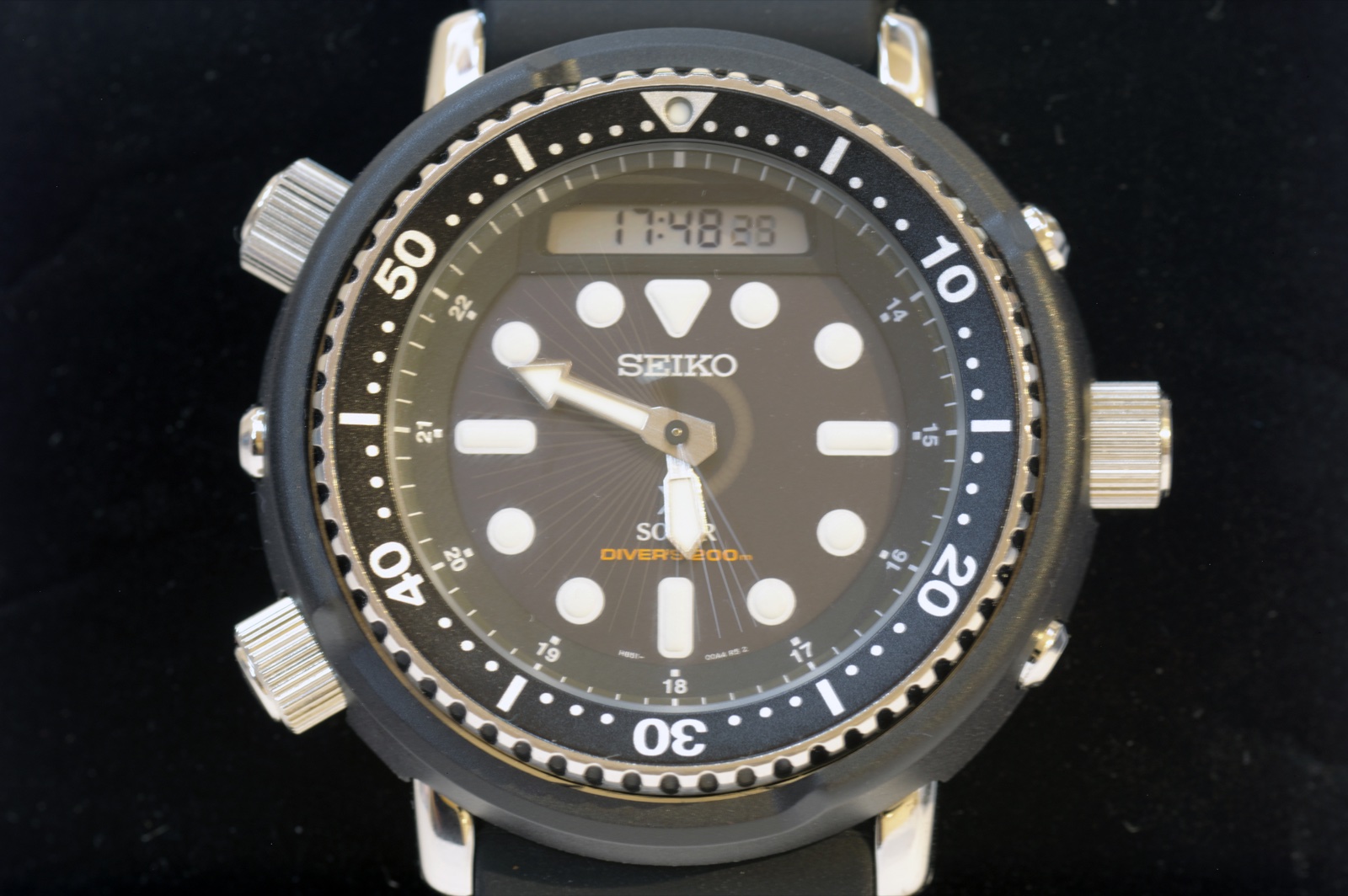
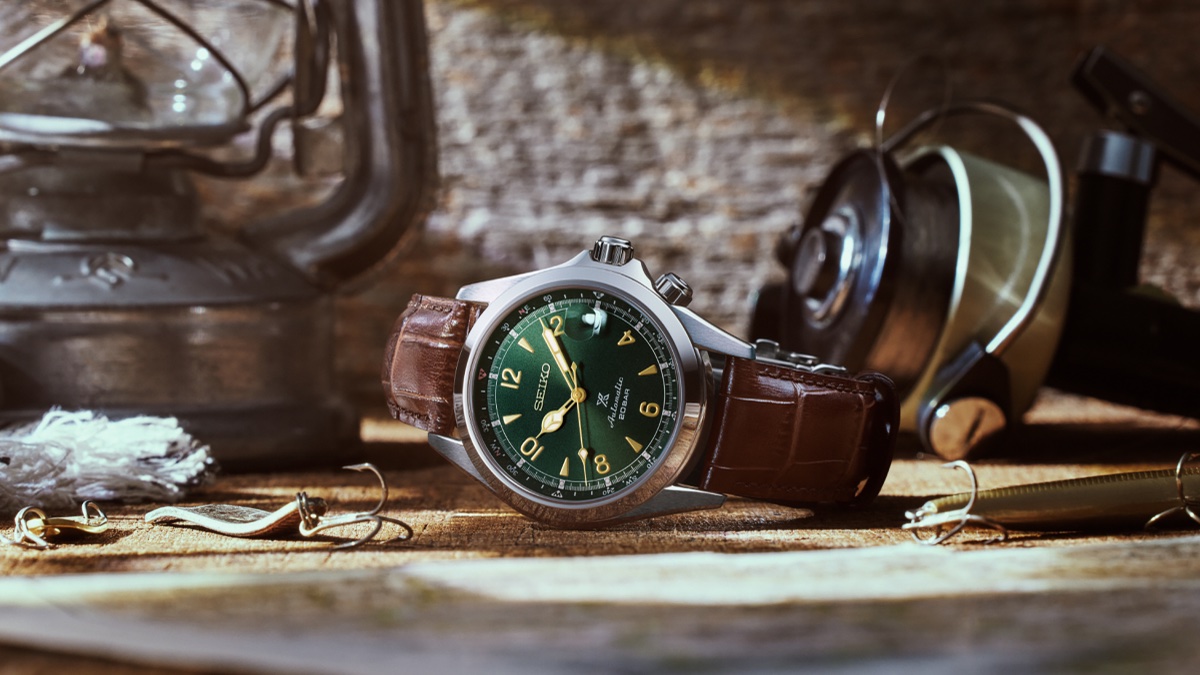
Live pricing is coming soon. Get notified when it is available for this reference.
The Sumo is a deliberately chunky 200m diver built around a wide, cushion-shaped case that divides opinion before it ever hits the water. At 45mm with pronounced lug extensions and a monocoque construction, it is a big watch that makes no apology for it. What you get in return is a no-nonsense tool watch with excellent lug-to-lug proportion management and a movement that outlasts most weekends.
Seiko introduced the original Sumo in 2003 as part of the Prospex dive lineup, drawing on a boxier aesthetic that set it apart from the slimmer Samurai and Turtle families. The SPB103J1 arrived in 2019 as a modern reinterpretation, swapping the older 6R15 caliber for the 6R35 and adding a 70-hour power reserve that addressed one of the few practical complaints about the previous generation. The monocoque case construction, which integrates the caseback into the main case body, has been a Sumo signature since the beginning and contributes to its water resistance without a traditional screwback.
The black dial version with its applied indices and LumiBrite lume plots is the reference most associated with the Sumo name. It has remained in continuous production, which speaks to a loyal niche that prefers its proportions to the more conservative alternatives.
The monocoque construction is the most important thing to understand before buying: the movement is accessed through the crystal, not a caseback, so servicing requires a watchmaker with specific experience on this case type. Not every independent watchmaker is comfortable with it, and errors during opening can damage the seal integrity. The 45mm width combined with the extended lugs gives this watch a substantial wrist presence that measures significantly larger than most 45mm divers from other brands.
Buyers with smaller wrists regularly find it unwearable. The crown placement and tube angle can catch on sleeve edges, which is a minor but recurring complaint from daily wearers. Finally, the SPB103J1 specifically is a Japan-domestic model, so grey market is the typical acquisition path outside Japan, and warranty support varies accordingly.
Street price for the SPB103J1 runs roughly $500 to $650 USD through grey market channels, which places it well under the official Japanese retail. Used examples in good condition typically sell in the $350 to $500 range, with price sensitivity to crystal condition given the monocoque opening requirement. There is a stable collector base for this reference, so it holds value reasonably well relative to other Seiko sport watches at similar price points.
The SPB103J1 runs the Seiko caliber 6R35, a 24-jewel automatic with 70-hour power reserve and a frequency of 21,600 vph. Seiko recommends service intervals of approximately every three years for dive watches used in water, though many collectors stretch this to five years for dry use. Because the monocoque case requires crystal removal to access the movement, confirm your watchmaker has done this procedure on Sumo-family cases before committing to a service.
Community + OSINT signals haven’t landed for this reference yet. We don’t publish a rating against zero signal — the number would mean nothing. Editorial body + caliber + market value still surface above; ratings appear once the signal corpus does.
The one-piece ceramic bezel insert and an intact caseback gasket ring are the primary Sumo authentication checks.
| Area | What to check | What is correct | Red flag |
|---|---|---|---|
| case | Ceramic bezel insert integrity | One-piece ceramic with bright pip, clean numerals, and consistent font throughout | Pip discoloration, chipped ceramic, or numeral font inconsistency; aftermarket insert |
| caseback | Gasket ring condition | Gasket is round, undeformed, and seated fully in the caseback groove | Flattened, cracked, or missing gasket; compromised water resistance |