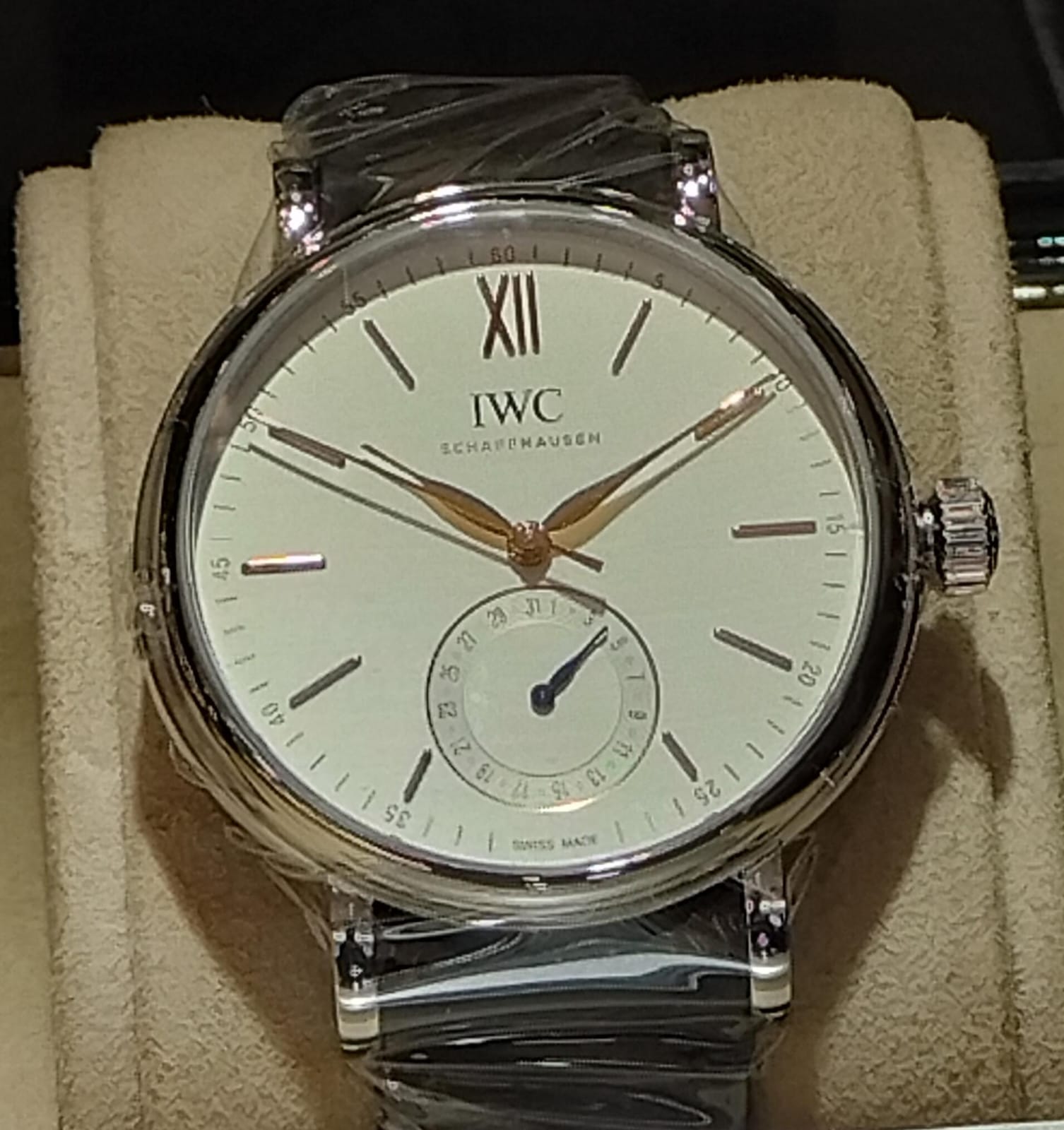
Live pricing is coming soon. Get notified when it is available for this reference.
The Type 3 fills its dial module with oil, collapsing the distance between the display and the crystal to zero. What you see is not a dial behind glass but indicators that appear to float in a single continuous medium. It is the most visually unusual watch in serious circulation and it earns the attention.
Ressence introduced the Type 3 in 2013, building on the orbital display system the brand had developed for the Type 1. The core innovation was replacing the air in the dial module with a refractive index-matched oil, eliminating glare and the parallax distortion that normally shifts a dial's apparent position as your wrist angle changes. The ROCS 3 (Ressence Orbital Convex System) sits beneath the oil chamber and translates the ETA 2824-2 movement into the rotating disc display, with time read across multiple orbiting discs rather than conventional hands.
Founder Benoit Mintiens, a Belgian industrial designer, developed the system with engineers and obtained multiple patents on the fluid-filled approach. The watch has been in continuous production since launch with incremental refinements, including the introduction of a solar-powered e-Crown variant.
The oil system requires specialist servicing that only Ressence and a small number of authorized partners can perform. If oil discolors, leaks, or develops bubbles, the repair bill is significant and turnaround is slow. The crown is on the caseback, which many wearers find awkward to set in practice.
Water resistance is rated at 30m, so this is not a watch you swim with. The 44mm titanium case wears larger than its weight suggests, and buyers with smaller wrists regularly find it overwhelming on the wrist even though titanium keeps the mass reasonable.
The Type 3 trades at a premium that reflects its technical complexity rather than precious materials or brand heritage. Grey market pricing has softened from post-launch highs and the watch is generally available without a wait. Condition of the oil chamber dominates value: a clean, bubble-free example with original documentation commands a meaningful premium over one with any visible fluid degradation.
The ETA 2824-2 base movement is robust and widely serviceable, but the ROCS 3 orbital module and oil chamber require Ressence directly or an authorized service center. Budget for a full service interval of five to seven years and factor in the oil system as a separate cost from conventional movement service.
Community + OSINT signals haven’t landed for this reference yet. We don’t publish a rating against zero signal — the number would mean nothing. Editorial body + caliber + market value still surface above; ratings appear once the signal corpus does.
The Type 3 oil-filled upper chamber must be clear and bubble-free; cloudy or bubbled oil indicates seal degradation.
| Area | What to check | What is correct | Red flag |
|---|---|---|---|
| dial | Oil-filled upper chamber clarity | Clear, colorless, bubble-free oil across the entire dial chamber | Cloudy, yellowed, or bubbled oil; seal degradation |
| dial | ROCS 3 indication rotation | All indications rotate correctly within the oil chamber | Stuck or incorrectly rotating indications; ROCS 3 module fault |
| caseback | Ressence serial and reference | Serial and reference correctly engraved | Missing or incorrect engravings; non-genuine caseback |
| movement |
| ETA 2824-2 base architecture |
| ETA 2824-2 base with ROCS 3 module overlaid |
| Non-ETA 2824-2 base; movement discrepancy |