Live pricing is coming soon. Get notified when it is available for this reference.
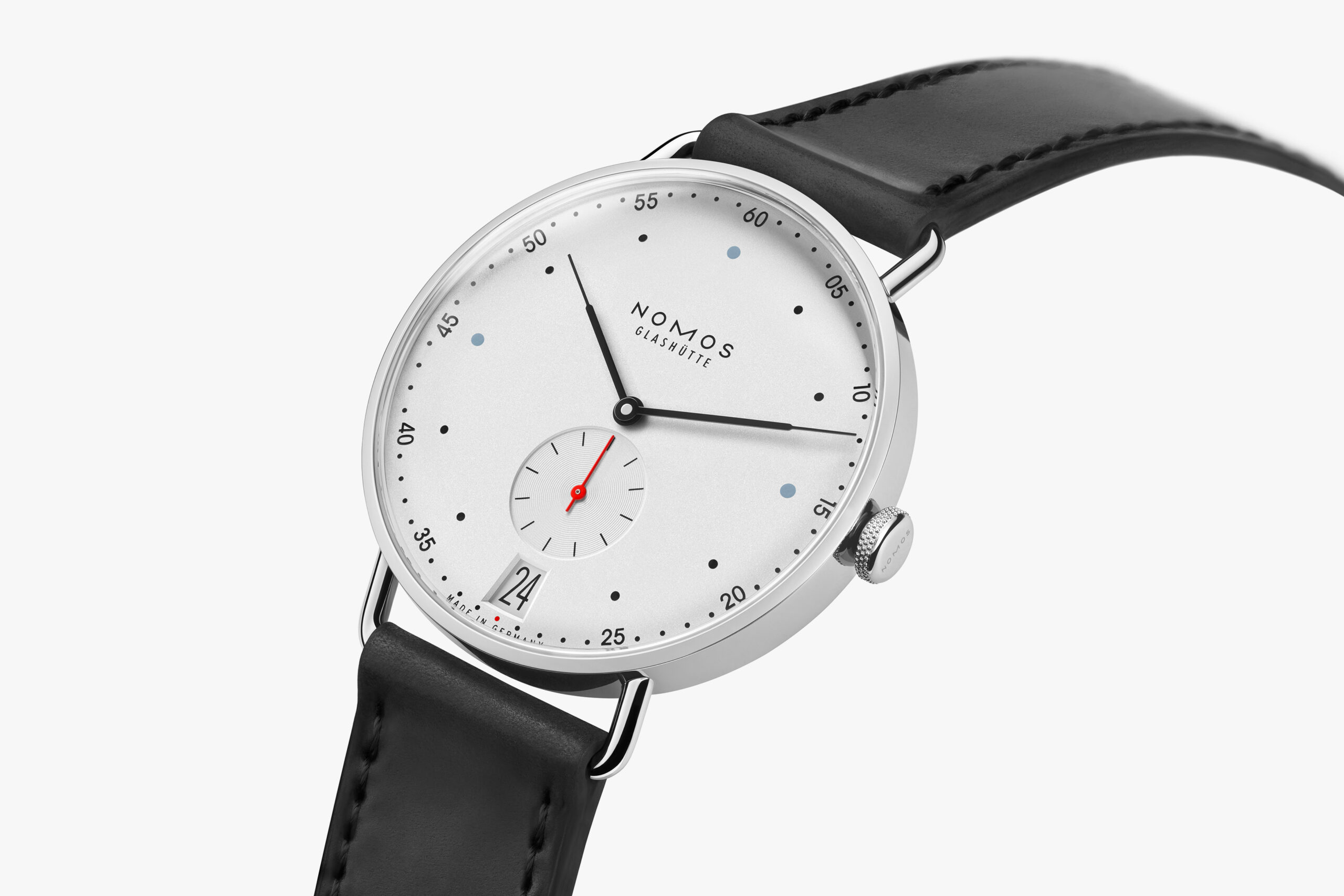
Maria and Richard Habring make roughly 200 watches a year in Graz, Austria, and the Erwin is their clearest statement of what that means: a 38.5mm hand-wound watch sized for wearing, not impressing. Named for Erwin Schrodinger, it carries real intellectual weight without performing it.
Richard Habring spent years as a movement developer at IWC and A. Lange & Sohne before he and Maria founded Habring² in 2004. The house builds on the work of Daniel Achatz, whose movement architecture informs the calibers they develop and produce in-house.
The Erwin arrived in 2015 as a distillation of that philosophy: hand-wound, 38.5mm, steel, nothing extraneous. Production stays around 200 pieces per year across their full range, which means the Erwin is genuinely rare without being a limited edition marketing exercise. Graz is not Geneva, and that distance is the point.
Service parts and movement knowledge are concentrated in Graz, so buyers outside Europe should confirm they have a clear path back to the manufacture or a trusted intermediary before buying. Dial condition matters more on this watch than on many others because the minimalist layout leaves nowhere to hide blemishes. Verify the case is unpolished or sympathetically refinished; the 38.5mm proportions read correctly only with crisp, original case geometry.
Grey-market pricing is thin because secondary market volume is low, so comp data from auction houses is sparse and private-sale valuations can drift wide. Ask for the original papers and any service history, since chain of custody is the main authenticity signal on a watch this small-batch.
Secondary market examples appear infrequently, typically through specialist dealers or small auction houses covering independent watchmaking. Prices have held relative to original retail, supported by the low annual production and a collector base that treats Habring² as undervalued against its peers. Expect a modest premium for pristine, unpolished examples with full documentation.
The Erwin runs the A11MS hand-wound caliber, developed in-house by Habring² in Graz. Habring² handles servicing directly, and correspondence with Maria and Richard is straightforward for owners who reach out. Service intervals are typical for a well-regulated hand-wound movement; follow the manufacture's guidance rather than generic third-party estimates.
Community + OSINT signals haven’t landed for this reference yet. We don’t publish a rating against zero signal — the number would mean nothing. Editorial body + caliber + market value still surface above; ratings appear once the signal corpus does.
The Erwin single-pusher chronograph must start, stop, and reset in three-phase sequence from one pusher; any Erwin with two pushers has been incorrectly described.
| Area | What to check | What is correct | Red flag |
|---|---|---|---|
| case | Single crown-integrated pusher | One pusher only; crown-integrated; three-phase sequence start/stop/reset | Two pushers present; incorrect description or non-genuine configuration |
| movement | Cal. A11MS in-house monopusher chronograph | In-house monopusher mechanism visible through caseback | Column-wheel two-pusher mechanism; non-genuine movement |
| dial | Habring2 dial printing | Habring2 dial text consistent with Erwin production; correct register layout | Incorrect dial text or register layout inconsistent with Erwin specification |