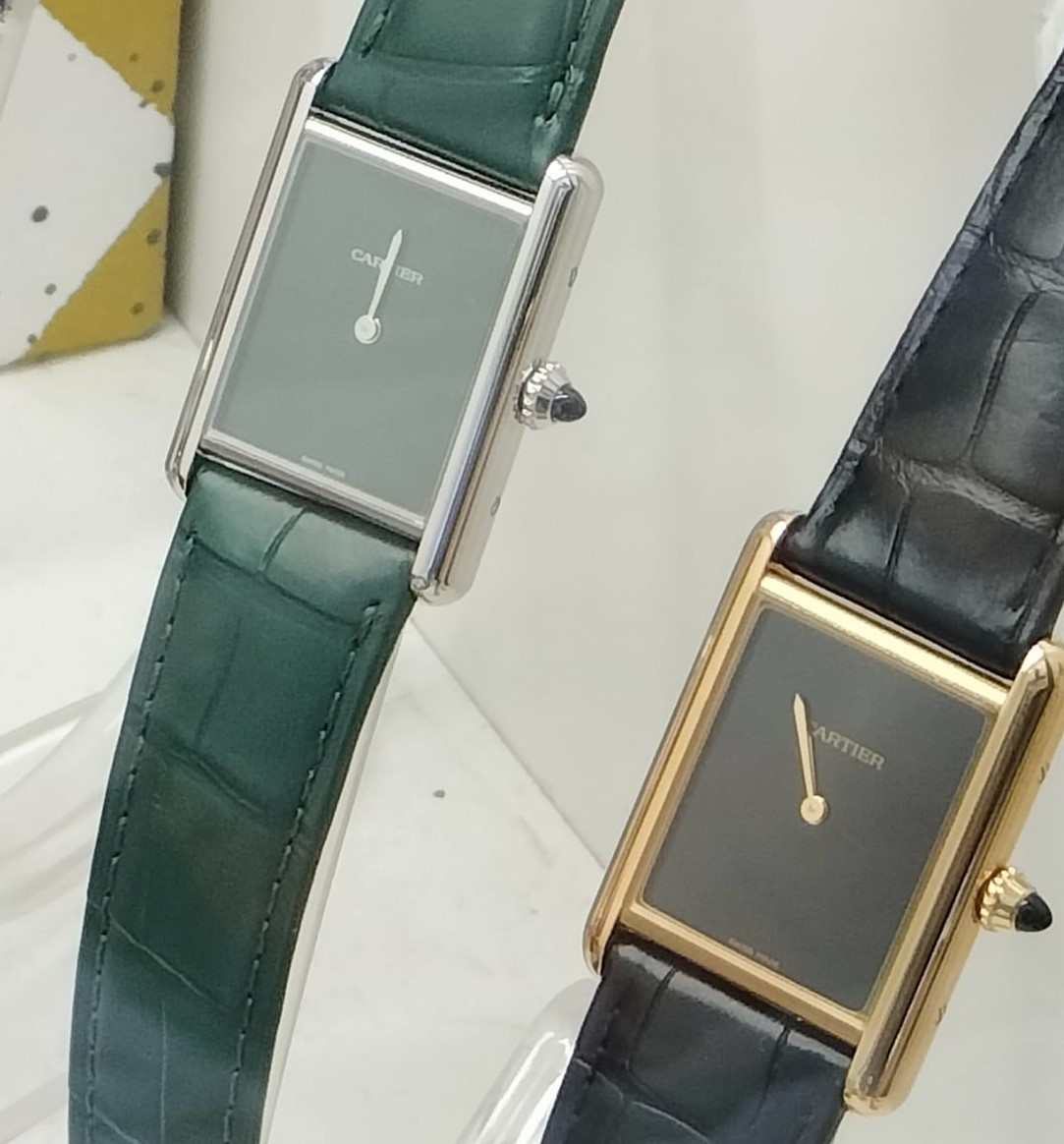
Live pricing is coming soon. Get notified when it is available for this reference.
The Clé de Cartier asked a simple question: what if the crown belonged to the case instead of jutting out from it? Cartier's answer was a D-ring crown integrated flush at 3 o'clock, rotated rather than pulled to wind and set. It ran from 2015 to 2019 before Cartier quietly retired it, leaving a well-executed idea on the secondary market at prices that reflect the discontinued status more than the quality of the watch.
Cartier introduced the Clé in 2015 as a full family spanning multiple sizes and metals, with the 40mm steel reference WSCL0008 serving as the accessible entry point. The defining feature was the D-shaped crown integrated into the case at 3 o'clock, designed to be rotated in place rather than unscrewed and pulled. This eliminated the classic problem of a traditional crown digging into the back of the hand during wear.
Cartier developed the 1847 MC caliber specifically for the line, named after the year Louis-Francois Cartier founded the maison. Production ceased in 2019, making the Clé one of the shorter-lived Cartier families of the modern era.
The integrated crown mechanism is the first thing to inspect on any pre-owned example. The D-ring rotates on a pivot, and if that pivot shows slop or the crown feels gritty, budget for a movement service that includes crown-mechanism attention, which not every independent watchmaker will have experience with. The 40mm steel case wears larger than equivalent round Cartier cases due to the cushion shape, so try it on before buying if possible.
Early examples from 2015 to 2016 occasionally showed mainspring barrel noise that Cartier addressed through a running production change; a service history showing post-2017 movement work is a mild positive signal. Verify the crown gasket is intact, as the integrated design makes resealing slightly more involved than a standard crown tube.
Discontinued Cartier references in steel almost always soften in price once production ends, and the Clé is no exception. The WSCL0008 trades well below its original retail, which was in the $6,500 to $7,500 range depending on year and market. That gap is the opportunity: the movement is solid, the concept is coherent, and the watch is genuinely comfortable to wear.
Expect to find clean examples in the $3,500 to $5,000 range depending on condition and whether the original box and papers are present.
The Cartier 1847 MC is an in-house automatic with a 48-hour power reserve and runs at 28,800 vph. Cartier boutiques will service it, and a growing number of independent watchmakers familiar with Cartier movements can handle it as well. A full service interval of five to seven years is reasonable under normal wear conditions.
Community + OSINT signals haven’t landed for this reference yet. We don’t publish a rating against zero signal — the number would mean nothing. Editorial body + caliber + market value still surface above; ratings appear once the signal corpus does.
The key-crown winding mechanism must engage smoothly; slipping or binding on a discontinued reference means a Cartier service visit.
| Area | What to check | What is correct | Red flag |
|---|---|---|---|
| crown | Key-crown winding engagement | Crown rotates smoothly and engages the winding mechanism with consistent resistance | Slipping crown that does not engage the winding mechanism; worn engagement pin |
| caseback | Papers and service date plausibility | Papers dated 2015-2019 (production years) with consistent service documentation | Papers dated after 2019; Cle was discontinued and new papers from Cartier would only be for service |