The Urwerk UR-210 | family history
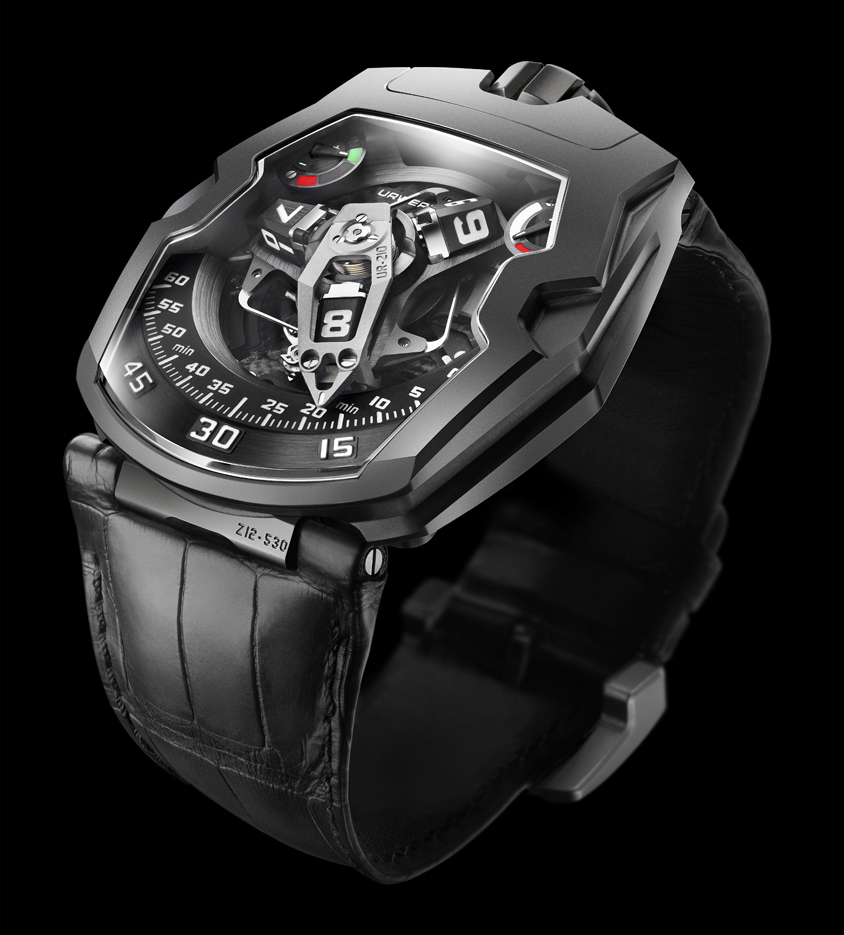
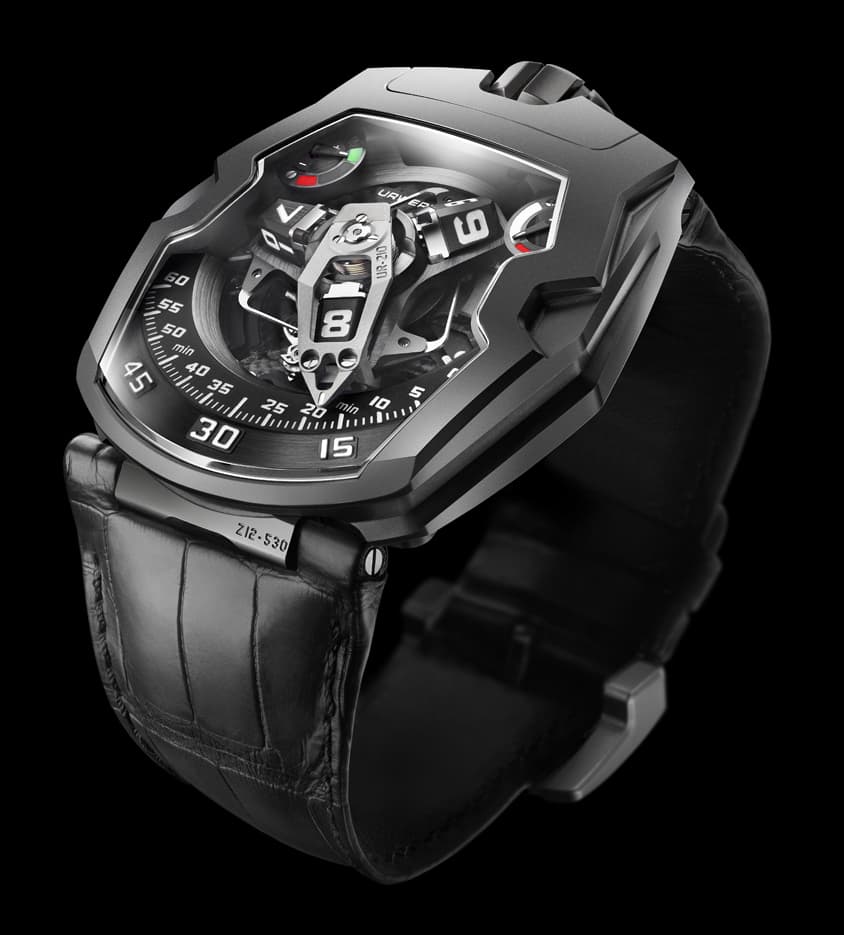
The UR-210 extends the satellite-hours concept as far as Urwerk has taken it: a winding efficiency meter on the dial, dual air turbines regulating mainspring tension automatically, and the movement architecture fully displayed on the caseback. It is the brand's most complete technical statement in the satellite-hours format.
Urwerk's turbine-regulation masterpiece: the winding efficiency indicator monitors how the wearer powers the watch, turning energy management into a complication.
2012-present · The UR-210 and winding regulation
Urwerk introduced the UR-210 in 2012 as a more technically complex successor to the UR-201. The defining addition was a winding efficiency display: a gauge on the dial shows the percentage of kinetic energy the movement's rotor has successfully converted to mainspring tension over the last two hours of wear. If the gauge shows low efficiency (a sedentary wearer), the owner can manually switch the rotor between Free, Auto, and Stop winding modes. The two air turbines regulate the process either way, damping over-winding automatically. No other production watch offers this combination of real-time winding feedback and automatic regulation.
How to read this family
Two questions for UR-210 buyers:
- Is the winding efficiency meter useful or decorative? Both. It displays genuine data about the movement's actual winding behavior, which is interesting once. The ability to manually select winding mode (Free/Auto/Stop) is the more practical utility for buyers who alternate between active and sedentary days. The turbine regulation beneath that is mechanical engineering that works whether or not you are reading the gauge.
- How does the UR-210 differ from the UR-105 TA? The UR-105 TA has one turbine for winding regulation and no winding efficiency display. The UR-210 has two turbines, the efficiency meter, and manually selectable winding modes. The UR-210 is the more complex reference; the UR-105 is the more wearable one.
Related families: Urwerk UR-105